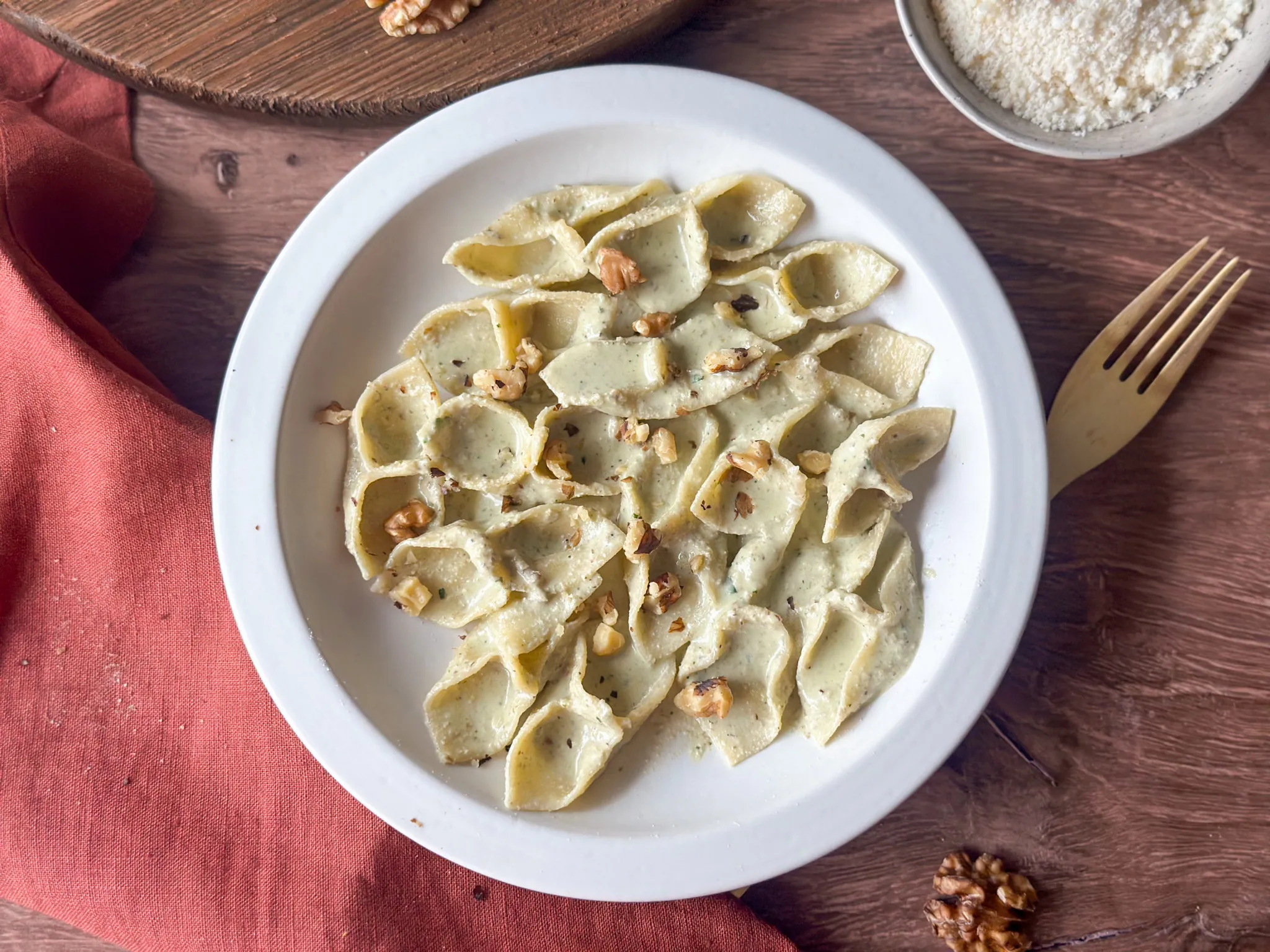
Creamy, nutty and incredibly versatile, this Italian walnut sauce is made with walnuts, ricotta, Parmesan, parsley, garlic and extra-virgin olive oil. Toss it with homemade pasta or spread it over crostini for an easy Italian appetizer. Walnut sauce, or salsa di noci, is one of those Italian sauces that proves you don’t need a long list of ingredients to create something deeply flavorful.
Walnuts bring richness, ricotta makes the sauce creamy, Parmesan adds a savory note, and extra-virgin olive oil brings everything together. I also add fresh parsley for brightness and a little garlic for depth. My version is inspired by the traditional walnut sauce of Liguria, where salsa di noci is famously served with pansoti, a filled pasta typically made with greens and herbs. Traditional versions often use bread soaked in milk and may include marjoram. Here, I use ricotta instead, creating a creamy sauce that is particularly easy to prepare at home.
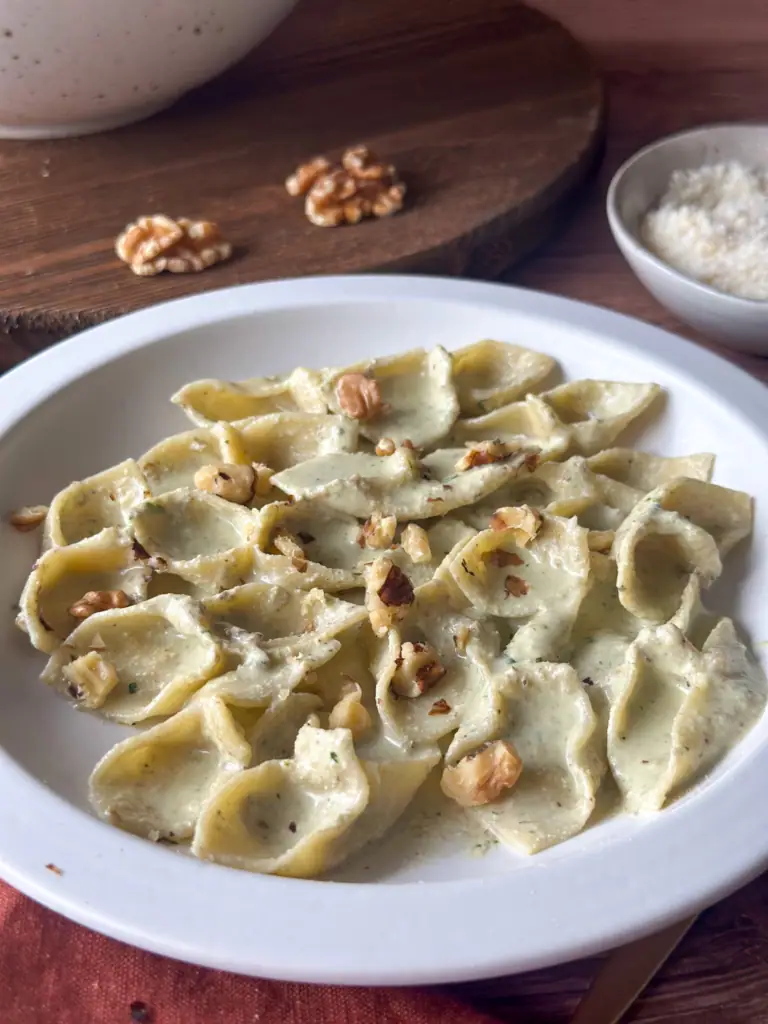
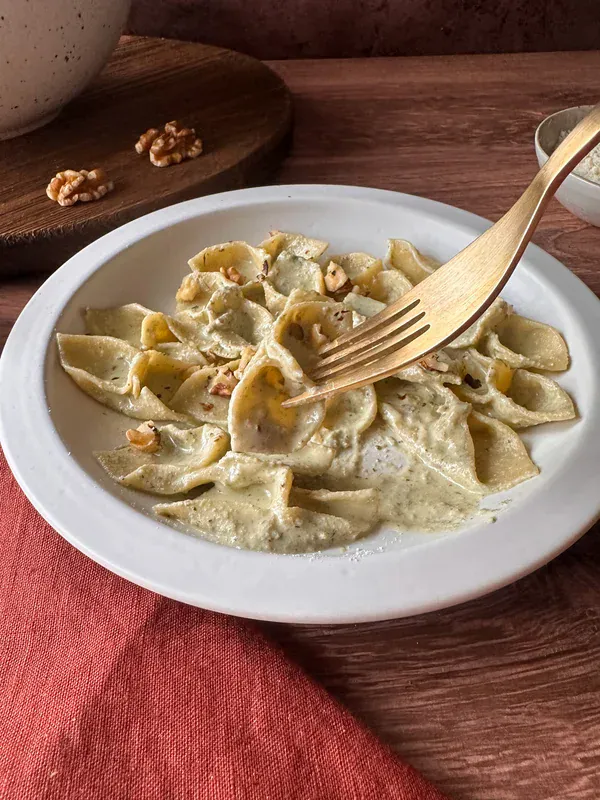
For this recipe, I paired it with my homemade barchette pasta. Their little boat-like shape is perfect for catching the creamy sauce. But don’t think of this only as a pasta sauce. Its thick, spreadable consistency also makes it wonderful on bruschetta and crostini, with roasted vegetables, or as part of an Italian aperitivo.
WHY YOU’LL LOVE THIS ITALIAN WALNUT SAUCE
- This is the kind of recipe I love to keep in my repertoire because one simple sauce can be used in so many different ways.
- It’s quick and easy—the sauce comes together in a food processor in about 15 minutes.
- It’s naturally creamy without heavy cream. Ricotta, walnuts and olive oil give it a rich, velvety consistency.
- It’s also versatile. Serve it with pasta for dinner, spread it on toasted bread for an appetizer, or pair it with seasonal vegetables.
- And perhaps most importantly, the walnuts remain the star. Their slightly sweet, earthy flavor gives the sauce its distinctive character.
WHAT IS SALSA DI NOCI?
Salsa di noci simply means walnut sauce in Italian. It is particularly associated with Liguria, the coastal region in northwestern Italy that is also home to pesto Genovese.
Traditional Ligurian walnut sauce is commonly prepared with walnuts, garlic, bread soaked in milk, olive oil and sometimes cheese and marjoram. It is especially well known as the traditional accompaniment to pansoti, a stuffed pasta filled with greens. Unlike pesto, walnut sauce has a soft, creamy consistency and a more delicate, earthy flavor.
My recipe isn’t intended as a strict reproduction of the traditional Ligurian version. I use ricotta instead of soaked bread and parsley for freshness, making it a Ligurian-inspired walnut sauce that is easy to prepare with ingredients readily available at home.
INGREDIENTS AND WHY THEY WORK
You need only a handful of ingredients, which means their quality really matters.
Walnuts: Walnuts are the foundation of the sauce. They provide both flavor and body, and their natural oils help create its rich texture. Use fresh walnuts and taste one before making the sauce. Because walnuts contain a high amount of oil, older nuts can develop a bitter or rancid flavor. I use 145 g (about 1¼ cups) of walnuts for a sauce where their flavor really comes through.
Ricotta: Ricotta softens the intensity of the walnuts and gives the sauce a creamy consistency without using heavy cream. Whole-milk ricotta works particularly well. If yours is very watery, let it drain briefly before adding it to the food processor.
Parmigiano Reggiano: Freshly grated Parmigiano Reggiano adds saltiness and umami while complementing the sweetness of the walnuts. Grate it fresh rather than using pre-grated cheese, which doesn’t incorporate as smoothly into the sauce.
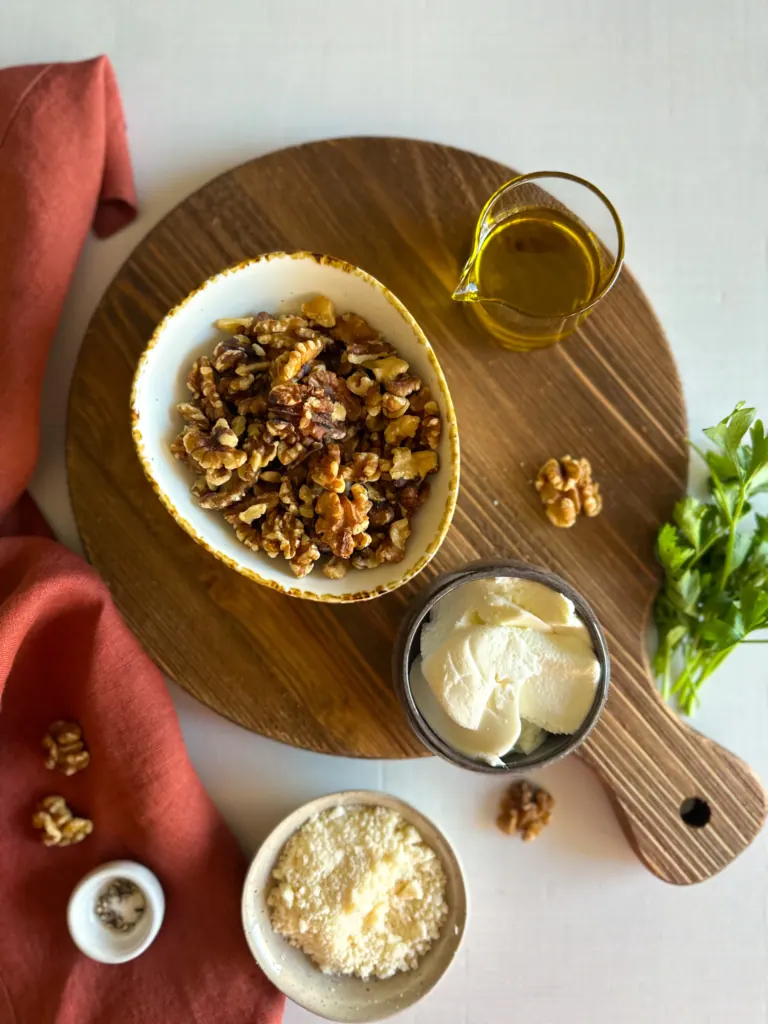
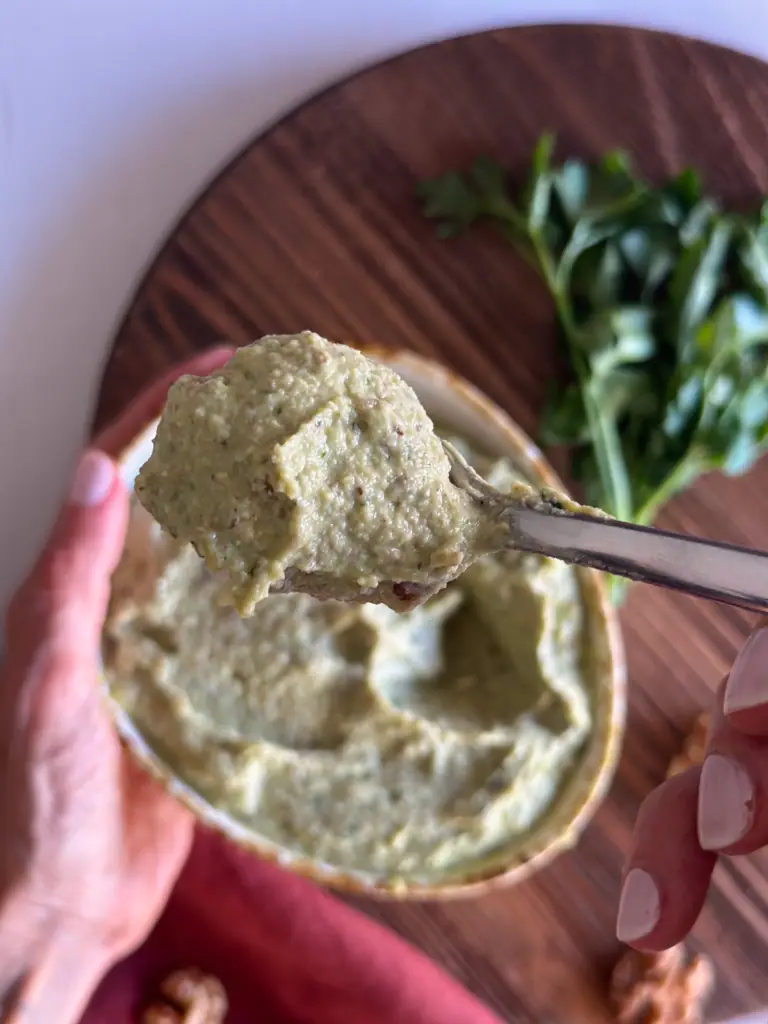
Fresh Parsley: Fresh Italian flat-leaf parsley gives this version freshness and a subtle herbaceous character. I used ½ cup, loosely chopped, which gives the finished sauce its pale green color.
NOTE: If you prefer a more traditional beige-gray walnut sauce, reduce the parsley considerably. One tablespoon will provide freshness without coloring the sauce as much, while omitting it almost entirely will allow the natural color of the walnuts to dominate.
Garlic Garlic should sit quietly in the background rather than overwhelm the walnuts. Half a small clove is enough for a delicate flavor; use a full clove if you prefer a more pronounced garlic note.
Extra-Virgin Olive Oil: I use 90 ml (6 tablespoons) of extra-virgin olive oil. It may seem generous, but it helps transform the ground walnuts and ricotta into a rich, spreadable sauce that works equally well for pasta and crostini. Choose a good-quality EVOO that isn’t excessively bitter or peppery so it doesn’t overpower the walnuts.
Pasta Cooking Water If you’re serving the walnut sauce with pasta, consider pasta water your final ingredient. The sauce is intentionally quite thick when first made. Starchy pasta water transforms it into a silky sauce that coats the pasta beautifully without requiring additional oil.
TIPS FOR THE BEST WALNUT SAUCE
- Use fresh walnuts. This is the most important tip. Walnuts are rich in natural oils and can become rancid relatively quickly. Taste them before using them.
- Boil the walnuts for 5-10 minutes and let them cool completely: this will remove bitterness, making them also tender.
- Don’t overprocess the walnuts. You want a creamy sauce with a little texture, not walnut butter.
- Be conservative with the garlic. Walnut sauce is delicate. Too much raw garlic can easily dominate it.
- Don’t thin the sauce if you’re storing it. Keep it thick and add pasta water only when you’re ready to serve it with pasta.
- Toss pasta off the heat. There is no need to cook the walnut sauce. High heat can affect the texture of the ricotta and Parmesan.
- Adjust the parsley to your preference. The ½ cup used here creates a noticeable fresh parsley flavor and pale green color. For a more walnut-forward sauce with a beige-gray appearance, reduce it to approximately 1 tablespoon.
- Keep the walnut skins for a grayer color. Unless your walnuts are particularly bitter, there is no need to peel them. Their skins contribute to the sauce’s natural earthy color.
VARIATIONS
More Traditional Ligurian-Inspired Walnut Sauce: Replace the ricotta with crustless bread soaked in milk and squeezed gently before blending. Use marjoram instead of parsley.
More Walnut-Forward: Reduce the parsley to 1 tablespoon. This allows both the flavor and natural gray-beige color of the walnuts to become more prominent.
With Marjoram: Replace some or all of the parsley with fresh marjoram. Its subtle, aromatic flavor is particularly appropriate with Ligurian-inspired dishes.
With Lemon: Add a small amount of finely grated lemon zest—not juice—for a brighter version. This is especially nice if serving the sauce with roasted vegetables or crostini.
Ingredients
- 145 g (about 1¼ cups) walnuts
- 120 g (about ½ cup) ricotta whole milk
- 35 g (about ⅓ cup)Parmigiano Reggiano freshly grated
- ½ cup Italian flat-leaf parsley roughly chopped
- ½ clove garlic
- 90 ml extra-virgin olive oil
- 1 tsp sea salt
- ¼ tsp black pepper Freshly ground
Instructions
- Boil the walnuts in water for 5-10 minutes. Let them cool completely before moving to the next steps.
- Add the walnuts, parsley and garlic to a food processor. Pulse until finely ground but still slightly textured.
- Add the ricotta and Parmigiano Reggiano. Pulse until combined.
- Gradually add the extra-virgin olive oil and process until the mixture becomes thick and creamy. Scrape down the sides of the food processor as needed.
- Season with salt and freshly ground black pepper. Taste and adjust the seasoning.
- For pasta: Cook your pasta until al dente and reserve at least 1 cup of pasta cooking water. Place the walnut sauce in a large bowl or skillet off the heat. Add the drained pasta and enough cooking water, a little at a time, to create a creamy sauce that coats the pasta.
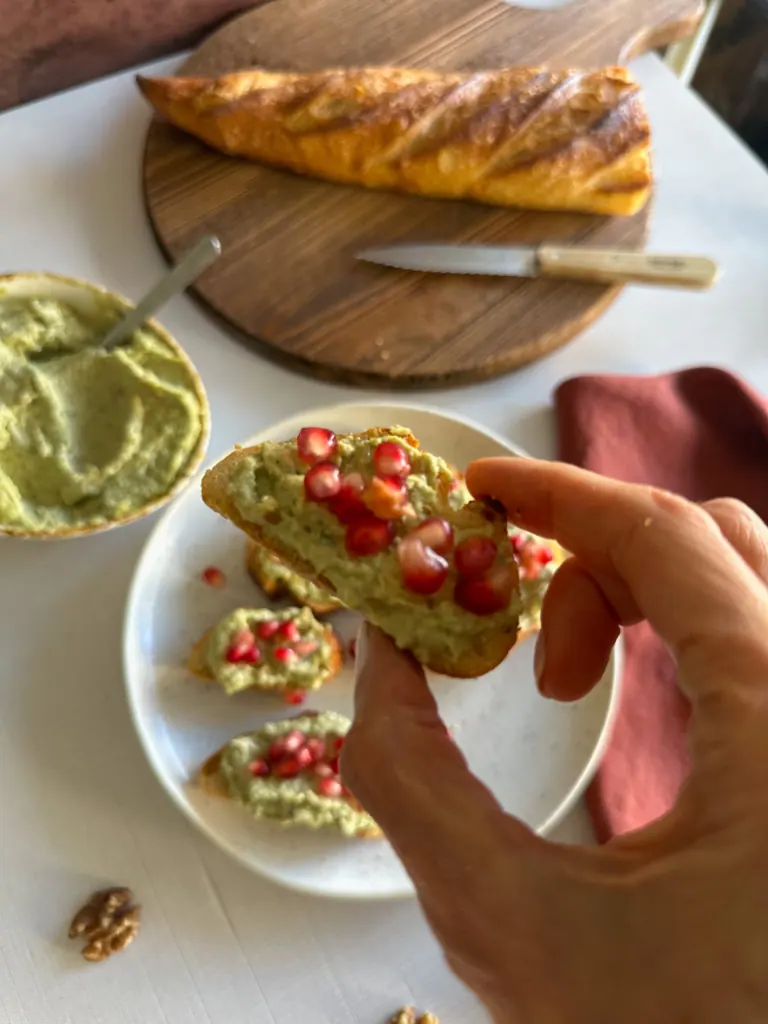
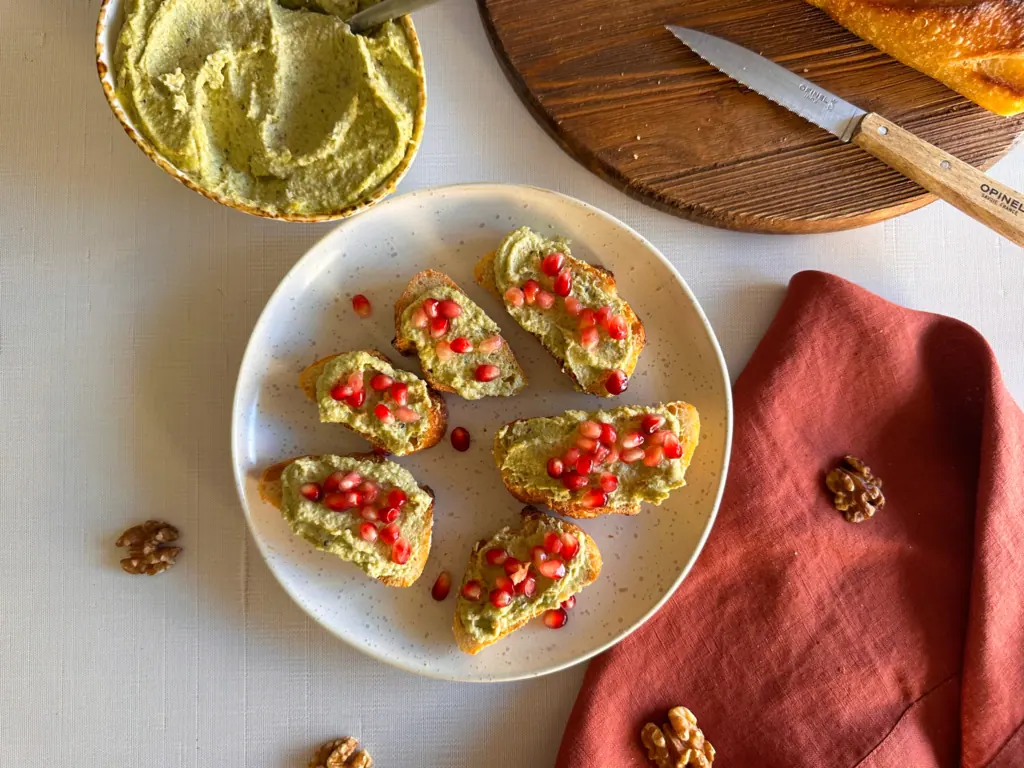
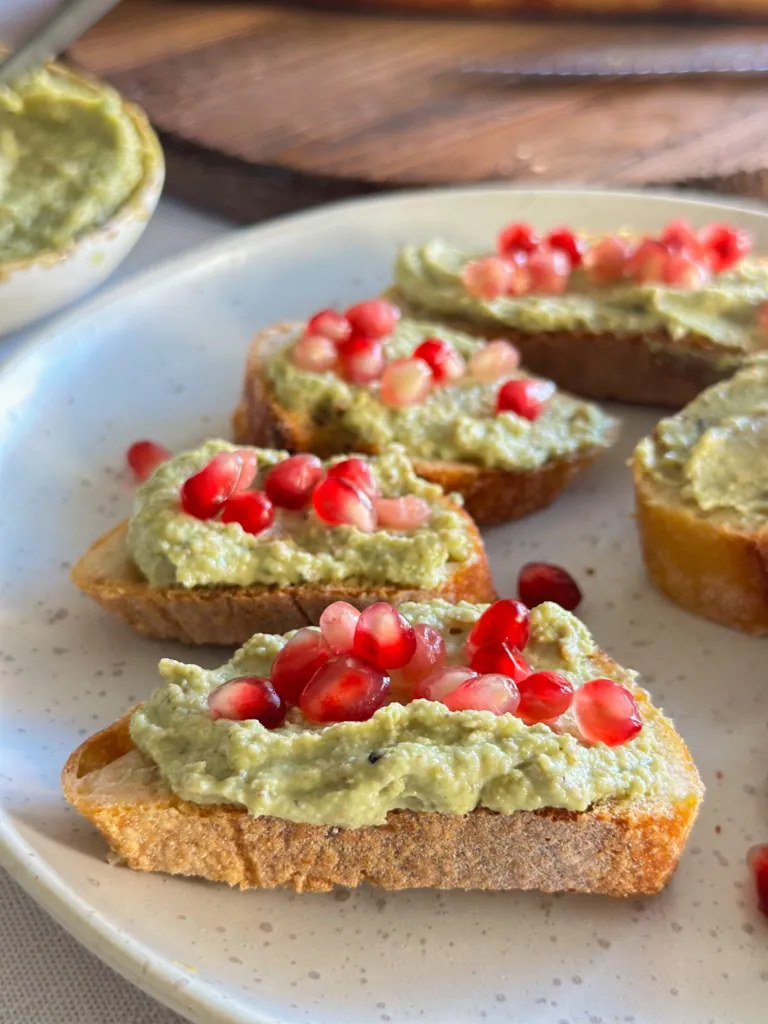
- For crostini or bruschetta: Use the sauce as is. Spread over toasted bread and finish with your preferred toppings. For a seasonal appetizer, top with fresh pomegranate seeds.
- Serve immediately with additional Parmesan, chopped walnuts or a drizzle of EVOO, if desired.
Notes
- Boiling the walnuts will remove the bitterness, make them softer reducing blending time and aiding a creamier texture.
- The sauce should be thick and spreadable straight from the food processor. Don’t add extra water unless you’re using it for pasta.
- For a more traditional beige-gray color and stronger walnut flavor, reduce the parsley from ½ cup to approximately 1 tablespoon.
- Keep the walnut skins unless the walnuts taste particularly bitter; they contribute to the sauce’s earthy color.
- Store in an airtight container in the refrigerator for up to 3 days.
Nutrition
FREQUENTLY ASKED QUESTIONS
Is salsa di noci the same as walnut pesto?
Not quite. Pesto generally relies on herbs, nuts, cheese and olive oil, while traditional Ligurian salsa di noci has a creamier base, often made with bread soaked in milk. Walnut sauce is generally softer and more delicate than pesto.
Do walnuts need to be toasted?
No. I prefer raw walnuts here because they retain a sweeter, more delicate flavor. Toasting them creates a deeper, more assertive walnut flavor that can change the character of the sauce.
Should I peel the walnuts?
It’s not necessary. Walnut skins can contribute some bitterness, but they also provide flavor and the characteristic earthy color of the sauce.
If your walnuts taste particularly bitter, you can blanch them briefly and rub away some of the skins.
Why did my walnut sauce turn green?
Fresh parsley releases chlorophyll as it is processed. Using ½ cup of parsley, as I did here, gives the sauce a pale olive-green hue.
For a more traditional beige-gray appearance, reduce the parsley to about 1 tablespoon or omit it and use a few leaves only as garnish.
Why is my walnut sauce so thick?
It should be.
The sauce is deliberately thick when made because this allows it to work as a spread for crostini and bruschetta.
When serving it with pasta, reserved pasta cooking water loosens the mixture and creates the final creamy consistency.
Can I make walnut sauce ahead?
Yes. Prepare it up to a day ahead and keep it refrigerated in an airtight container. For pasta, wait until serving to add pasta water.
Can I use Pecorino instead of Parmesan?
You can, but Pecorino Romano is saltier and more assertive. Use less initially and taste before adding additional salt.
Is walnut sauce gluten-free?
This version is naturally gluten-free, assuming all individual ingredients are certified or verified gluten-free where needed. Serve it with gluten-free pasta or vegetables if required.
HOW TO SERVE WALNUT SAUCE WITH PASTA
Walnut sauce is traditionally paired with filled pasta, but its creamy texture works beautifully with many shapes.
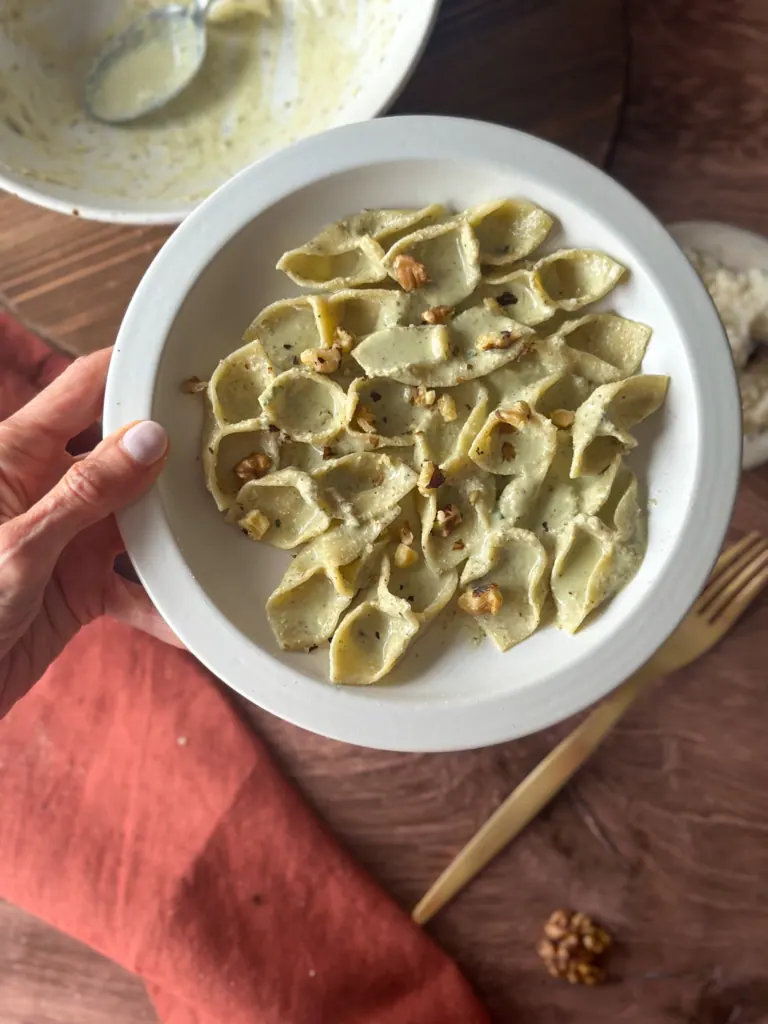
For this recipe, I made homemade barchette pasta. Barchette means “little boats” in Italian, and their curved shape is perfect for capturing the creamy walnut sauce.
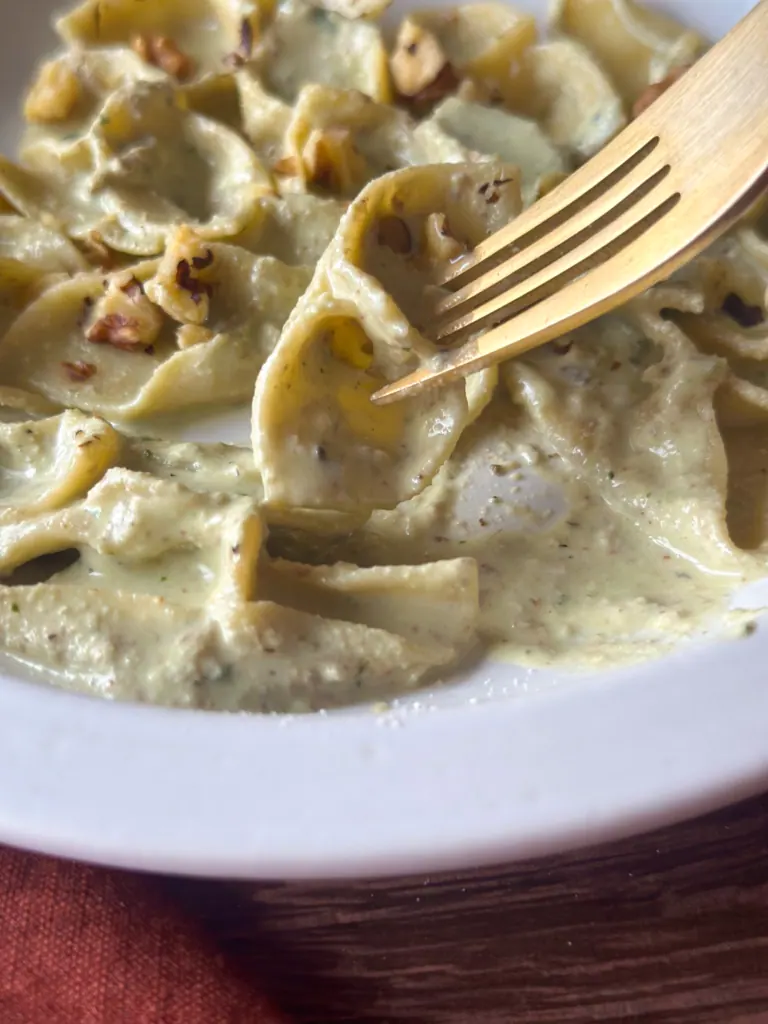
Cook the pasta until al dente, reserving about 1 cup of pasta water. Toss the pasta with the walnut sauce off the heat, adding pasta water a little at a time until the sauce is creamy and coats the pasta. Finish with Parmesan, chopped walnuts and a little parsley.
Other pasta shapes to try:
BEYOND PASTA: OTHER WAYS TO USE WALNUT SAUCE
The thick, creamy consistency of walnut sauce also makes it an excellent spread, dip or accompaniment.
- Crostini or bruschetta: Spread the sauce over toasted baguette, ciabatta or rustic bread. I topped mine with fresh pomegranate seeds, whose tartness balances the richness of the walnuts and ricotta. Perfect as an antipasto or for an Italian-style aperitivo.
- With roasted vegetables: Serve it alongside roasted butternut squash, cauliflower, carrots or zucchini. Finish with EVOO, fresh herbs and chopped walnuts.
- As a sandwich spread: Use it instead of pesto on focaccia, ciabatta or sourdough with grilled vegetables, roasted peppers, arugula or tomatoes.
- On an aperitivo board: Serve it as a dip with crostini, breadsticks and vegetables, finished with a drizzle of EVOO and chopped walnuts.
- Tip: If serving it on crostini or bruschetta, assemble just before serving so the bread stays crisp.
HOW TO STORE WALNUT SAUCE
Store homemade walnut sauce in an airtight container in the refrigerator for up to 3 days. Because walnuts and olive oil can absorb refrigerator aromas, make sure the container is tightly sealed.
MY TIP: The sauce will become firmer when chilled. If you’re serving it as a spread, let it sit at room temperature briefly before serving. For pasta, don’t try to reheat the sauce by itself. Instead, loosen it with warm pasta cooking water and toss it with freshly cooked pasta off the heat.
DO NOT FREEZE IT! It can change the texture of ricotta.
BEST WINE PAIRING FOR WALNUT SAUCE
A creamy walnut sauce calls for a white wine with enough freshness to balance the richness of the walnuts, ricotta and Parmesan.
- Vermentino is a particularly natural choice and keeps the pairing connected to Liguria. Its freshness and subtle herbal notes complement both the walnuts and parsley. It is great if you plan to serve the walnut sauce over crostini with waluts, or wth roasted vegetables.
- A Gavi also works beautifully, while Soave Classico is another excellent option—the wine’s characteristic mineral and almond-like notes are particularly good with walnuts.
MORE ITALIAN SAUCES AND SPREADS FOR YOU
CLASSIC PESTO: This sauce is typically served with trofie, which is homemade pasta, or with trenette, which is a sort of long dry pasta. In Liguria, this dish always comes with green beans and potatoes boiled together with the pasta. T
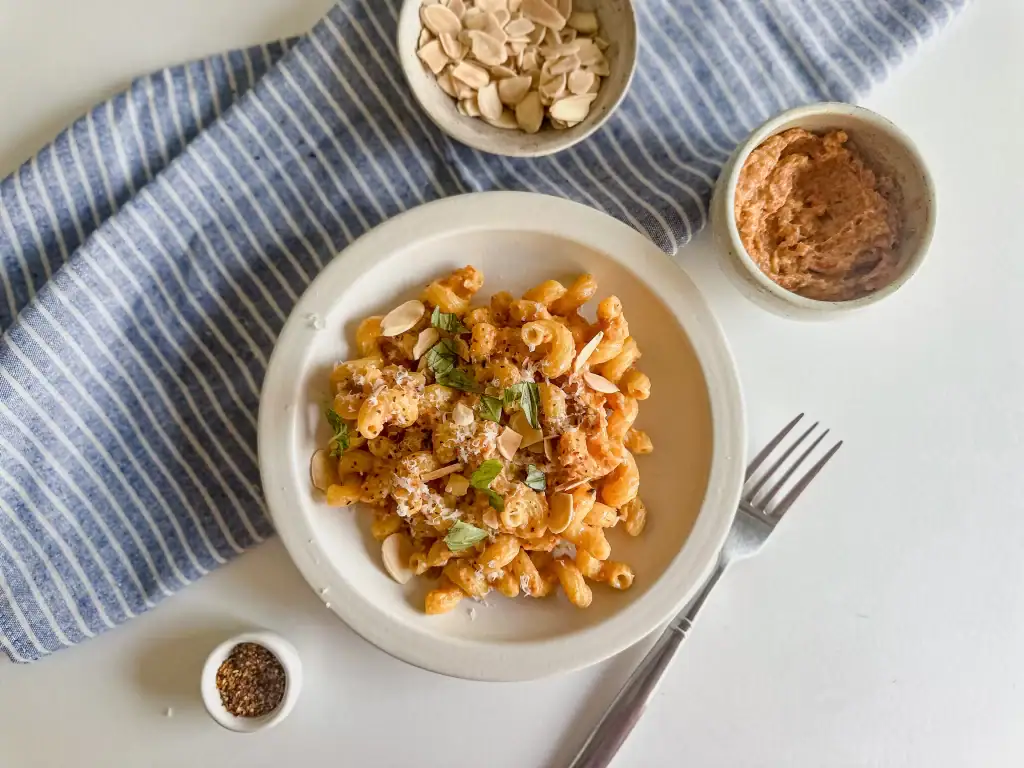
RED PEPPER PESTO: Red Pepper Pesto is spicy and creamy thanks to the ricotta and almonds, with some notes of sharpness given by the pecorino and the sundried tomatoes. It is a rich pesto with bold flavor that develops heat slowly.

CANNELLINI DIP::This white bean crostini is a great Italian appetizer to enjoy all year long! You will need only 6 ingredients and 25 minutes of time and you can also make it ahead. Quick and easy!
CARROT TOP PESTO: This bright green color pesto is a bit earthy. The addition of parmesan and nuts gives it a creamy texture and the lemon adds a zesty fresh flavor. A delicious must-try for this season!


✨ This Walnut Sauce (Salsa di Noci) is the perfect cream sauce to accompany homemade egg pasta, or to serve as apetizer over crostini or as part of a spread. I would love to connect with you through my recipe and I will be very appreciative of your comments! If you make this recipe make sure to tag me on Instagram @Italian_kitchen_confessions. To get more ideas follow me on Pinterest.✨


