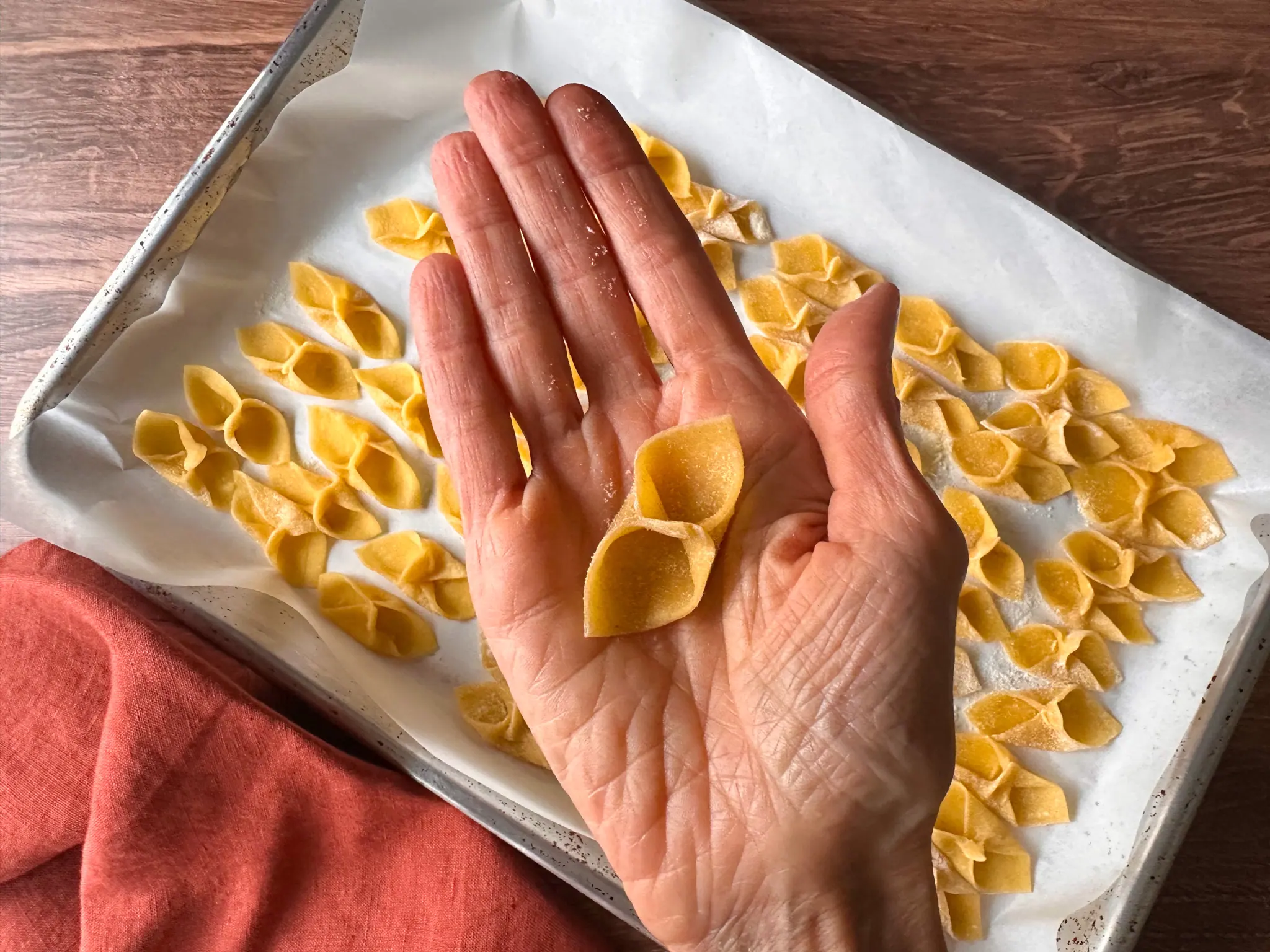
Homemade barchette pasta are delicate Italian “little boats” shaped by hand from fresh egg pasta dough. This dough is enriched because it is made with whole eggs and extra yolks. The result is a dough that is supple enough to shape yet structured enough to create the characteristic open hollows that catch sauce beautifully.
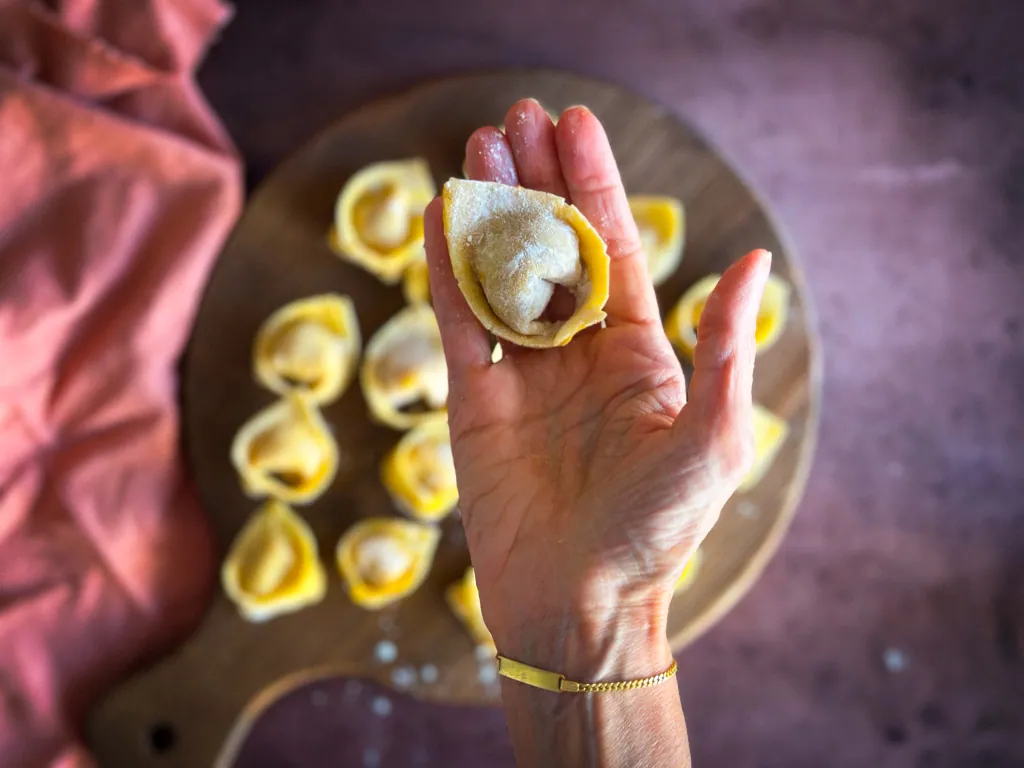
There is something endlessly fascinating about handmade pasta. Starting with just flour and eggs, you can create hundreds of shapes, each one designed not only to look different but also to interact with sauce in its own way. These homemade barchette are a perfect example. Barchette means “little boats” in Italian, and their shape explains the name immediately. Each piece of pasta is pinched in the center, creating two open, curved hollows on either side.
Those little hollows aren’t only beautiful. They are perfect for capturing sauce. For the pasta, I used an enriched egg dough made with 2 whole eggs and 2 additional egg yolks. It gives me exactly the balance I want for this shape: enough elasticity and structure to roll and pinch the pasta, with additional richness and a beautiful golden color from the extra yolks.
If you enjoy making pasta by hand, this is a wonderful shape to add to your repertoire.
WHAT ARE BARCHETTE?
Barchetta means “little boat” in Italian, while barchette is the plural.
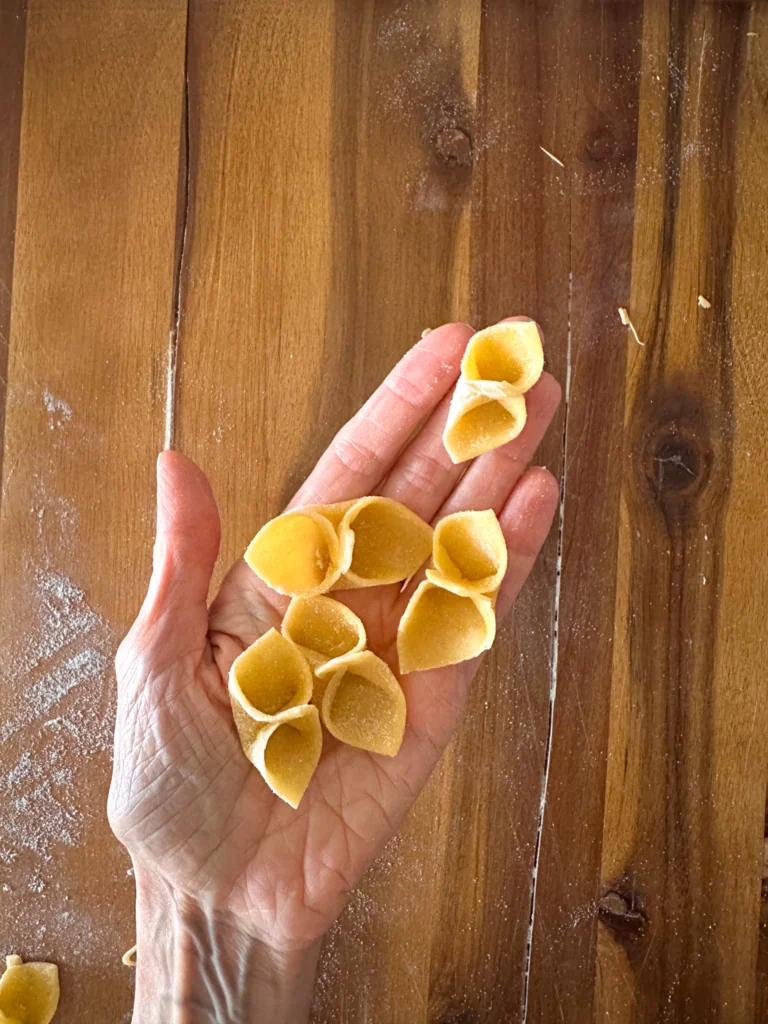
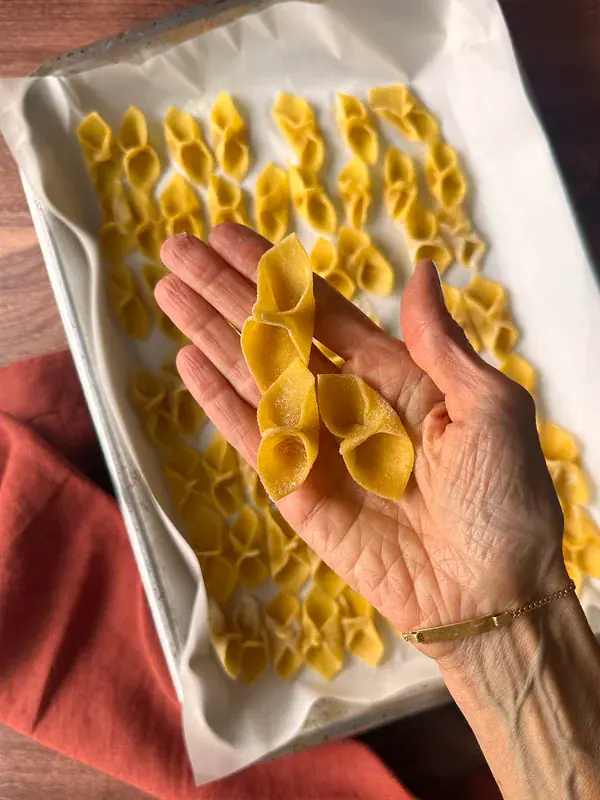
The name is descriptive: each piece resembles two tiny open boats joined together at the center. Unlike pasta shapes that are completely flat or tightly closed, barchette have open, curved sides that create small pockets for sauce.
That makes them particularly good with creamy or textured sauces. Pesto, finely chopped vegetables, mushrooms, grated cheese and nuts can all settle naturally into the hollows. And despite their distinctive appearance, you don’t need a special pasta tool to make them. Once you’ve rolled the dough, the final shape is created entirely with your fingers.

WHY I USE AN ENRICHED EGG DOUGH FOR BARCHETTE
My classic fresh pasta dough usually follows a very simple formula of approximately one whole egg for every 100 grams of flour. For these barchette, I wanted a slightly richer dough while maintaining enough elasticity to create the shape.
I use 2 whole eggs plus 2 additional egg yolks. It’s a small change, but it creates a lovely dough for handmade shapes.
- Whole eggs provide moisture and structure
- Egg whites contain a significant amount of water as well as protein. They help hydrate the flour and contribute structure to the finished pasta.
- For a shape like barchette, that’s important. The dough needs to be flexible enough to bend and pinch without breaking.
- Extra yolks add richness
- Egg yolks bring fat and emulsifiers to the dough, creating a richer flavor and more supple texture.
- They also give fresh pasta its gorgeous golden color.
- The combination gives you balance
- The goal isn’t an extremely soft dough.
- For shaped pasta, I want something firm but pliable: easy enough to roll and curve with my fingers, but structured enough that those little hollows remain visible after cooking.
- The combination of whole eggs and additional yolks gives me that balance.
INGREDIENTS FOR HOMEMADE LITTLE BOATS PASTA SHAPE
The ingredient list is wonderfully short, which is one of the reasons homemade pasta is so satisfying.
300 g 00 flour: Finely milled Italian 00 flour produces a smooth dough that is easy to knead and roll. Different brands of flour absorb moisture differently, so use the recipe as your guide but always pay attention to how the dough actually feels.
2 large whole eggs: The whole eggs provide most of the moisture needed to hydrate the flour while contributing to the structure of the dough.
2 large egg yolks: The additional yolks enrich the pasta and give it a deeper golden color and a beautifully supple texture.
Semolina flour, for dusting: Use a small amount of semolina to prevent the shaped pasta from sticking to the tray.
HOW TO MAKE BARCHETTE PASTA
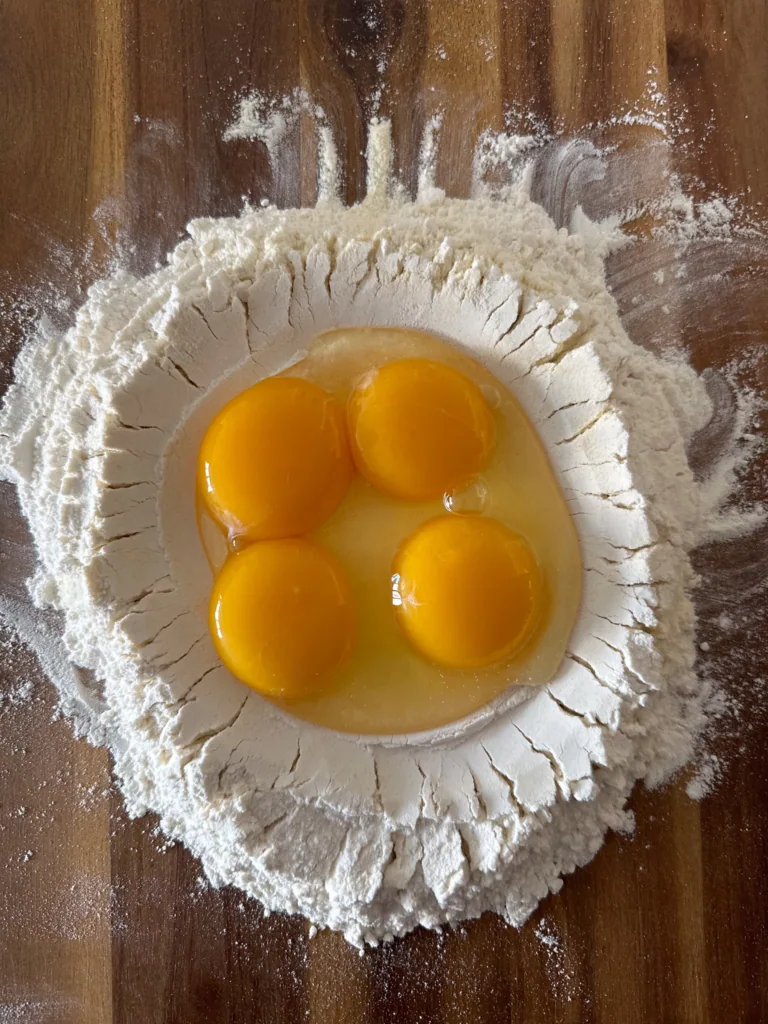
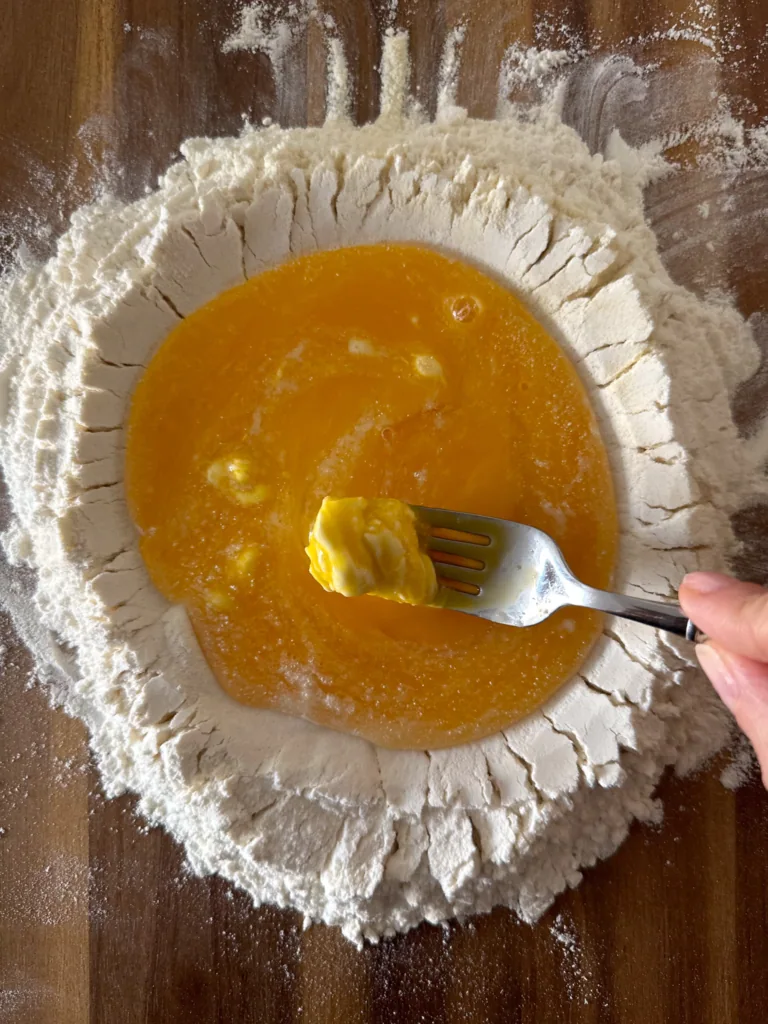
Place the flour on a clean work surface and create a large well in the center. Add the 2 whole eggs and 2 egg yolks. Using a fork, gently beat the eggs together.
Begin incorporating a little flour at a time from the inside of the well, continuing until the egg mixture becomes thick enough to work with your hands. Bring everything together into a rough dough.
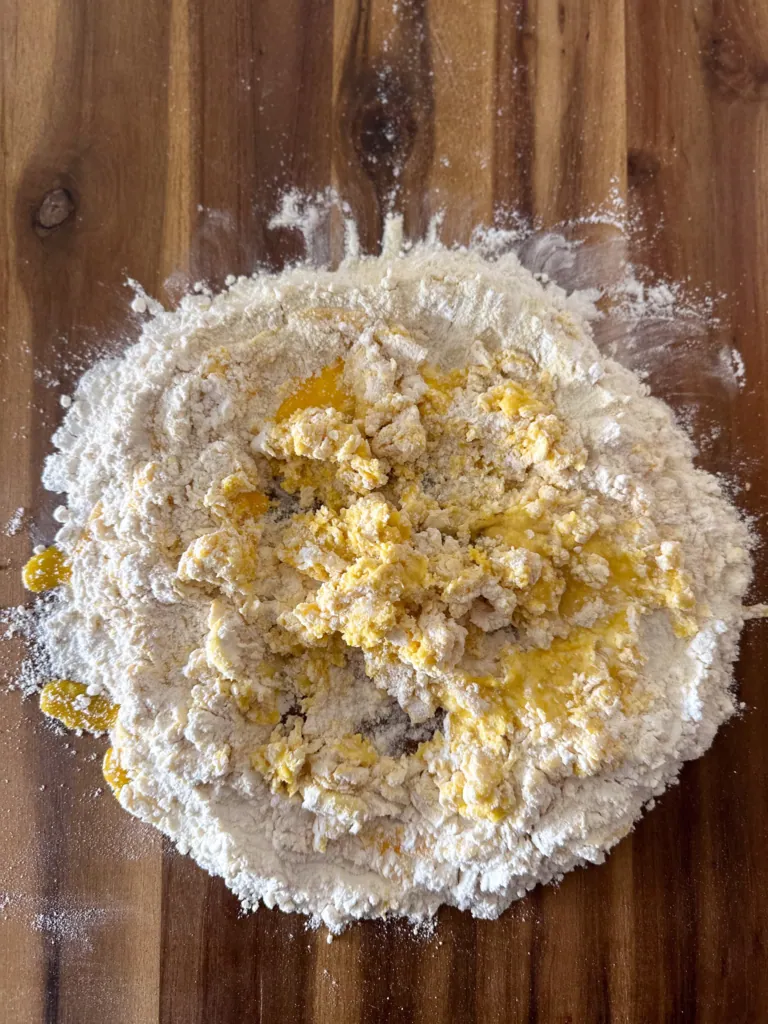
Knead it for 8-10 minutes until a finger pressed into the dough springs back. Rest the dough for 30 minutes covered in plastic wrap. Resting is essential.It gives the flour time to fully hydrate and allows the gluten to relax, making the dough considerably easier to roll. Divide the dough into two or four portions . Cover the part you will not roll as of yet, to keep it moist, and use a rolling pin first to flatten the dough.
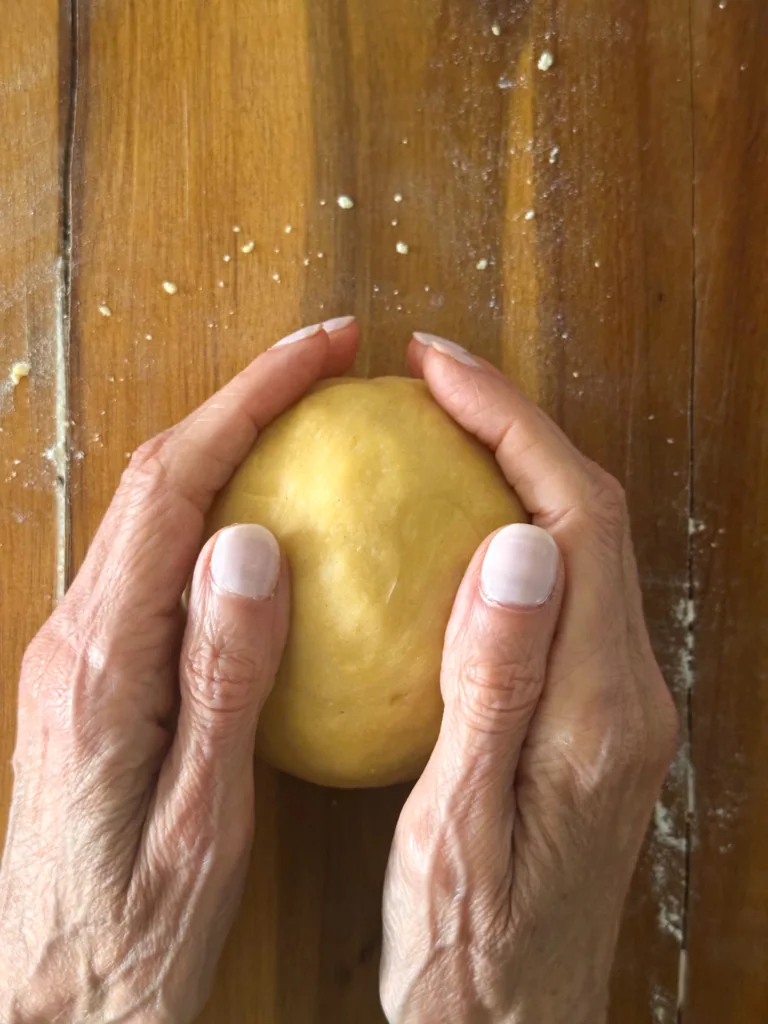
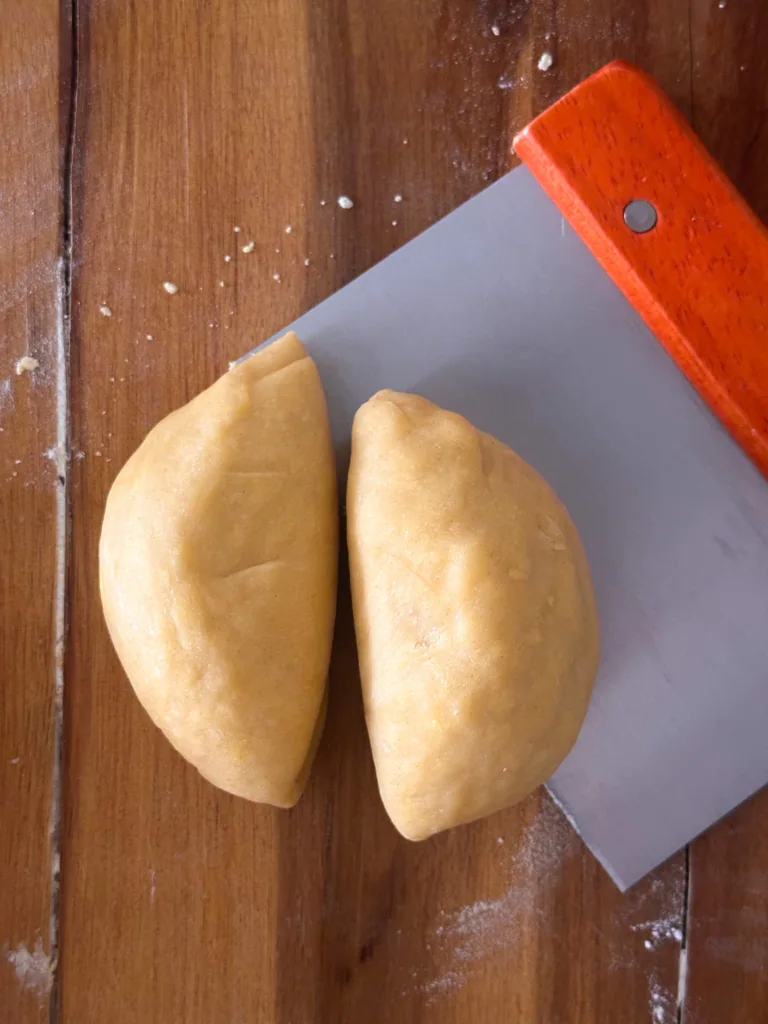
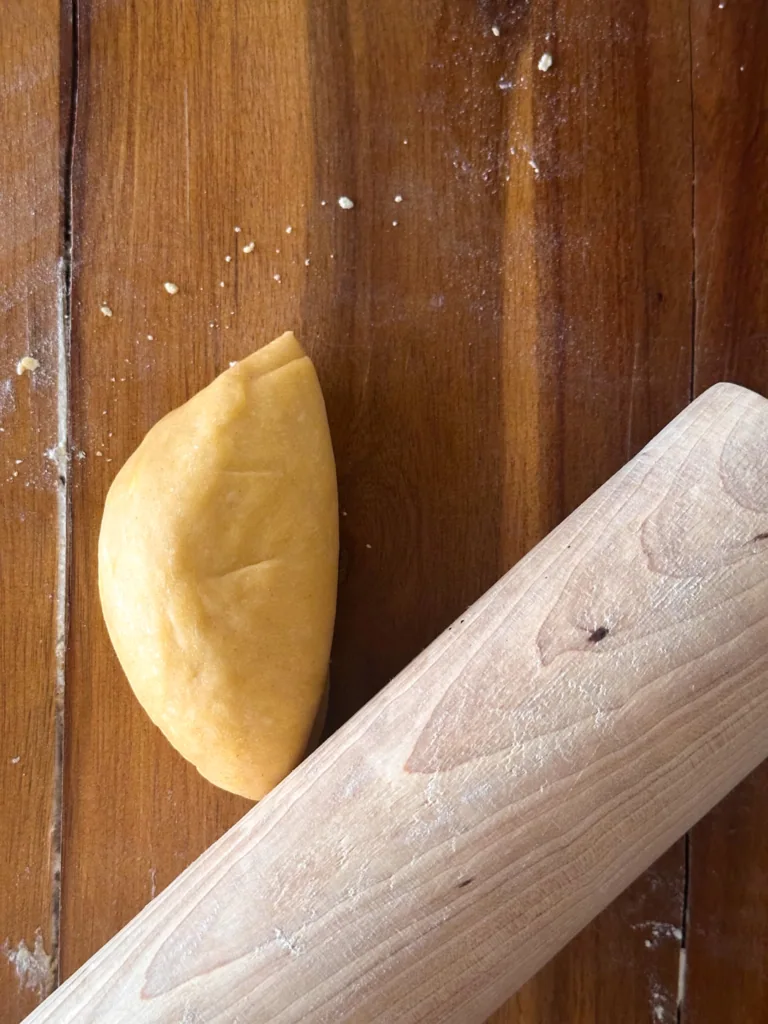
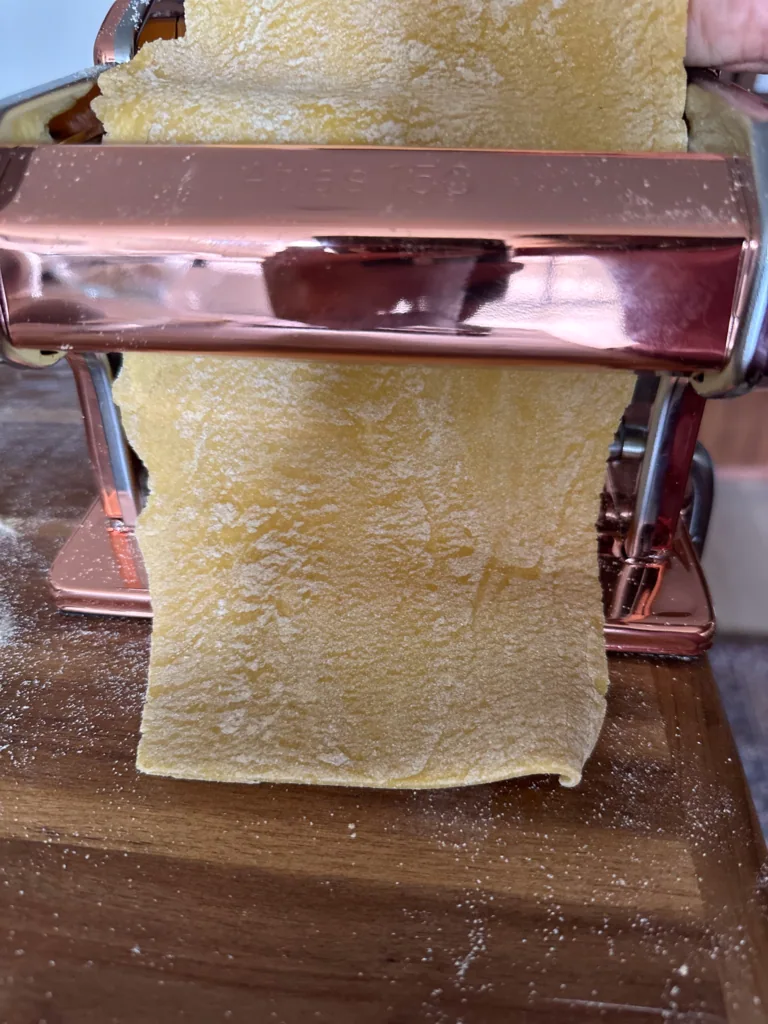
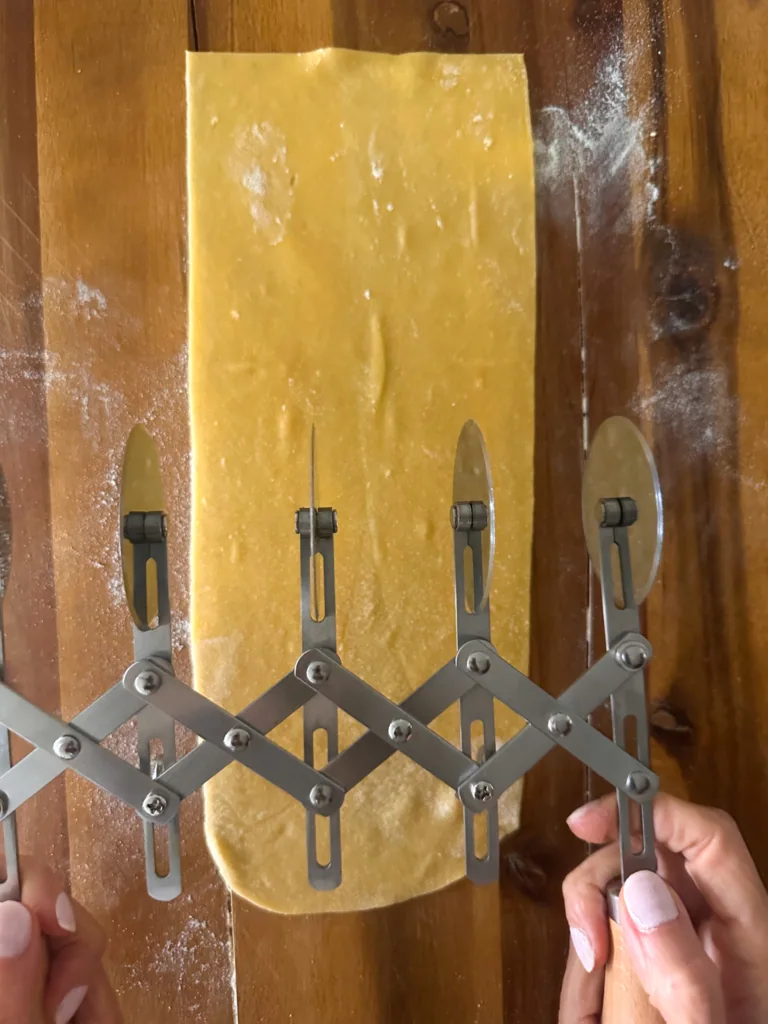
Now roll each one through a pasta machine into a thin but sturdy sheet. Keep the remaining dough covered with plastic wrap or kitchen linen while you work. For barchette, don’t roll the pasta paper-thin. The dough needs enough structure to maintain those open, curved sides. I recommend 5 in the Marcato Atlas pasta machine. Cut the pasta sheet into small rectangles. ( 2.5 inch x 2 inch), you can use a knife, a pizza cutter or a wheel pasta cutter.
HOW TO SHAPE BARCHETTE
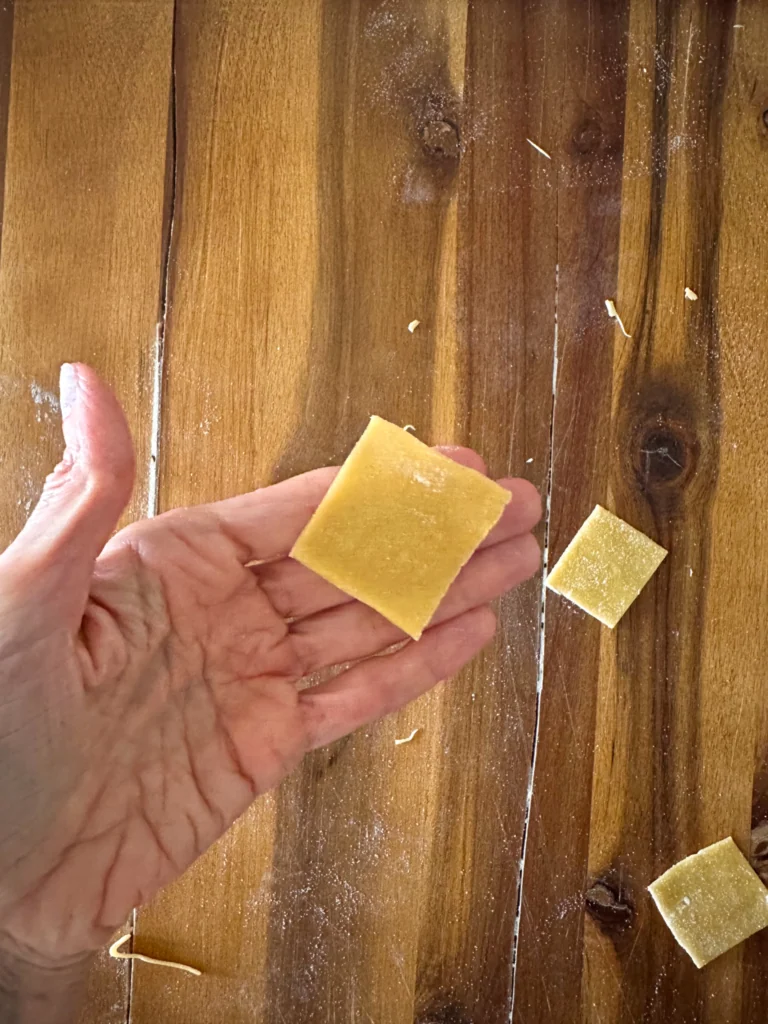
Take one rectangle and gently curve the two short sides upward to begin creating two shallow hollows.
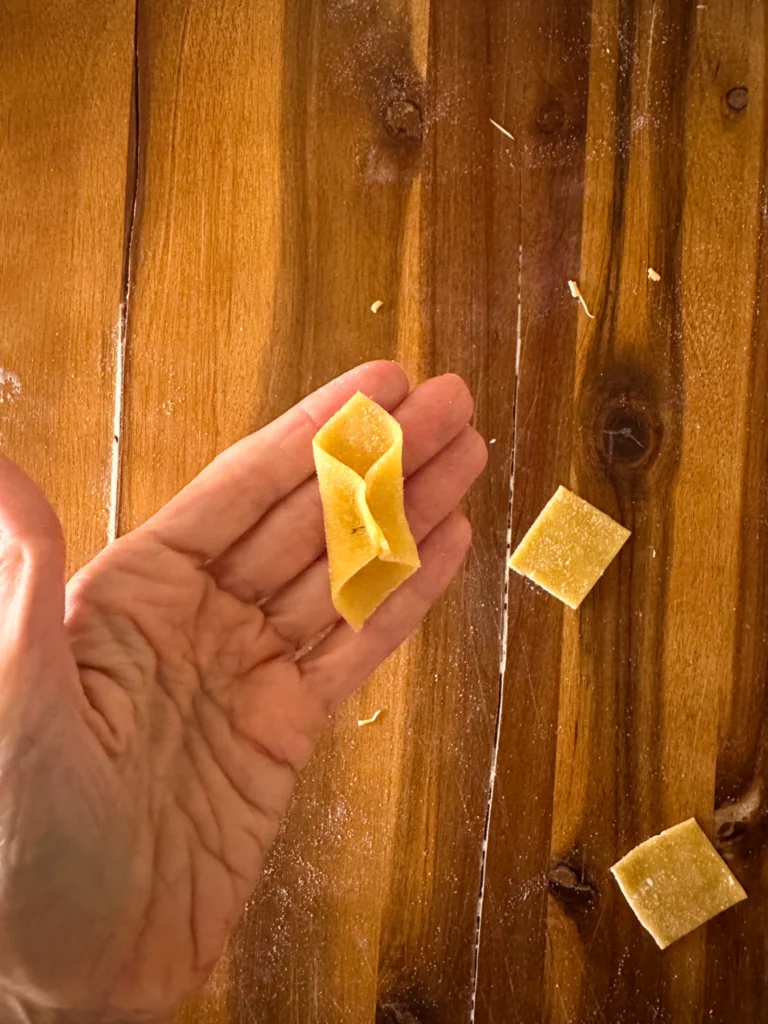
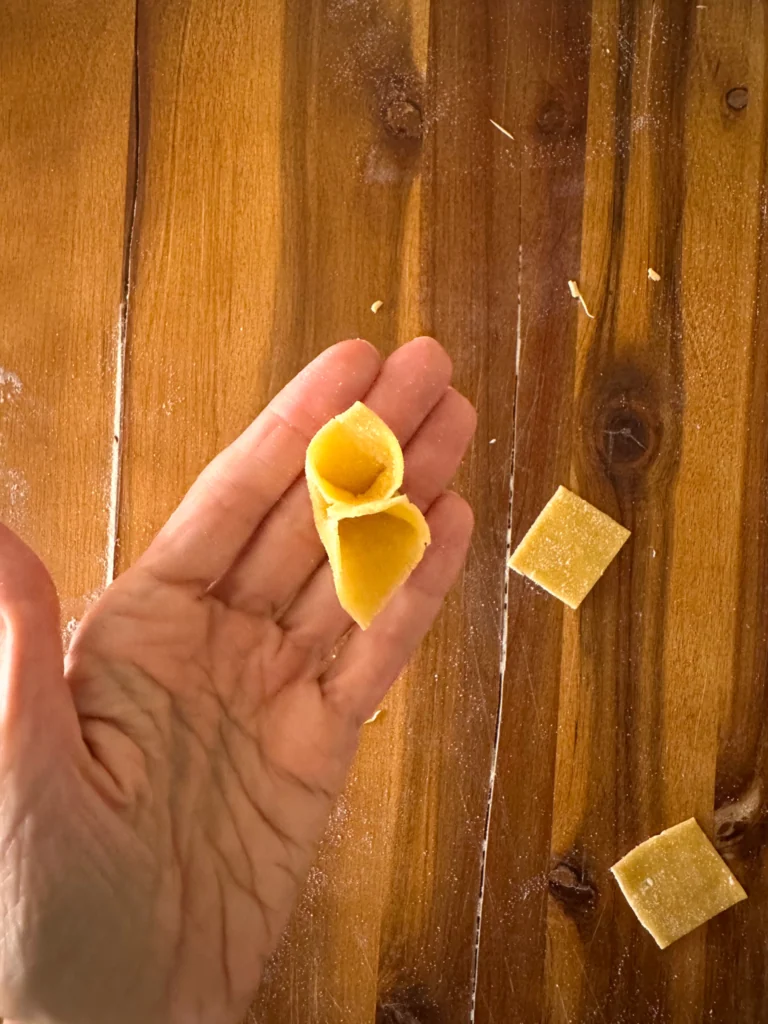
Bring the center of the two long edges toward one another and pinch them firmly together in the middle.
Use your fingers to keep the two sides open and rounded, creating the characteristic two little boats joined at the center. Place on a semolina-dusted tray while you shape the remaining pasta.
TIP: Shape the pasta while the dough is still supple. If it becomes too dry, it will be difficult to seal.
HOW TO COOK BARCHETTE
Cook the barchette in generously salted boiling water for about 3–5 minutes, depending on their thickness. Transfer them directly to the sauce with a slotted spoon, adding a little pasta water as needed. Toss gently to preserve their shape.
TIP: make sure the water is at gentle boiling, as little boats like all homemade pasta are more delicate.
TIPS FOR PERFECT HOMEMADE BARCHETTE
- Keep the dough firm: A very soft dough may feel easy to work with, but the finished pasta won’t have as much definition.
- Don’t roll the dough too thin: Barchette need some structure. You want delicate pasta, but not a paper-thin sheet.
- Cut and shape as you go.: Don’t cut dozens of rectangles and leave them exposed. Fresh pasta dries quickly.The most important thing is to work while the pasta is still supple. If you roll several sheets at once and leave them exposed while you work, the surface will begin to dry. Once that happens, it becomes much harder to create a secure pinch in the center. TIP: If a piece has become slightly dry and doesn’t want to seal, touch the center with a barely damp fingertip before pinching.
- Pinch the center firmly: This is what holds the entire shape together during cooking.
- Keep flour away from the pinch: Too much flour between the two surfaces can prevent them from sticking together.
- Keep the sides open: Don’t squeeze or flatten the two curved sections. Those hollows are the defining feature of barchette.
- Cook at a gentle boil: You don’t need violently boiling water for delicate handmade pasta.
Ingredients
- 300 gr 00 flour
- 2 egg whole
- 2 yolk egg
- 5 tbsp durum wheat semolina, to dust the board surface
Instructions
- Place the 00 flour on a clean work surface and create a large well in the center.
- Add the whole eggs and egg yolks to the well and gently beat them together with a fork. Gradually draw flour from the inside edge of the well into the eggs. Continue until the mixture becomes thick.
- Bring the mixture together with your hands to form a rough dough.
- Knead for 8–10 minutes, until the dough is smooth, firm and pliable. If it remains excessively dry after several minutes of kneading, lightly dampen your fingertips and continue kneading.
- Wrap the dough tightly and allow it to rest at room temperature for 30 minutes.
- Divide the rested dough into four portions. Keep the unused dough covered.
- Flatten one portion and pass it through the widest setting of a pasta machine. Fold and roll again as necessary until smooth. Continue rolling through progressively thinner settings until you have a thin but sturdy pasta sheet. Do not roll it paper-thin. ( See notes)
- Cut the sheet into small rectangles. Working with one rectangle at a time, gently curve the two short sides upward to begin forming two shallow hollows.
- Bring the center of the two long edges together and pinch firmly in the middle. Gently open and round the two sides with your fingertips to create two little boats joined at the center.
- Place the shaped barchette on a tray lightly dusted with semolina and repeat with the remaining dough.
- Bring a large pot of generously salted water to a gentle boil. Add the barchette and cook for approximately 3–5 minutes, tasting to determine doneness.
- Transfer the pasta directly to your prepared sauce with a slotted spoon or spider. Toss gently and serve immediately.
Notes
- Dough consistency: The pasta dough should be firm but pliable, never sticky.
- Keep it covered: Work with one portion at a time so the remaining dough doesn’t dry out.
- Rolling: Don’t roll the dough too thin. The barchette need enough structure to maintain their open shape.I advise to roll up to 5 on the Marcato Atlas rolling pasta machine.
- Shaping: Pinch the center firmly, but keep the two sides rounded and open.
- If the dough won’t seal: Lightly dampen your fingertip and touch the center before pinching.
- Freezing: Freeze shaped barchette in a single layer until firm, then transfer them to an airtight container. Cook directly from frozen.
Nutrition
FREQUENTLY ASKED QUESTIONS
What does barchette mean in Italian?
Barchette means “little boats.” The singular is barchetta. The name refers to the curved, open shape of the pasta.
How are barchette shaped?
A small rectangle of fresh pasta is curved to create two open sides, then the center of the long edges is pinched firmly together. This creates two little boat-like hollows joined in the middle.
Why do you use extra egg yolks?
The extra yolks enrich the pasta, adding flavor, color and a supple texture. I use them together with whole eggs so the dough also has the moisture and structure necessary for rolling and shaping.
Can I make barchette with regular egg pasta dough?
Yes. A traditional whole-egg dough can also be used.
I particularly like the enriched dough here because of its color, richness and texture.
Can I make barchette without a pasta machine?
Absolutely. Roll the dough evenly with a rolling pin. Just remember not to roll it excessively thin, because the barchette need enough structure to retain their shape.
Why are my barchette opening while cooking?
The center probably wasn’t sealed securely enough, the dough may have dried before shaping, or there may have been too much flour between the surfaces. Pinch the center firmly while the pasta is still supple.
What if the pasta won’t stick together?
The surface may have dried slightly. Touch the area you’re going to pinch with a barely damp fingertip, then press it together firmly.
How long do fresh barchette take to cook?
Start checking after approximately 3 minutes. The exact time will depend on the thickness of your pasta and how dry it is when it goes into the water.
Can I freeze barchette?
Yes. Freeze them first in a single layer on a tray and then transfer them to a freezer-safe container. Cook them directly from frozen.
WHICH SAUCE IS BEST FOR BARCHETTE (LITTLE BOATS) PASTA
Pasta shape and sauce should work together.That is particularly evident with barchette. When cooked, the pasta softens while retaining its curved shape. The two open hollows become little vessels for whatever sauce you’re serving.
Rather than simply coating the outside of the pasta, the sauce collects inside the barchette, giving you a little more with every bite. I particularly like them with sauces that are creamy or that contain small pieces of ingredients that can find their way inside the little boats.
A few ideas:
- The combination of fresh egg pasta and walnuts is particularly delicious during fall. My walnut sauce combines walnuts, ricotta, Parmesan, parsley, garlic and extra-virgin olive oil into a creamy sauce that is rich without being excessively heavy.
- basil pesto
- mushroom and leek sauce
- peas and tiny bits of prosciutto
- brown butter, sage and Parmesan
I would avoid an extremely heavy sauce that completely covers the pasta. Barchette are beautiful, and part of the pleasure of making them is being able to see the shape on the plate.
HOW TO COOK FRESH BARCHETTE
Bring a large pot of water to a boil and season generously with salt. Once the water is boiling, add the barchette and stir gently so they don’t stick together.
Fresh pasta cooks much more quickly than dried pasta. The exact cooking time depends on the thickness of your pasta and how long it has been resting, so begin checking it after approximately 3 minutes.
Taste a piece. The pasta should be tender but still have a pleasant bite. Rather than draining it completely in a colander, I like to transfer delicate handmade pasta directly into the sauce using a spider or slotted spoon. That also brings a little pasta water along with it, helping the sauce emulsify.
Toss very gently so you don’t damage the shape.
HOW TO STORE HOMEMADE BARCHETTE
Fresh barchette are best cooked soon after shaping. For longer storage, arrange them in a single layer on a semolina-dusted tray and freeze until firm, then transfer to an airtight container or freezer bag.
Cook them directly from frozen without thawing, adding a little extra cooking time.
WHAT TO SERVE WITH BARCHETTE
With a rich walnut sauce, I would keep the rest of the meal simple.
A crisp seasonal salad makes an excellent starter. You could also serve sautéed greens or roasted vegetables alongside the pasta.
Let the handmade pasta be the star.
WINE PAIRING
For barchette with walnut sauce, my choices are:
- Soave Classico from Veneto: a clean, light white wine that will complement well the pasta. Garganega’s freshness works beautifully against the richness of walnuts, ricotta and Parmesan, while its subtle almond character naturally complements the nuttiness of the sauce.
- A Gavi from Piedmont is another lovely option if you prefer a crisper, more mineral white.
- For something slightly rounder and fuller, try a Lugana: its mineral-rich soil gives the wine its distinct structure and salinity.
MORE PASTA RECIPES FOR YOU
These are pasta shapes that you can make from a square of pasta:
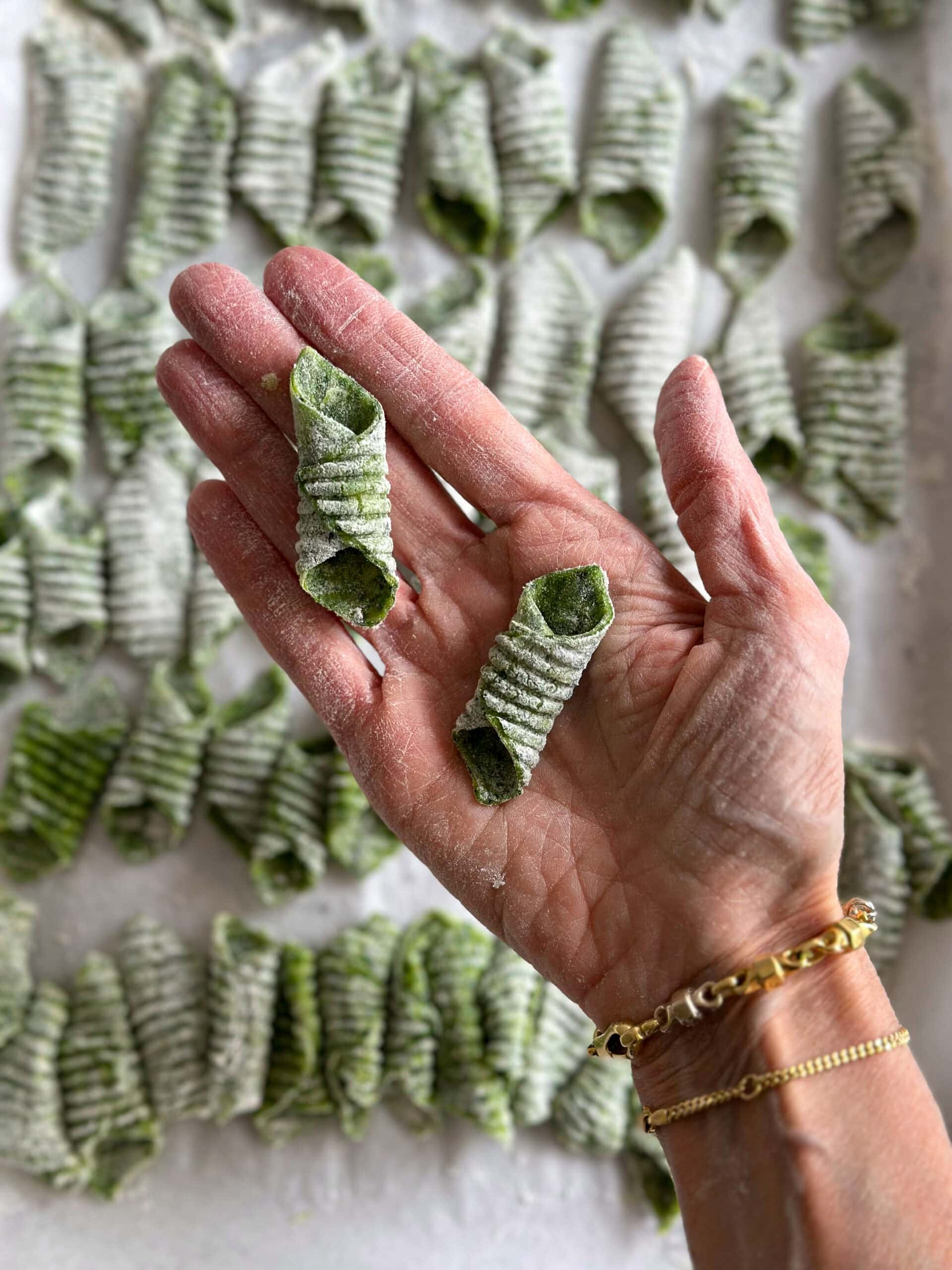
Garganelli: Garganelli is an egg-based pasta typical from Emilia Romagna. Learn how to make this shape using a spinach fresh-egg dough and bring the spring to your table!
Rigatoni:Learn how to make homemade rigatoni from scratch using fresh egg pasta dough and a gnocchi board. These beautiful ridged pasta tubes are easier to shape by hand than you might think.

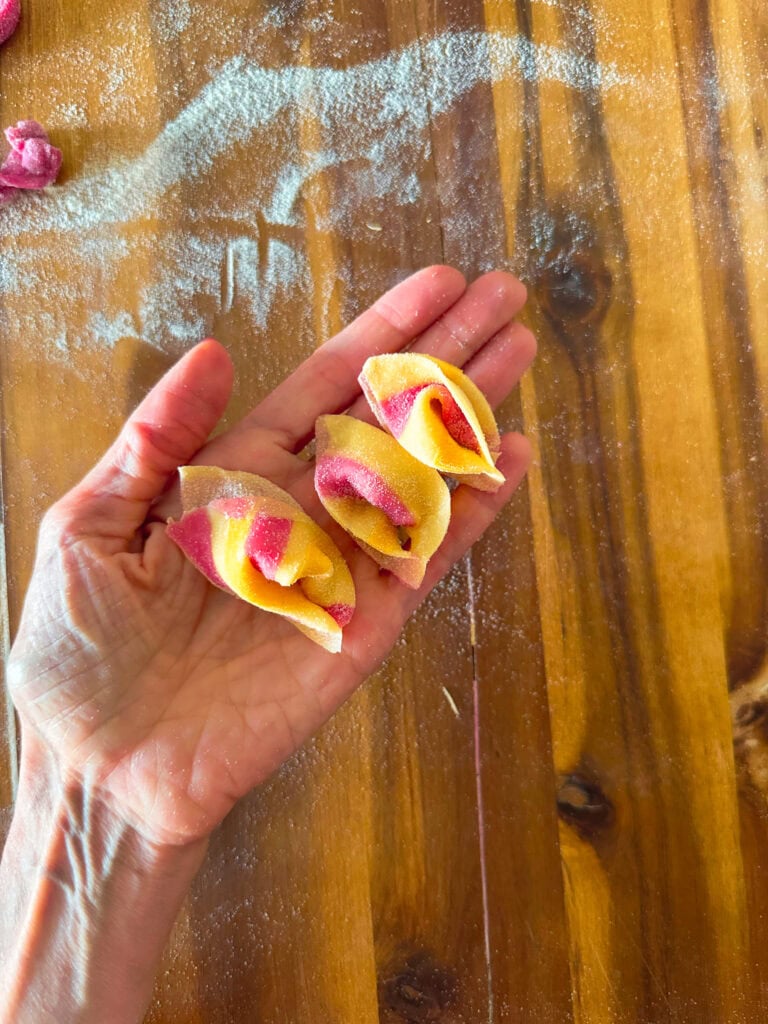
Sorpresine (Little Surprises): these delicate folded pasta parcels made from striped, naturally colored doughs in yellow, orange & red. Tossed in a creamy mushroom sauce for the perfect fall dish!
Tortelli di Zucca: these are homemade pumpkin tortelli from Mantua, Italy. Sweet roasted pumpkin, amaretti, and Parmesan wrapped in delicate handmade pasta, tossed in butter and sage. The perfect homemade filled pasta for cozy autumn evenings.
✨ These homemade barchette pasta (little boats pasta) is a new recipe, ideal for the more creamy rich sauches that welcome fall. I would love to connect with you through my recipe and I will be very appreciative of your comments! If you make this recipe make sure to tag me on Instagram @Italian_kitchen_confessions. To get more ideas follow me on Pinterest.✨


