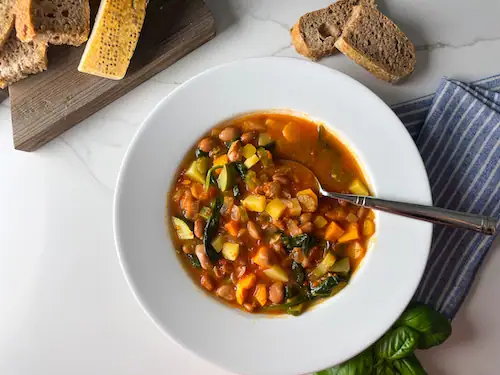
This is the best Italian minestrone soup recipe: a classic veggie-and-bean soup with a soffritto base, tomatoes, and spinach, finished with Parmesan rind for extra depth. It’s hearty, nourishing, and ready in about 20 minutes prep + 45 minutes cook.
Classic Italian Minestrone Soup is a traditional soup that every family in Italy makes differently, but the common ingredients are different vegetables, beans and sometimes pasta. This is the recipe you need when you want a comforting meal that will leave you nourished and satisfied.
Minestrone is one of those light yet hearty recipe that is the perfect example of cucina povera, where you use humble ingredients that will nourishes your body and soul.
I usually cook minestrone soup in large batches and freeze individual portions to eat when I need a food that reminds of home the most. This authentic Italian minestrone soup and I must confess that I learned the secret of a good minestrone from my nonna El sa Elsa ( nonna in Italian means grandmother). My grandma lived until the age of 96 and probably eating minestrone twice a week has been her secret for longevity.
The main ingredients in my grandmother’s minestrone are onions, potatoes, sweet potatoes, carrots, spinach, zucchini, beans and sometimes some rice or small pasta. When I was a kid, I spent part of the summer at my grandparents’ house. Making minestrone – from boiling it to freezing it for the winter months – was an all-day process. Although minestrone was not my favorite, I always enjoyed making the soup and spending time with them.
Why you will love this recipe
- Great all time of year and easy customizable with different seasonal vegetables.
- Vegetables stay tender (not mushy) because they’re added in stages.
- Parmesan rind deepens the broth like a slow-simmered stock.
- It a light yet hearty meal that everyone in the family will love, especially if you serve it with a crusty focaccia bread.
- Vegetarian and gluten-free to suit all the dietary needs. Removing Parmesan will make it vegan and adding pasta will make it not suitable for those of you who are celiac or gluten-intolerant.
Classic Italian Minestrone Soup Ingredients
The secret for a delicious soup recipe is the combination of simple ingredients:
Carrots, Celery and Onions: this combo is what we use to make soffritto, the base for many Italian recipes. Soffritto, which consists of 2 part of chopped onions, 1 part of chopped celery and 1 part of chopped carrots adds a flavorsome and deep taste to this recipe.
Garlic: add some minced garlic for more flavor.
Extra Virgin Olive oil: use good quality olive oil to make this soup and to drizzle it when you serve it.
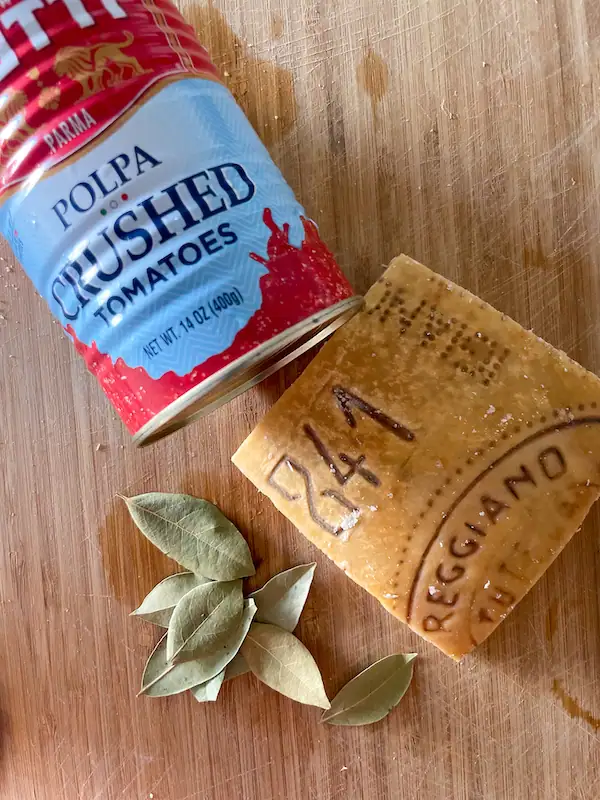
Parmesan Cheese: grated Parmigiano Reggiano sprinkled on top is great. I also love to add a rind of Parmigiano cheese rind to give more depth to the broth.
Canned Crushed Tomatoes: you can use a good quality canned diced tomatoes. I usually love using Mutti products as their tomato sauce is less acid and in my family it is has been a staple ingredients for generations.
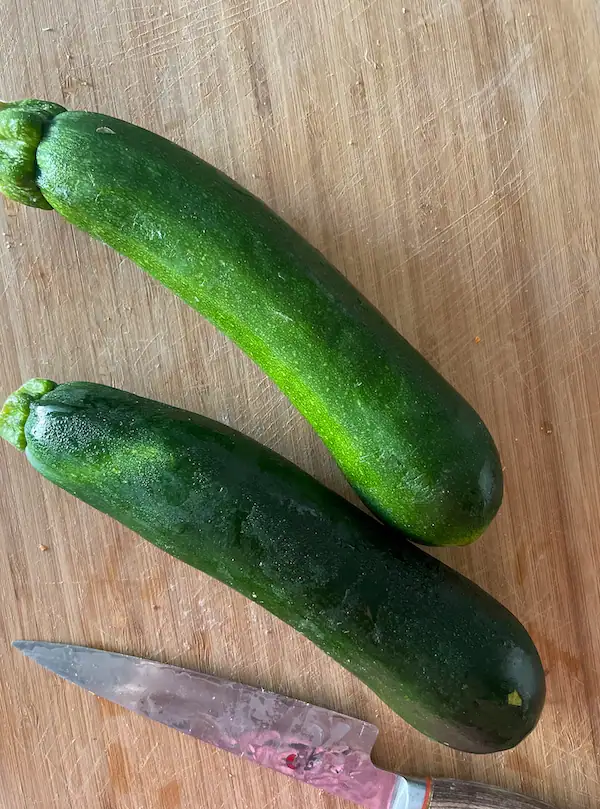
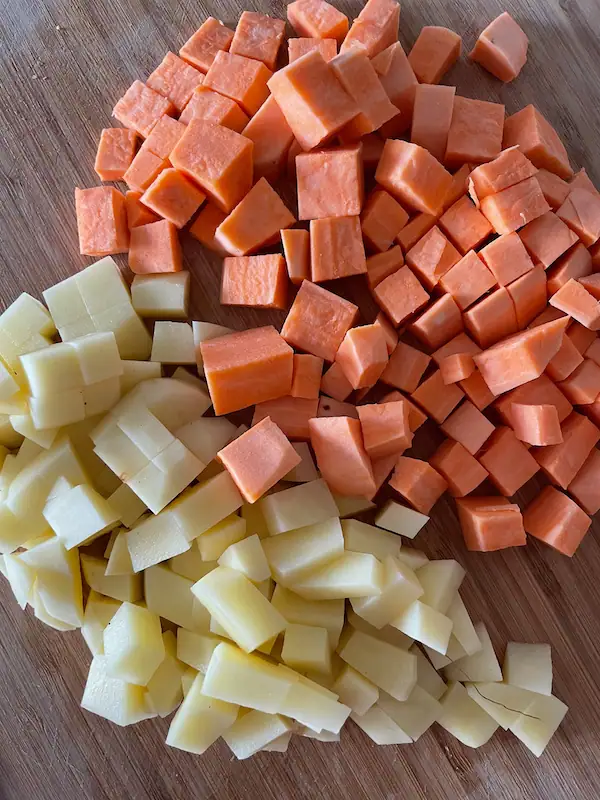
Mixed Fresh Vegetables: you will have to cut them in cubes, while this is a lengthy process, it is also part of the tradition. In Italy usually more than one family members helps in the process and it is a get together moment. The vegetables in this recipe are:
–Potatoes: Russet or Idaho potatoes works best.
–Carrots: cubed carrots add some colors.
–Sweet Potatoes: they add a delicious sweet taste to the dish.
–Zucchini: they add the green color and they are light.
–Spinach it is great to complement the ingredients.
–Beans: I use borlotti beans, the classic Italian bean type for this soup, cannellini or kidney beans also work. If using canned, rinse well; if using cooked-from-dry, use some cooking liquid to enrich the broth.
–Fresh Herbs: I love using some basil, harder to find in the winter, you can sub it with Parsley. I also add a bay leaf while I am cooking the soup, as it adds more depth and flavor.
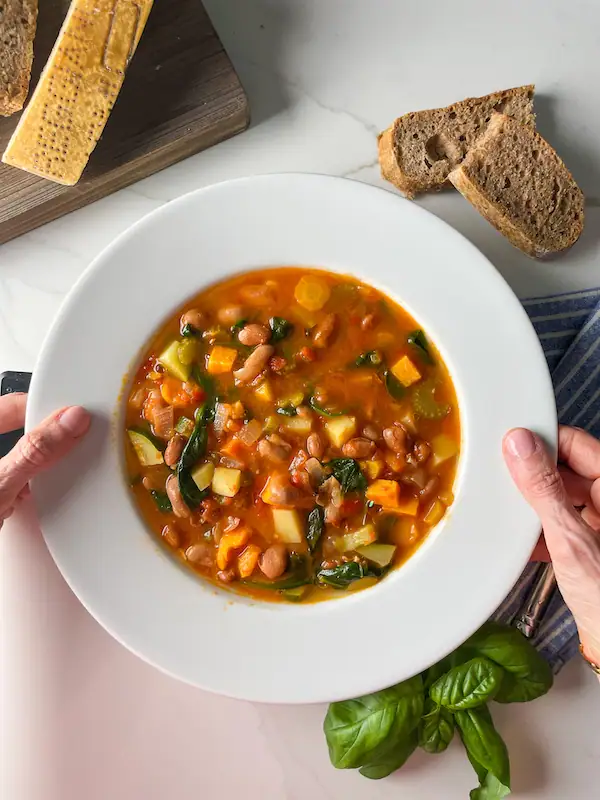
Seasonal Vegetables options for Minestrone Soup:
You can vary your colorful mix of vegetables according to the season.
MY TIP: sturdy, hard vegetable earlier, after the soffritto. Soft vegetable later. This way all vegetable will have the right level of doness.
Fall: use pumpkin instead of carrots. Add kale instead of spinach. You can still use zucchini and consider also broccoli florets.
Winter: use Parsnip or Turnip instead of carrots. Use pumpkin instead of potatoes. Use chard, spinach, kale, collard greens, broccoli.
Spring: add peas, asparagus, green breans, baby spinach, keep on using potatoes.
Summer: tomatoes, zucchini, peppers, green breans.
Other Variations:
Add Pasta: the addition of pasta is very common to make this soup more filling. Small pasta shape is best. Use ditalini pasta, which means “little thumbs”. Ditalini they are best in soup as they will keep al dente. Other good shapes are small shell or little macaroni. My nonna was using rice, especially in the last few years, she was adding it while warming up the soup on the stove.
Use Garlic: when making the soffritto, you can also add some garlic if you like.
What Makes Italian Minestrone Different
Italian minestrone is not a fixed recipe — it is a method rooted in seasonality, balance, and restraint.
- It follows the rhythm of the land. In Italy, minestrone changes with the seasons — zucchini and fresh beans in summer, cabbage and squash in winter.
- It is vegetable-forward. The broth supports the vegetables; it does not overpower them.
- It is layered, not rushed. Ingredients are added according to cooking time, preserving structure and integrity.
- It values texture. Vegetables should be tender but distinct — never collapsing into mush.
- It embraces simplicity. No heavy cream, no unnecessary spices — just good olive oil, proper soffritto, and time.
In many American versions, everything is added at once, often resulting in overcooked vegetables and a diluted flavor profile. Traditional Italian minestrone, by contrast, is about control — knowing when to add, when to simmer, and when to stop.
The Best Rules to Master Perfect Minestrone (And Why They Matter)
Dice Small & Even
- Even cuts create a cohesive texture where every spoonful tastes harmonious.
- Small, uniform vegetables ensure balanced cooking — nothing undercooked, nothing collapsing.
- Minestrone is about layered flavor, not oversized chunks competing for attention.
Build a Proper Soffritto Base
- A slow-cooked soffritto develops natural sweetness and depth without heaviness.
- Gentle cooking allows onions and celery to release flavor gradually instead of turning sharp.
- This foundational layer determines whether your soup tastes complex or flat.
Start with the Longest-Cooking Vegetables
- Root vegetables require more time to soften and release their starches.
- Adding them first allows the broth to develop body and subtle thickness.
- Layering by cooking time prevents delicate vegetables from becoming mushy.
Layer with Broth & Flavor Boosters
- Simmering with broth and tomatoes allows flavors to integrate early.
- Bay leaf adds aromatic structure that rounds out sweetness.
- A Parmesan rind slowly melts into the soup, enriching it with savory depth and natural umami.
- Giving this base time to cook builds complexity before additional vegetables are introduced.
Add Medium-Cooking Ingredients Later
- Zucchini cooks quickly and can lose structure if over-simmered.
- Cannellini beans need warmth to absorb flavor but not prolonged boiling.
- Staggering additions preserves both texture and integrity.
Finish with Delicate Greens
- Spinach only needs brief heat to maintain its freshness and color.
- Adding it last keeps the soup vibrant and prevents bitterness.
- This final layer brings brightness to balance the deeper base flavors.
Let It Rest Before Serving
- Resting allows starches to settle and flavors to marry.
- The broth naturally thickens slightly as it cools.
- Minestrone almost always tastes better after a short pause — and even better the next day. make Minestrone Soup
Minestrone FAQ
How long should minestrone simmer?
About 30–35 minutes total, depending on your vegetables.
Root vegetables need the most time; zucchini and spinach go in later. The goal is tender but structured — never mushy.
What’s the best pasta for minestrone?
Small shapes work best, such as:
- Ditalini
- Small shells
- Stelline
- Tubetti
- Orzo pasta, more used in Italian American recipes, than in authentic Italian.
They distribute evenly and keep the soup balanced and vegetable-forward.
Can I make minestrone in a slow cooker?
Yes. Build the soffritto first on the stovetop, then cook root vegetables and broth in the slow cooker. Add zucchini, beans, and spinach near the end. Cook pasta separately for best texture.
Can I freeze minestrone with pasta?
No. Pasta becomes soft and mushy after freezing. Freeze the soup without pasta, then cook pasta separately and add it when reheating.
Why does minestrone get thick the next day?
Because pasta and potatoes release starch and absorb liquid. Simply add a splash of water or broth when reheating to loosen it.

Ingredients
- 3 tbsp olive oil extra virgin
- 1½ cup onion chopped
- 1 cup celery chopped
- 1 cup carrots chopped
- 1½ tsp garlic crushed
- ¾ cup potato cubed
- ¾ cup sweet potato cubed
- ¾ cup carrot cubed
- 6 cup broth vegetable
- 14 ounces canned tomatoes crushed
- 2 units bay leaves
- 1 rind Parmesan cheese
- 2 cup beans borlotti
- 2 cup zucchini cubed
- 4 cups spinach
Instructions
- Start by dicing onions, potatoes, celery in small pieces. Add 2 tablespoon of extra virgin olive oil to a soup pot.
- When the oil shimmers add the soffritto and let it cook at low temperature until the onions become translucent.
- In the meantime, prepare potatoes, sweet potatoes and carrots.Add them to the pot along with 6 cups of vegetable broth and some bay leave. Mix it well.
- Add the canned crushed tomatoes and a Parmesan rind.
- Bring it to boil and cook for 10-15 minutes. In this time chop the zucchini, add them to the soup and add the cannellini beans. Mix it well.
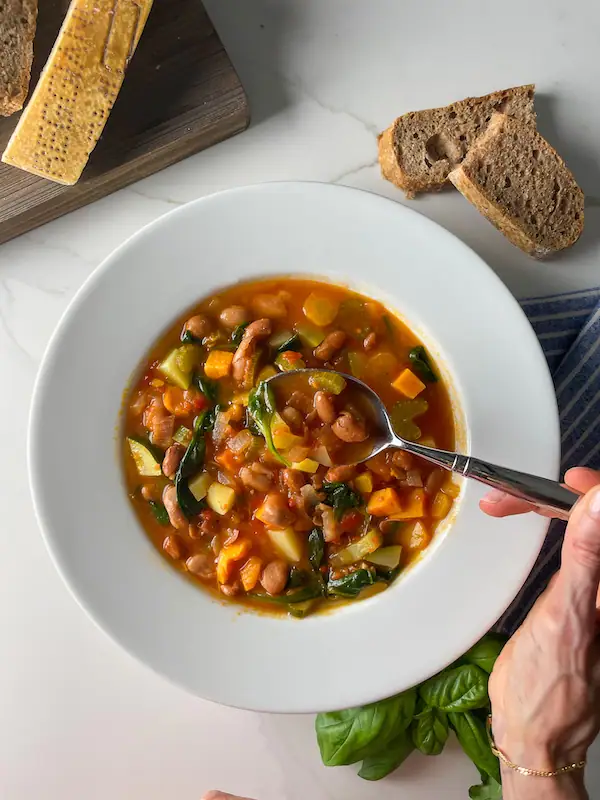
- Cook for other 10 minutes, add the spinach and let it cook until it wilt. Serve it warm along with some crusty bread.
Nutrition
How to serve Classic Italian Minestrone Soup
This soup is a great warming meal in the winter season, and it is wonderful as a refreshing soup in the warmer months as well. Serve it with Italian Foccacia, that you can dunk in.
To complete your meal consider making a side salad such as Winter Cabbage Apple Slaw, or a seasonal Beet, Orange, Fennel Salad. You will never go wrong by serving a classic Italian Green Salad. If you want Leek fritters will be great served as appetizer.

How to store Classic Italian Minestrone Soup
Refrigerator
- Leftover minestrone tastes even better the next day as the flavors deepen and marry.
- Store in an airtight container in the refrigerator for up to 5 days.
- The soup will naturally thicken as it sits — simply add a splash of water or broth when reheating to loosen it.
Freezer
- Minestrone is freezer-friendly — except for the pasta.
- For best results, freeze the soup without pasta in airtight containers for up to 3 months.
Pasta storing tips for minestrone
- Pasta does not freeze well because it absorbs liquid and becomes soft and mushy when thawed and reheated.
- When ready to serve, reheat the soup, cook the pasta separately in salted water, and add the freshly cooked pasta directly to the hot soup before serving.
- This keeps the broth balanced, the vegetables intact, and the pasta properly textured — exactly as it should be.
More delicious soup recipes for you
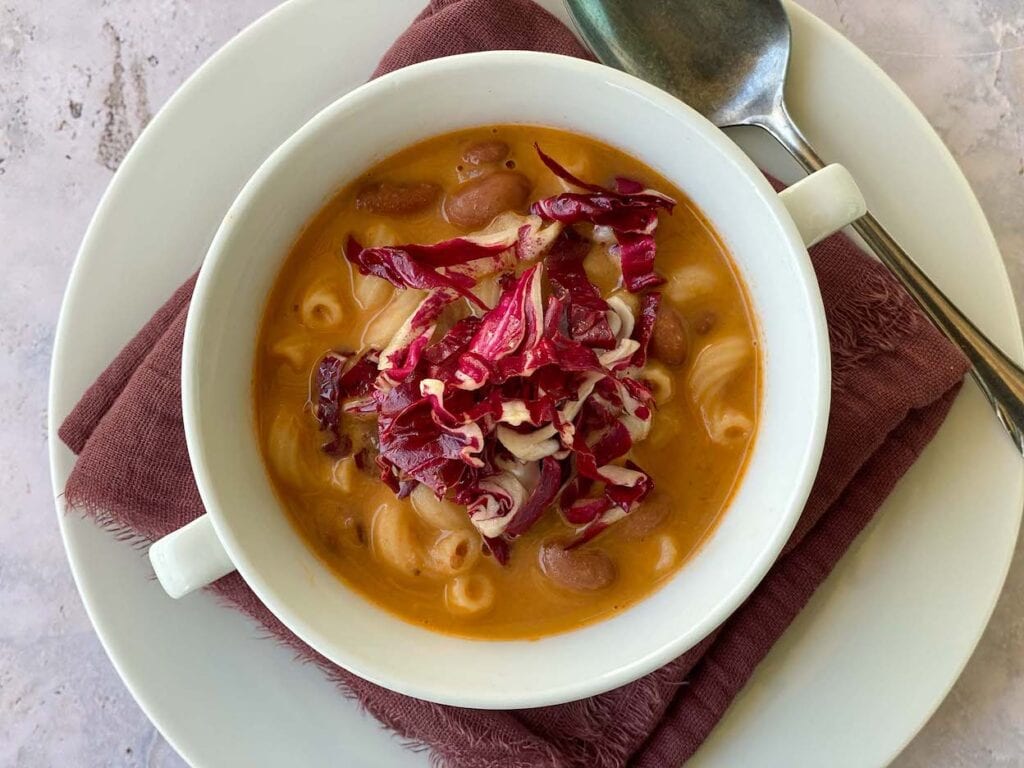
Pasta e Fagioli (Italian Pasta with Beans)

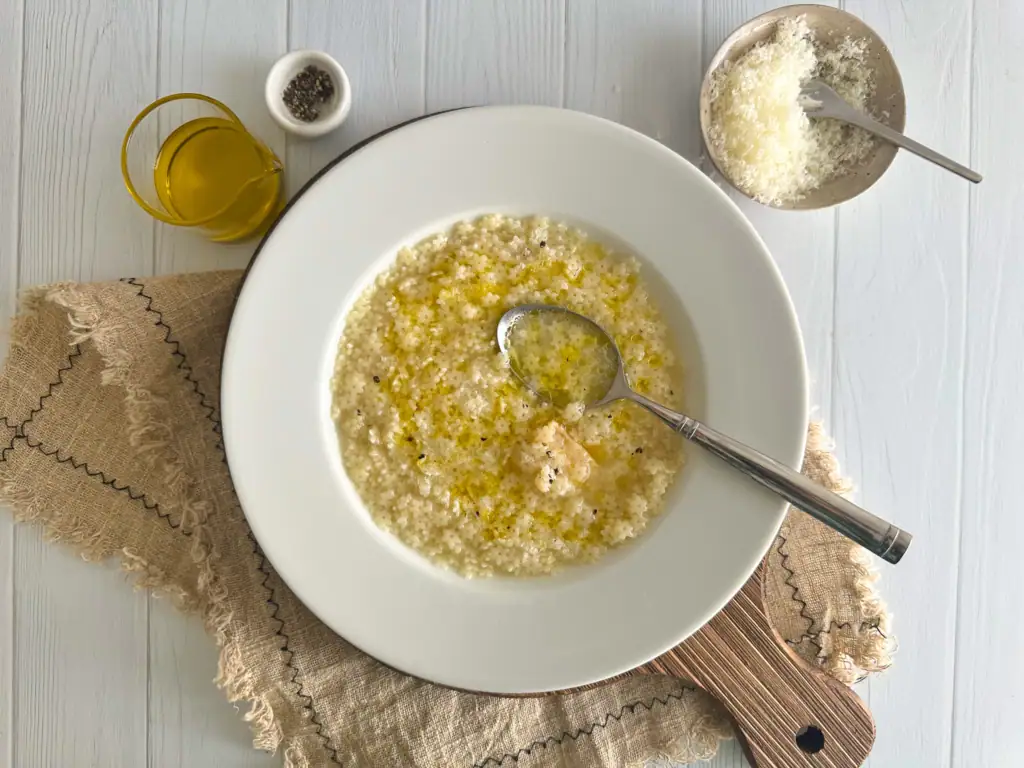
Brodo di Pollo (Authentic Italian Chicken broth recipe)

If you try this recipe and you liked it, please leave a star review below! I would love to connect with you through my recipe and I will be very appreciative of your comments! If you make this recipe make sure to tag me on Instagram @Italian_kitchen_confessions. To get more ideas follow me on Pinterest.
This post contains affiliate links for products we love. Italian Kitchen Confessions earns a small commission on these links at no cost to you.


Favoloso in questa stagione
excellent soup. I did add some orzo to it.
Hi Trevor,
Thank you so much for stopping by and taking the time to write a review. I really appreciate it!
Orzo is a great options to make it a full-complete mea. If you like to try different cereal, I could suggest farro or barley.
Have a lovely Sunday,
Laura
You mention carrots twice, 2 different t quantities, also cut differentnyly.? Please clarify. It looks delicious!
Hi Shulamith, thank you for stopping by.
The carrots are in the qty and cut as per the recipe. You will need in fact chopped carrots to make soffritto, which is an Italian aromatic trio of onions, carrots and celery. Then you will need 3/4 cup carrots cubed to add along with all the other vegetables in the minestrone soup. I hope it helps!
Amazing recipe! I’ve made it multiple times and am grateful to have found it.
Dear Annette,
Your message could not make me more happy. Minestrone is a classic, either you follow the basic recipes or swap in different veggies, it is a nourishing and warming one pot meal.
Thank you for your comment and for stopping by!
Have a lovely week,
Laura
Made this recipe for my father today. My mom, his wife passed away 2 years ago and minestrone was a staple in our home. My mother took her time making it. I have never been able to recreate the flavour. With the recipe you provided, you made my father so happy today.
Dear Olivio, you cannot imagine how happy you made me with your words. My father passed away 2 years ago as well, and most of the family recipes are coming from him or from my grandmothers. He was the best at risotto and frittata, and still today I feel my risotto miss something, probably just his company. My mom has not been eating risotto since he passed away, I am glad you cook this recipe for your dad and I am even happier you enjoyed the recipe and shared good memories. Thank you. It counts a lot.