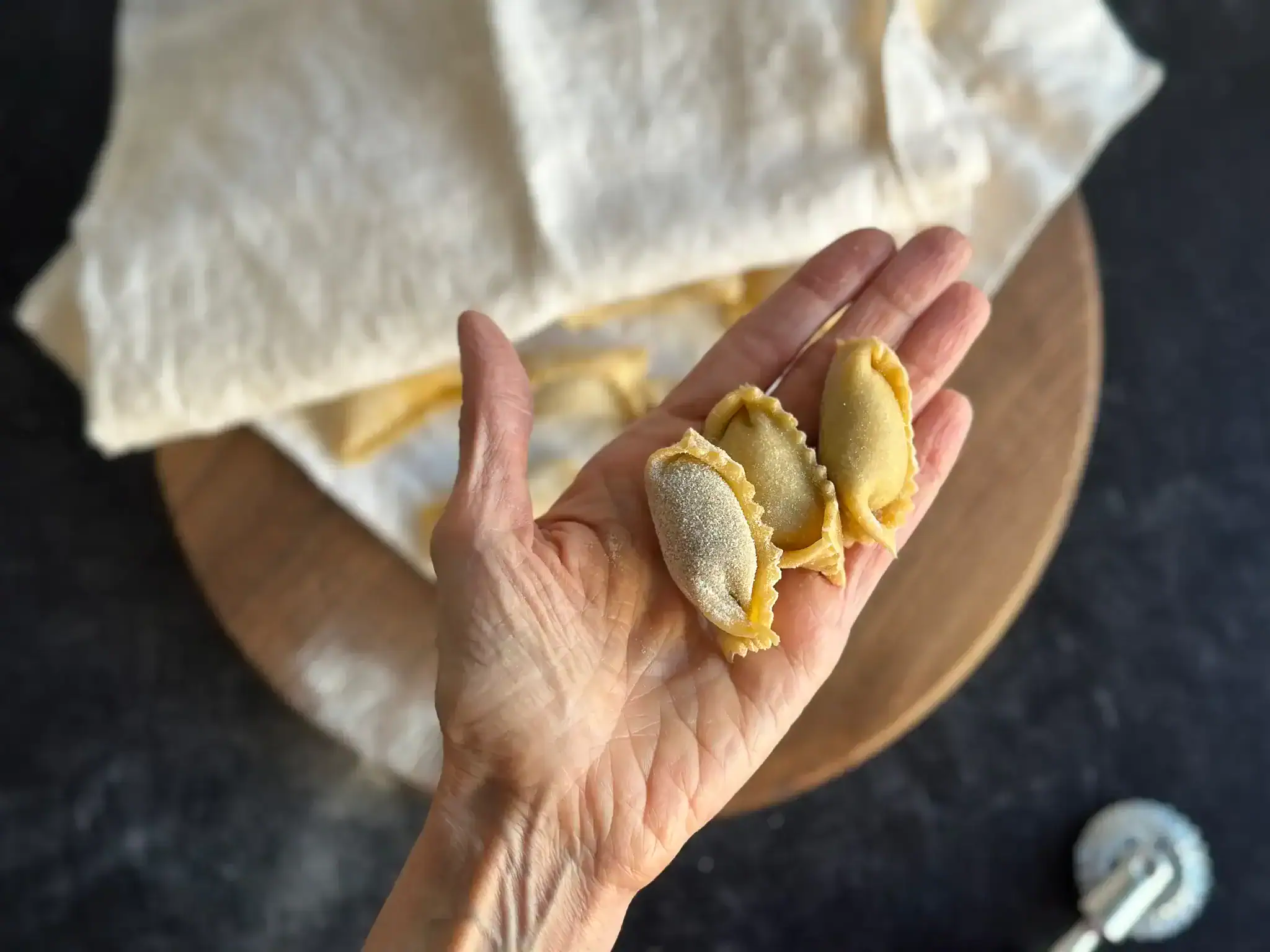
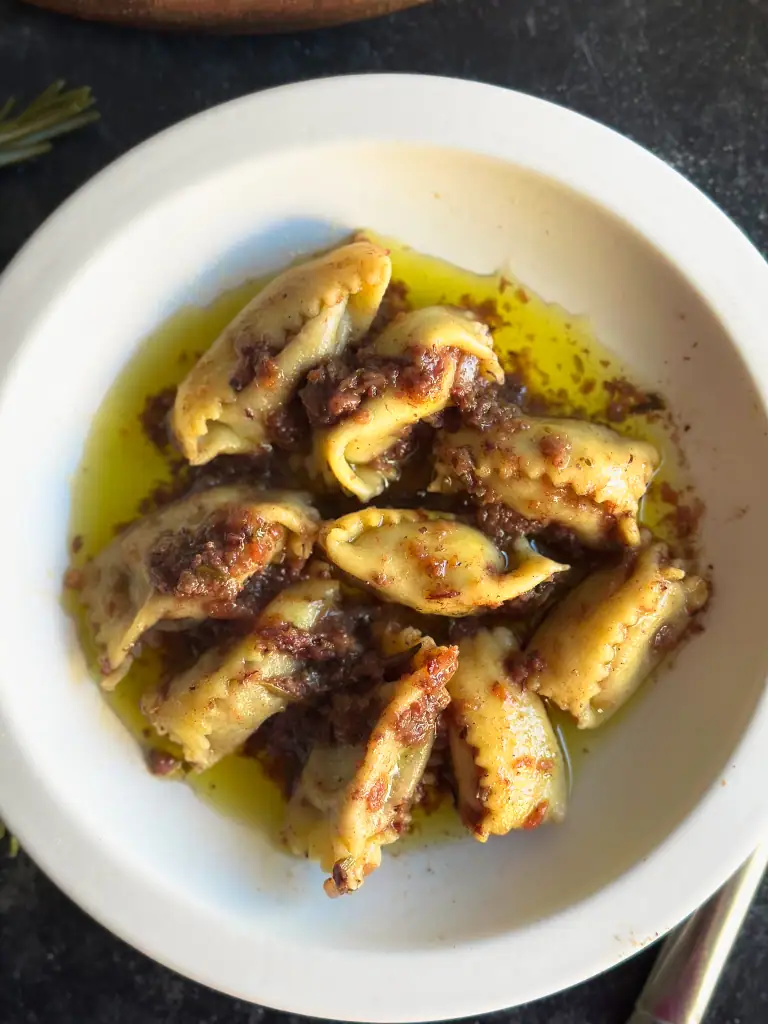
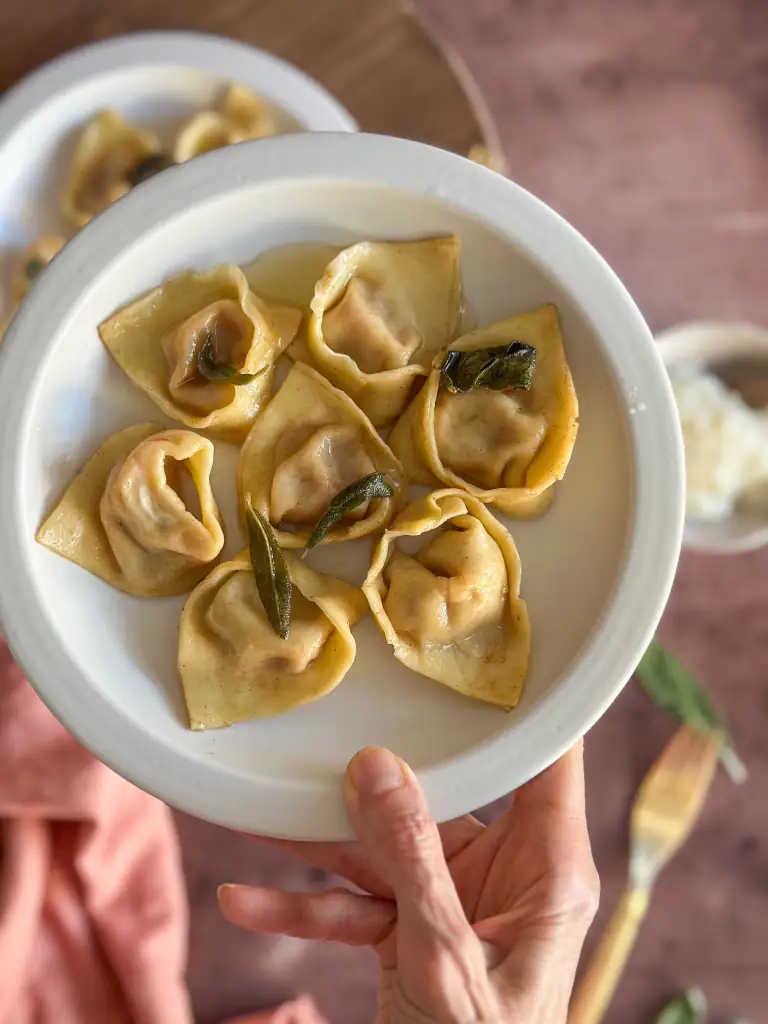
There are few dishes as deeply tied to the culinary soul of Piemonte as Barolo-Braised Beef Agnolotti del Plin, or as we say in Italian Agnolotti con Brasato al Barolo. These delicate, hand-folded pasta pillows are filled with slow-braised Barolo beef, scented with rosemary, bay, and wine, and sealed using the traditional plin pinch. The tenderness of the pasta and the richness of the filling create a dish that feels celebratory and comforting all at once.
If you’ve tried Agnolotti del Plin before, you’ll notice a key difference here: instead of mixing several roasted meats for the filling, this recipe uses only Barolo-braised beef. The result is a filling that is silky, intensely savory, and beautifully unified in flavor—a perfect marriage of pasta and slow-cooked meat.
WHY THIS RECIPE WORKS
- Single-meat filling = deep flavor clarity: Using only braised beef builds a round, velvety taste with no sharp edges.
- The braising juices become instant flavor boosters: They moisten the filling naturally so it never becomes dry.
- Hand-folding (plin) technique protects the filling: Pressing and sealing correctly means a pasta that holds together and cooks evenly.
- Balanced texture: Thin pasta, rich filling, and a light sauce—never heavy, never dull.
A NOTE ON KEY INGREDIENTS
I will outline the essential ingredients, for all the rest refer to the recipe.
BAROLO-BRAISED BEEF
Beef: I chose a 3 pounds cut of beef chuck. You can sub it with a brisket. You need a good marbled piece of meat, fat ensures tenderness during slow cooking, keeping the meat juicy and flavorful. The meat needs to slowly simmer it for 2.5 – 3 hours for a tender result that won’t fall apart, but can easily be sliced.
Barolo wine: The soul of this dish. Barolo’s tannins and bold character create a luxurious sauce. For this dish, the quality and type of red wine is crucial. To achieve a full-flavored sauce, you need a big, bold wine. I used 1 full bottle of Barolo, one of the most emblematic and bold Italian wine from the Piedmont region. Budget tip: Substitute with Barbera, Nebbiolo, or Valpolicella—still rich enough to honor the tradition, but slightly cheaper than a bottle of Barolo.
FRESH PASTA DOUGH
Traditional Piedmontese dough uses:
00 Italian flour: this is the finest Italian flour used to make fresh egg pasta. As usual I recommend to use a digital scale to weigh your flour as cups is not always the best way to measure flour to obtain a perfect pasta dough. I recommend Antimo Caputo 00 flour.
Eggs: count 1 egg for every 100 gr. Ideally you should have 57grams of egg for every 100 gr of flour. For this recipe I used 4 whole eggs. If you want a richer dough, add more egg yolks. If you want a more hydrated dough use the egg whites of one more egg. Make sure you remove the eggs from the refrigerator at least 1 hour before you start making the pasta dough. The eggs at room temperature disperse better into thee flour.
No water; no oil—just simplicity and technique.
THE HEART OF THE DISH: HOW TO FOLD AGNOLOTTI (STEP-BY-STEP)
This is where the craft happens—where agnolotti becomes artisan.
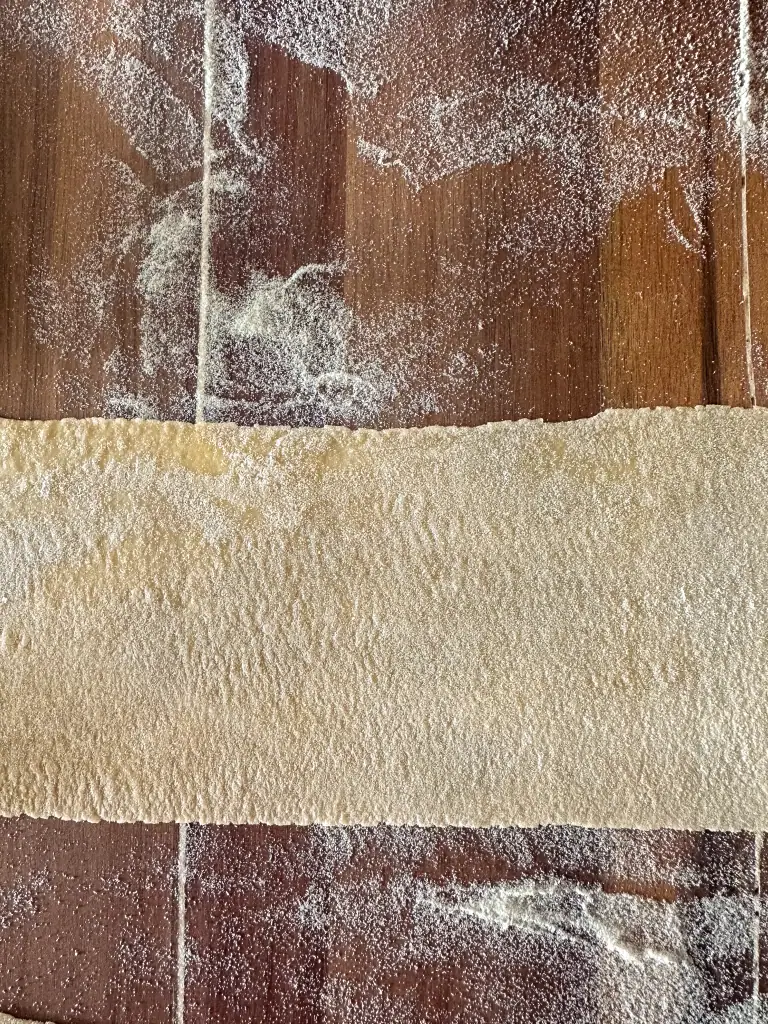
1. Roll the Dough
- Roll your pasta sheet into a long rectangle, very thin (about 1 mm / you should see your hand’s shadow through it).
- Work with one sheet at a time; keep others covered to prevent drying.
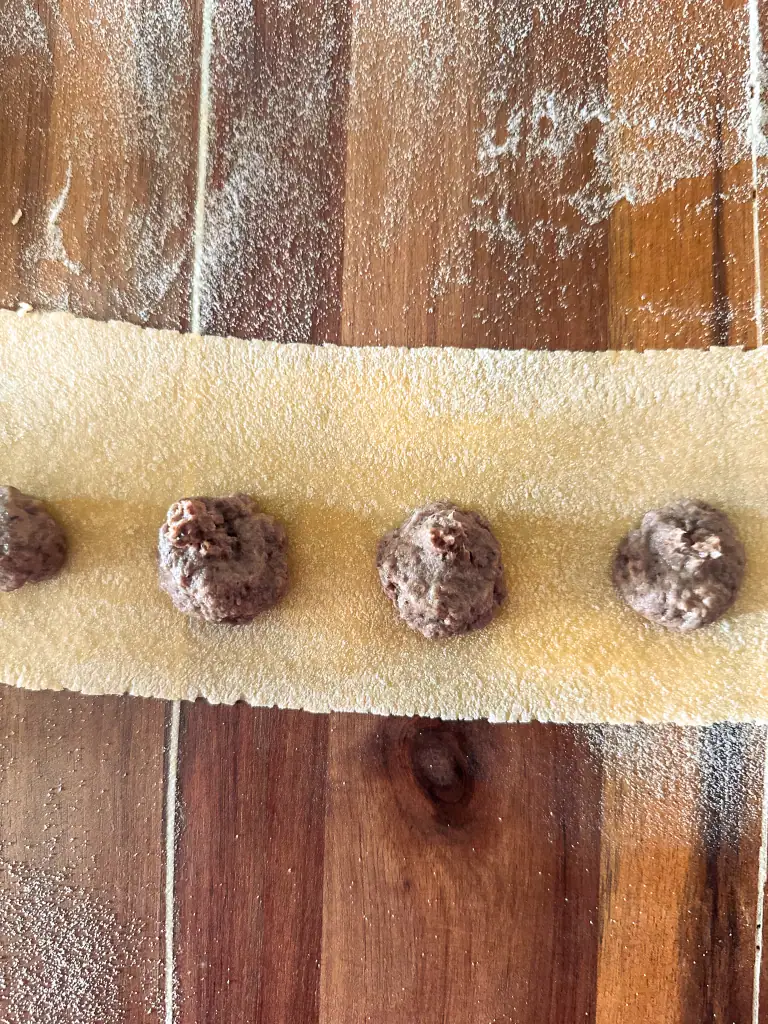
2. Pipe or Spoon the Filling
- Place small, evenly spaced mounds (about a hazelnut-size) along the lower third of the sheet.
- Leave 2 cm between each.
- Tip: Smaller mounds = easier sealing and better texture.
3. Fold the Sheet Over
- Lift the top edge of the pasta and fold it down over the filling line.
- Press the dough directly around each mound to remove air.
- Air pockets are the #1 cause of agnolotti bursting.
4. Create the “Plin”
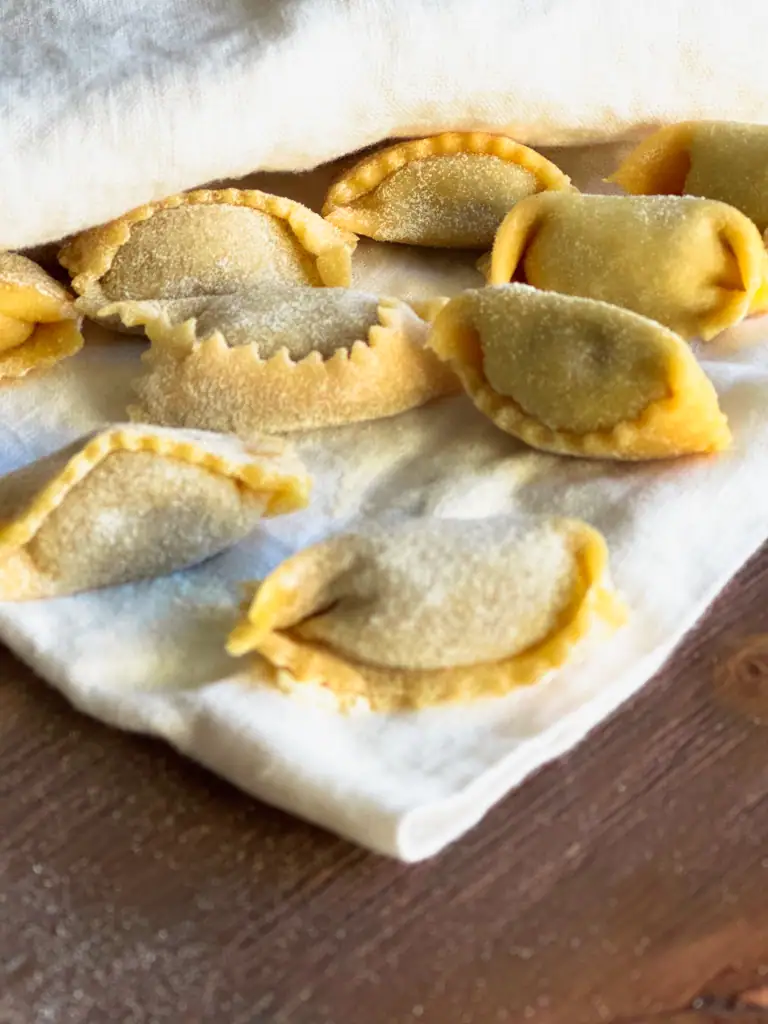
- The plin means “pinch” in Piedmontese dialect.
- Using your fingers, pinch between each mound to seal into individual pockets.
- This creates the signature gathered shape and ensures the filling stays inside.
5. Cut
- Cut along the length of the folded pasta to separate the row.
- Cut between each pinch to form individual agnolotti.


6. Cook
- Let them rest on a semolina-dusted board until ready to cook.
- Cook in salted boiling water, until the agnolotti float on the surface. 3-4 minutes.
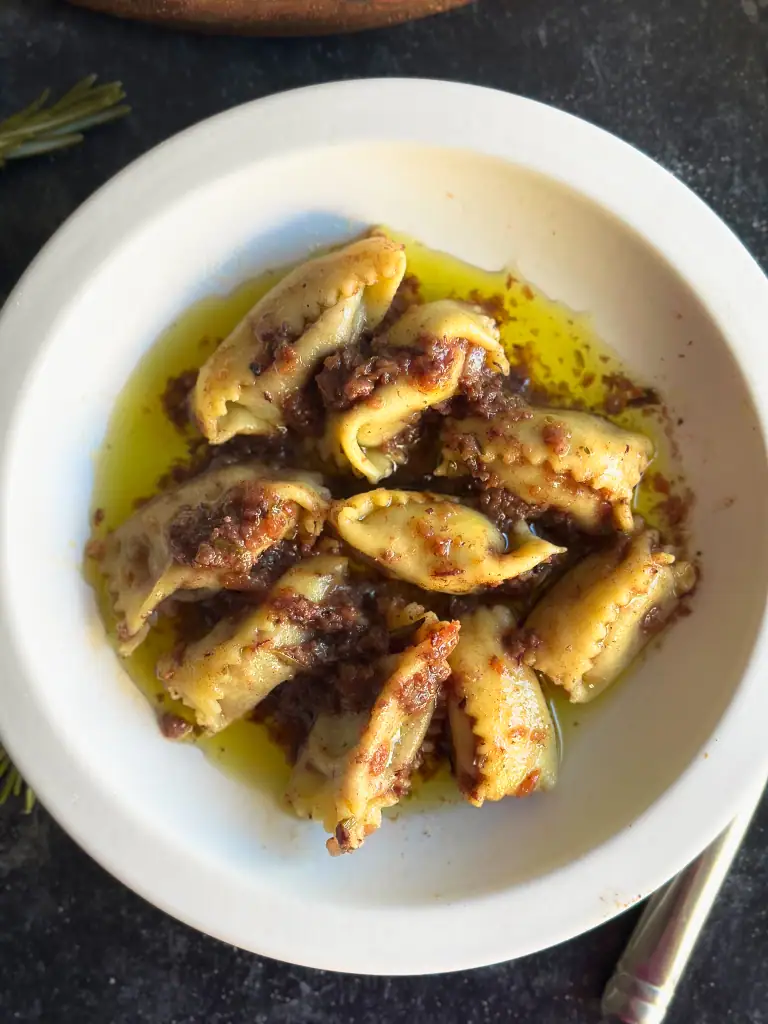
- Add them to the pot where there is your sauce of choice, a bit of pasta water and plate it. Sprinkle with Parmigiano Reggiano optional.
TROUBLESHOOTING THE FOLDING
- The filling is leaking out: it means that the air wasn’t pressed out. To avoid ensure you press firmly around mounds before pinching.
- The Agnolotti is opening in water: the dough edge dried before sealing. To avoid work fast or mist dough lightly.
- The pasta feels too thick:the sheet not rolled thin enough.Roll to nearly translucent
- The filling is too loose: there is probably too much braising liquid. Ensure you belnd the meat and some juice and chill the filling before shaping.
Equipment
- 1 tongs
- 1 Blender
- 1 Carving Knife sharp
Ingredients
BAROLO BRAISED BEEF
- 3 pound beef chuck
- ⅓ cup olive oil extra virgin
- 1 cup onion chopped
- 1 cup celery chopped
- 4 cloves garlic cloves
- 750 ml red wine Barolo
- 3 units cloves
- 1 sprig thyme
- 1 spring rosemary
- 3 tsp salt
- 1 tbsp pepper black, ground
- 4 tbsp butter
- ½ cup flour all purpose
AGNOLOTTI
- 400 gr flour 00
- 4 unit egg large
- 6 tbsp Parmesan Cheese finely grated (optional)
Instructions
BAROLO BRAISED BEEF
- Braise the Beef: Brown vegetables and beef, add wine, herbs, and paste. Simmer 2.5–3 hours until tender. ( for all detailed instructions refer to the Barolo al Brasato recipe)
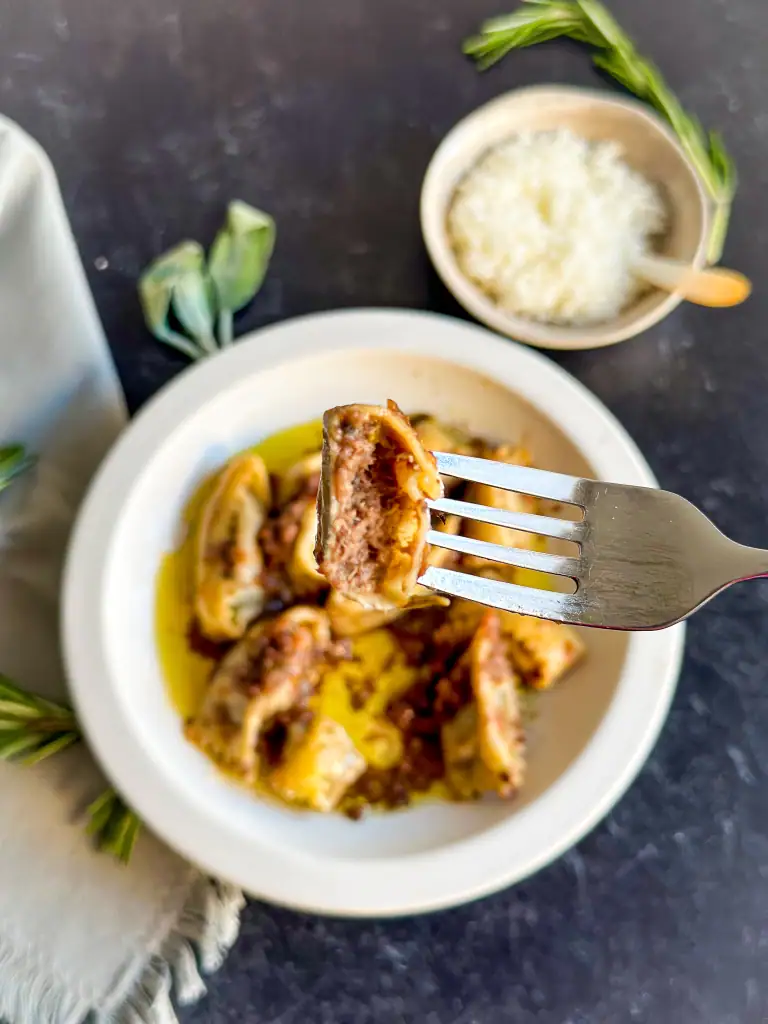
- Prepare the Filling: Shred beef finely; stir in some reduced braising juices and cheese. Blend until well combined. The filling has to be moist, but not too soft. Chill. (do this after one day to allow juices in the meat to better distribute. You can also do this with leftover).
- Make the Dough: Combine flour and eggs; knead and rest. Roll into thin sheets.
- Shape Agnolotti using the folding and plin technique above.
- Cook and Serve in boiling salted water, 2–3 minutes, then finish with the reduced braising sauce.
Nutrition
FAQ ON BAROLO-BRAISED BEEF AGNOLOTTI DEL PLIN
WHAT ARE AGNOLOTTI DEL PLIN?
Agnolotti del Plin are small, hand-pinched stuffed pasta from Piedmont (northwest Italy). The word plin comes from the local dialect for “pinch”, referring to how the dough is folded over the filling and then pinched to seal each piece.
Typical fillings:
• Braised meats (veal, pork, rabbit)
• Or sometimes vegetables and cheese
They are often served very simply: perhaps with melted butter and sage, or even just warm meat drippings (il sugo d’arrosto), to let the filling shine.
WHAT’S THE DIFFERENCE BETWEEN AGNOLOTTI DEL PLIN AND AGNOLOTTI DEL PLIN WITH BRAISED BEEF?
The shape and technique are the same. The difference is simply what’s inside.
• Agnolotti del Plin can have mixed meats, vegetables, or a blend.
• Agnolotti del Plin with braised beef specifically have braised beef as their primary filling.
DIFFERENCE BETWEEN AGNOLOTTI AND RAVIOLI?
- Agnolotti origin is Piedmont, their shape is typically smaller; often rectangular or tiny “pinched” parcels (del Plin) . Agnolotti are filled with meat, that is the focus and the particularity of this regional pasta shape.
- Ravioli are popular through the entire Italian peninsula. Their shape can be square or round, they are often larger. The filling can be everything from ricotta-spinach to pumpkin to seafood.
- The technique is also different: agnolotti are dough folded over and pinched. Ravioli are cut with a stamp or wheel, or ravioli mold.
WHAT IS PIEDMONTESE CUISINE LIKE?
Piedmont is comforting, earthy, and aristocratic, with French influence and deep agricultural roots.
Signature qualities:
- Rich meats: veal, rabbit, beef braised in wine
- Truffles — especially white truffles of Alba
- Hearty slow cooking: brasato, ragù, roasts
- But also delicate: carne cruda, vitello tonnato
Famous dishes & ingredients:
- Bagna cauda (warm anchovy-garlic dipping sauce)
- Tajarin (golden, extra-yolk pasta ribbons)
- Castelmagno cheese
- Barolo and Barbaresco wines
It channels autumn landscapes: rolling vineyards, misty valleys, fire-warmed kitchens. A cuisine of depth and patience.
HOW TO SERVE BRAISED BEEF AGNOLOTTI
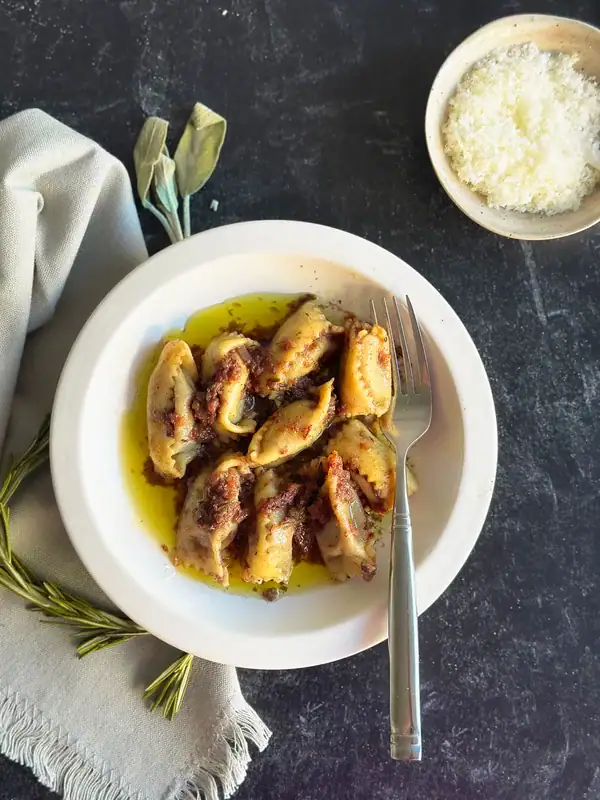
- Reduced braising jus drizzled lightly: this is my favorite way and how it has been served in my family.
- Sauteed sage + butter + Parmigiano (classic and delicate)
- Toasted hazelnuts for a Piedmontese touch

STORING & REHEATING
- Fridge: Up to 2 days (cooked or uncooked on a floured tray, covered).
- Freezer: Freeze uncooked agnolotti on a tray, then once they have become harder, remove them from the tray and bag them. They last for up to 2 months.
- To cook from frozen: Boil straight from frozen; add 1–2 min.
- Reheat: Gently in butter or a splash of hot broth. Avoid microwaving directly.
WINE PAIRING FOR AGNOLOTTI DEL PLIN WITH BAROLO-BRAISED BEEF
The filling is rich, savory, and slow-cooked. You want a wine with tannin to cut the richness, acidity to refresh, and aromatics to complement the braise.. This is why Nebbiolo is the natural match.
Barolo
- Style: Structured, deep, complex
- Why it works: Firm tannins clean the palate; aromas of rose, cherry, and leather echo the braised beef.
- Best when: The sauce is butter + jus or includes truffle.
- Serve: Slight decant (1–2 hours), ~63°F / 17°C.
Barbaresco
- Style: More floral, elegant, and approachable than Barolo
- Why it works: Softer tannins make the pairing a bit gentler and more seamless.
- Best when: you want something more graceful.
- Serve: 1-hour decant, ~62°F / 16.5°C.
Nebbiolo d’Alba (or Langhe Nebbiolo)
- Style: Youthful, brighter fruit, less tannic
- Why it works: Keeps the pairing lifted and easy, without overshadowing the pasta.
- Best when: The meal is casual or you want wallet-friendly authenticity.
- Serve: No decant needed; ~60°F / 15.5°C.
MORE STUFFED PASTA RECIPES
Iff you like making homemade stuffed pasta, there are seeveral other recipes to try:
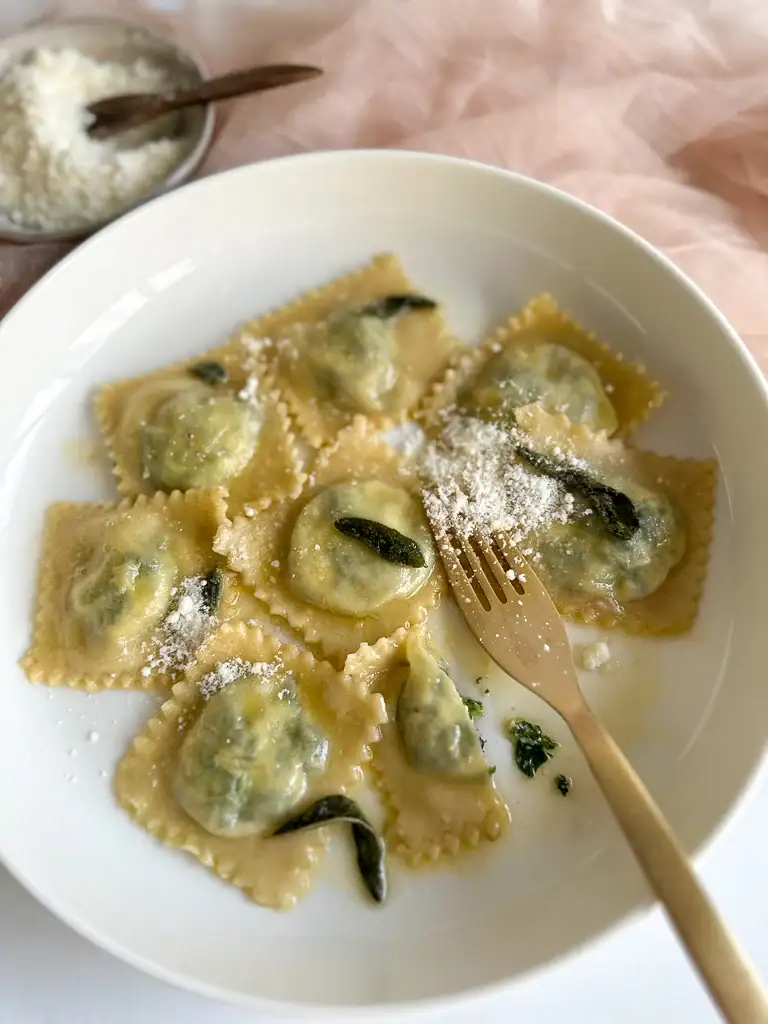
Spinach Ricotta Ravioli: an Italian classic, great when spinach are fresh and in season.
Tortelli di Zucca (Pumpkin Tortelli): Sweet roasted pumpkin, amaretti, and Parmesan wrapped in delicate handmade pasta, tossed in butter and sage. The perfect homemade filled pasta for cozy autumn evenings.
Sea Bass Ravioli: Sea bass Ravioli is a delicate and flavorful dish. It combines tender, flaky sea bass with delicate pasta pillows filled with a zesty and herby sea bass filling.
Beetroot Ravioli filled with Goat Cheese and Ricotta: Beet Ravioli is a colorful homemade pasta dish, that look like flowers on a plate. Make them for someone special!


✨ This Barolo Braised Beef Agnolotti recipe is a great recipe for the colder weather and for celebrations! I would love to connect with you through my recipe and I will be very appreciative of your comments! If you make this recipe make sure to tag me on Instagram @Italian_kitchen_confessions. To get more ideas follow me on Pinterest.✨


The instructions on creating the filling are not clear. My filling was shredded but seemed not the correct texture.
Dear Andrew,
Thank you for stopping by and for commenting the recipe. You are right!In the recipe card, there is a blender among instruments needed. I realized that in fcat I blended the shredded meat with its sugo and some cheese, but omitted to write this important steps. I just edited. So thank you!! I hope you liked them and/ or if you make them, I would appreciate a star review.
Happy cooking,
Laura