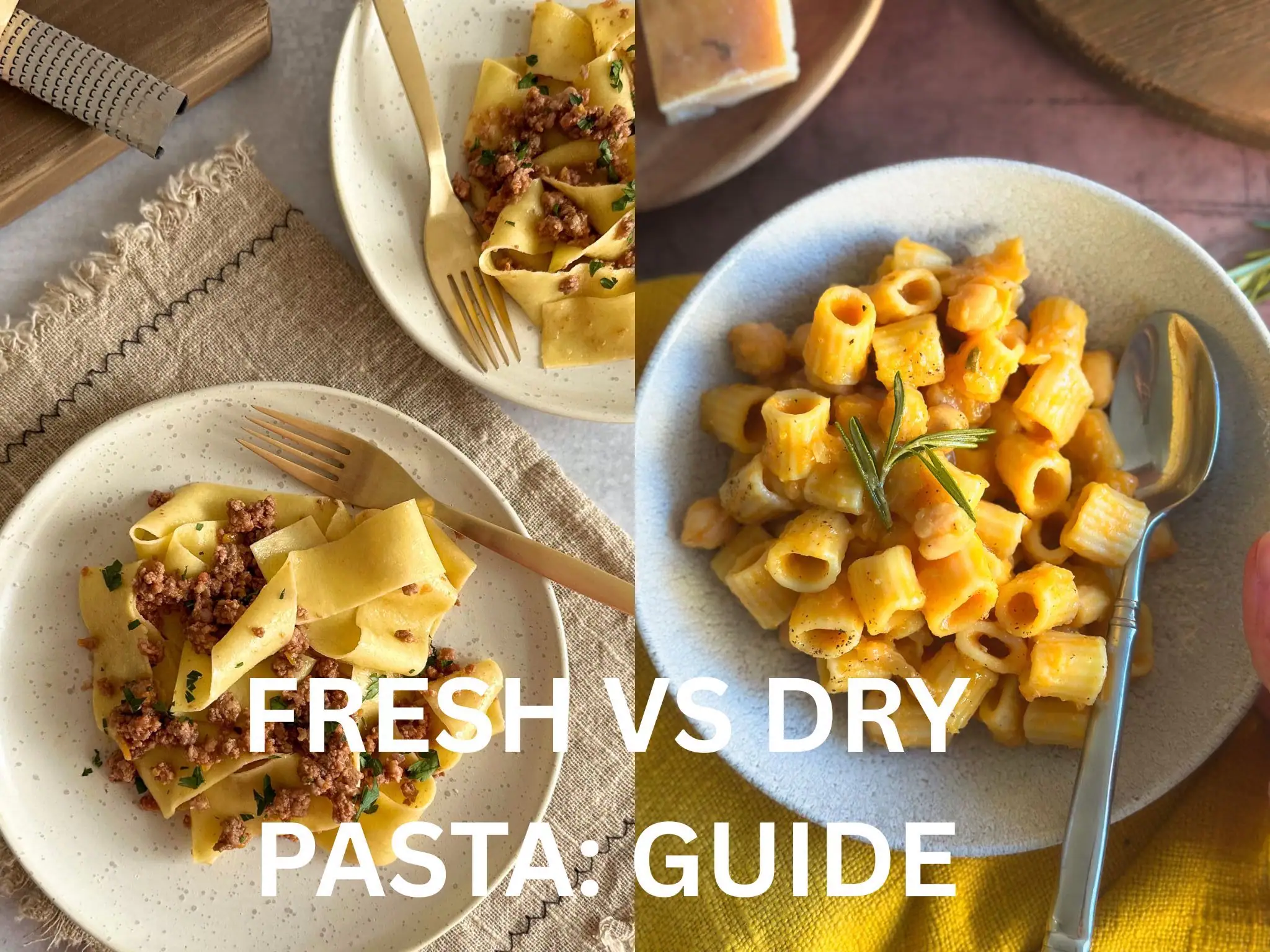
If you’ve ever stood in the pasta aisle wondering whether to buy fresh tagliatelle or dried spaghetti, you’re not alone.
The debate of fresh vs dried pasta is one of the most misunderstood topics in Italian cooking — especially outside of Italy.
Here’s the truth: in Italy, one is not “better” than the other. They serve different purposes. And knowing when Italians use fresh pasta vs dried pasta will completely change the way you cook.
As someone who grew up in the Veneto region — where Sunday meant rolling dough at the table with my family — I can tell you this: choosing the right pasta is about sauce, structure, and tradition.
Let’s break it down properly.
TABLE OF CONTENTS
- WHAT IS THE DIFFERENCE BETWEEN FRESH AND DRIED PASTA?
- WHEN ITALIANS USE FRESH PASTA
- WHEN ITALIANS USE DRIED PASTA
- FRESH VS DRIED PASTA: TEXTURE COMPARISON
- THE BIGGEST MISTAKE PEOPLE MAKE
- FRESH VS DRIED PASTA FOR POPULAR DISHES
- WHY THIS MATTERS
- FAQ: FRESH VS DRIED PASTA
- MORE PASTA RECIPES FOR YOU
- FINAL TAKEAWAY
WHAT IS THE DIFFERENCE BETWEEN FRESH AND DRIED PASTA?
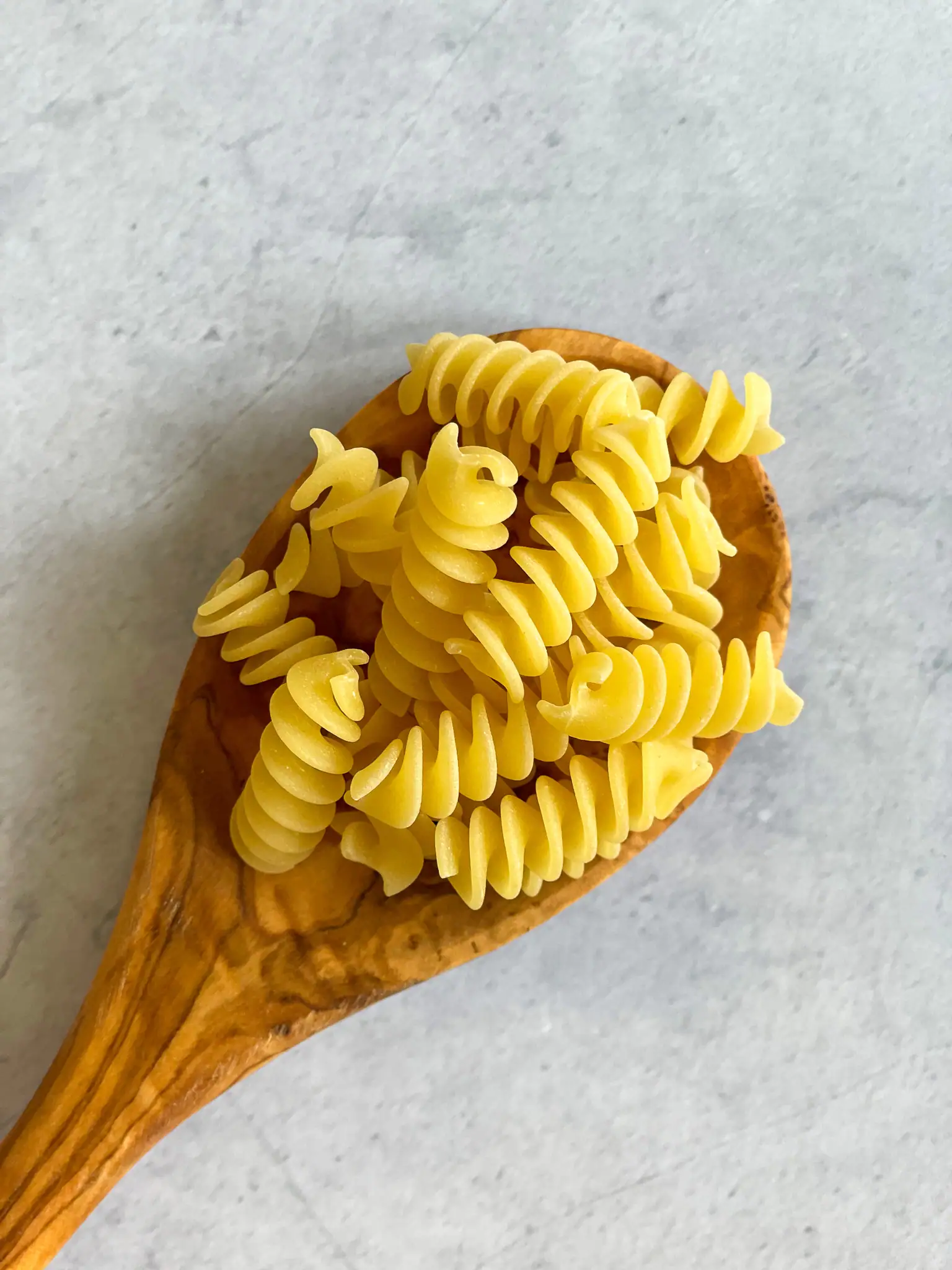
Fresh Pasta (Pasta Fresca)
- Made with flour + eggs (in Northern Italy)
- Soft, tender texture
- Cook time: 1–3 minutes
- Often handmade
- Higher moisture content
- Best for delicate, butter-based or creamy sauces
Dried Pasta (Pasta Secca)
- Made with durum wheat semolina + water
- No eggs (traditionally)
- Firm, elastic bite
- Cook time: 8–12 minutes
- Industrially extruded (ideally bronze-die)
- Best for structured, oil-based or tomato-based sauces
The key difference isn’t just moisture — it’s structure.
- Dried pasta is designed to hold sauce and maintain bite.
- Fresh pasta is designed to absorb and embrace it.
WHEN ITALIANS USE FRESH PASTA
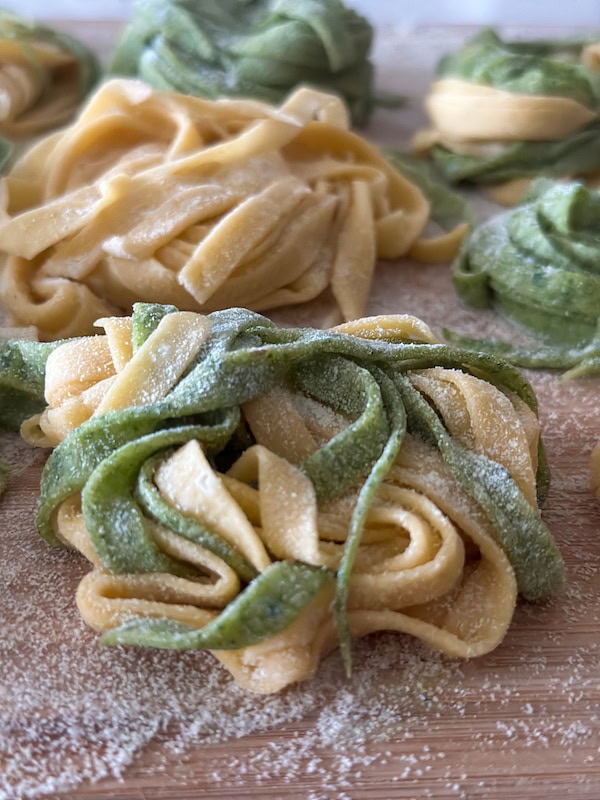
In Italy, fresh pasta is often used for:
1. Egg-Based Northern Pasta Traditions These come from regions like Emilia-Romagna, Piedmont, Veneto.
- Tagliatelle
- Tortellini: and all its derived shaped tortelli, tortelloni.
- Ravioli
- Agnolotti
- Pappardelle
For example:
You would never use dried pasta for traditional tortellini in brodo.
Fresh pasta is chosen when:
- The sauce is delicate
- The dish is celebratory
- The pasta is stuffed
- Texture should be tender, not firm
- Fresh pasta is emotional. It’s Sunday. It’s family. It’s ritual.


WHEN ITALIANS USE DRIED PASTA
Dried pasta dominates Southern and Central Italy.
It is essential for:
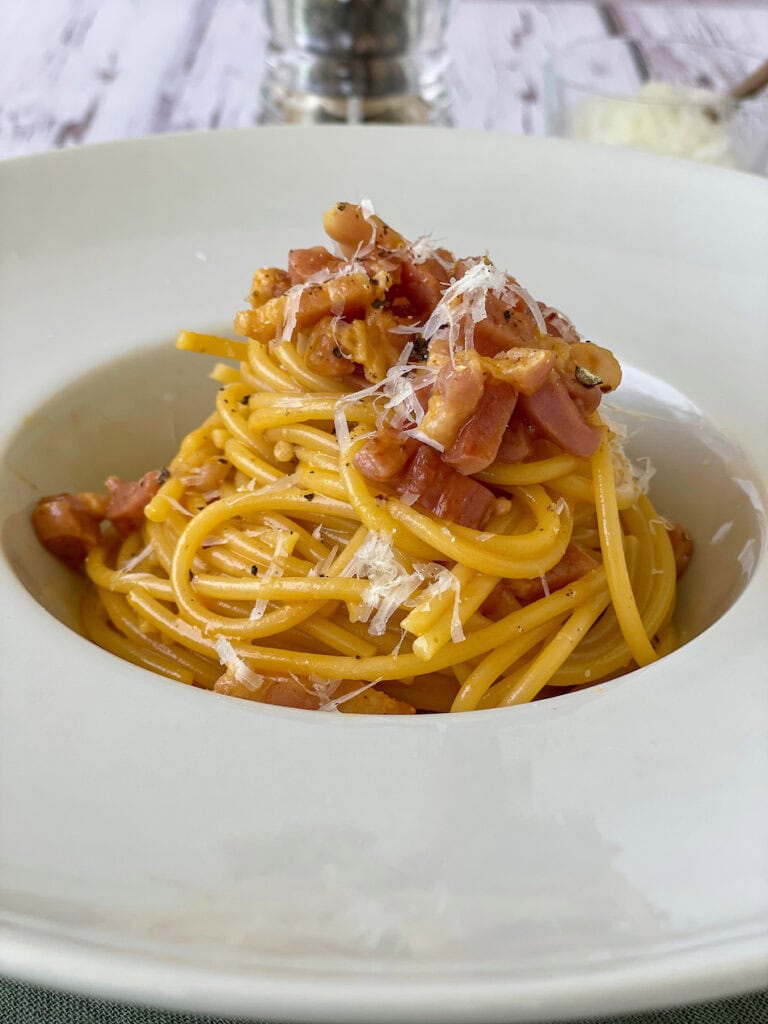
1. Roman Classics
These require:
- Firm bite (al dente)
- Starch release for emulsification
- Structural integrity
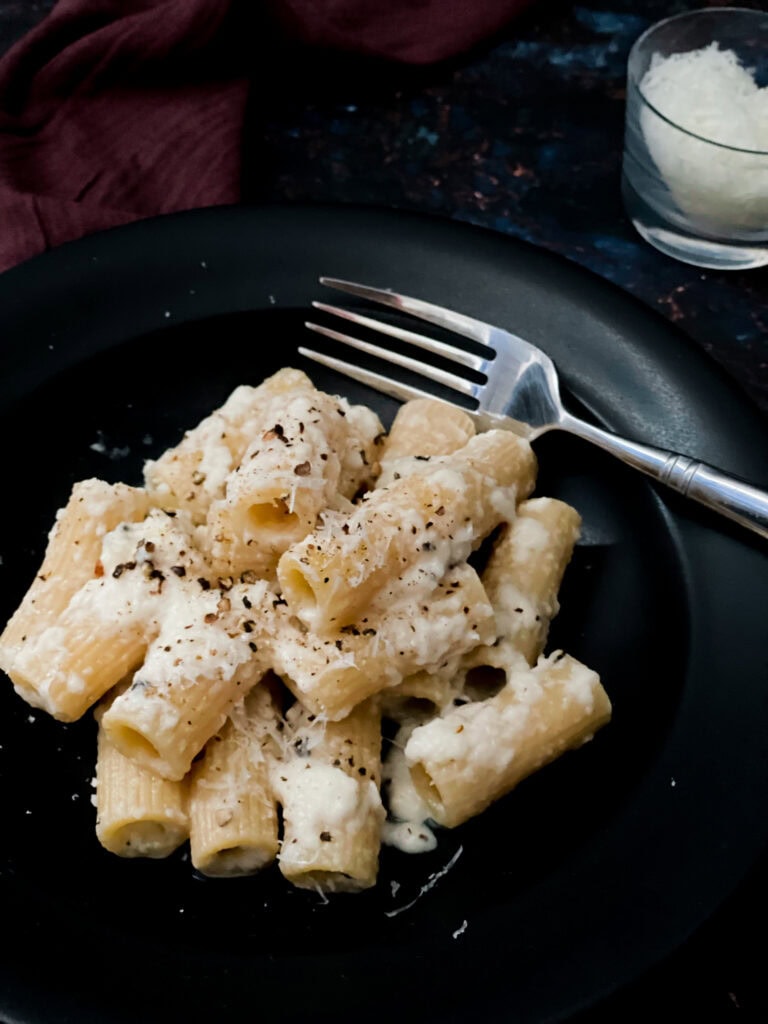
- Using fresh pasta for carbonara would result in softness and imbalance.

2. Tomato-Based Sauces
Spaghetti, rigatoni, penne, bucatini — all dried.
Why?
Durum wheat semolina provides:
- Elasticity
- Sauce grip (especially bronze-cut)
- Longer cooking time = starch development


3. Oil-Based Sauces
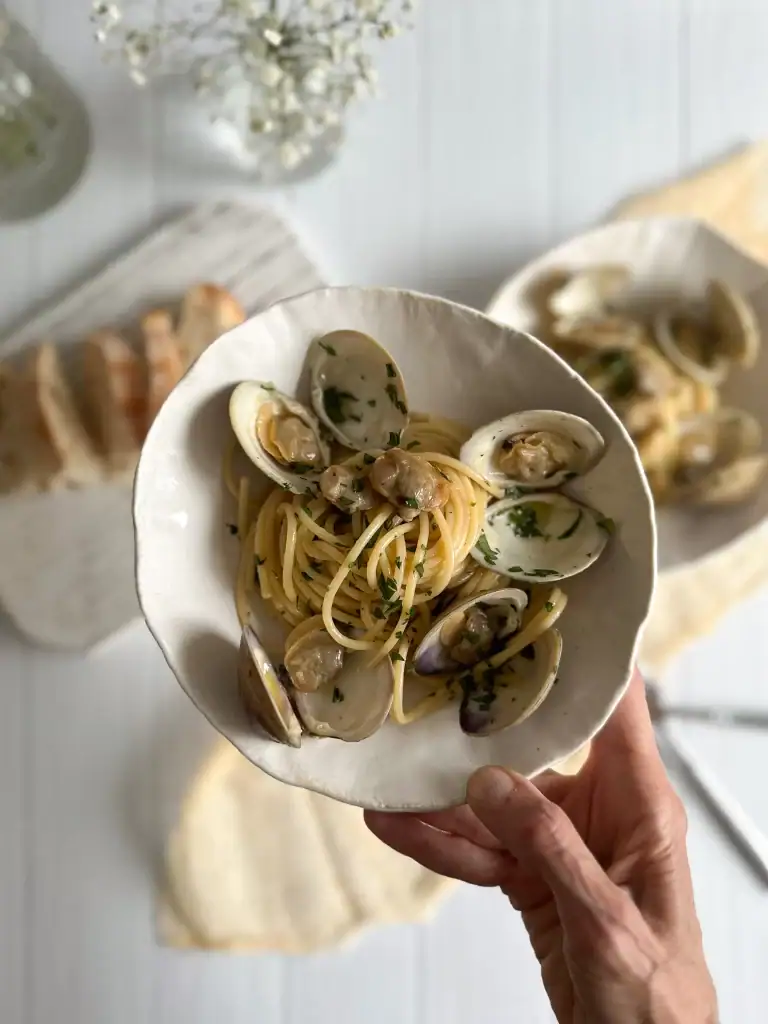
Aglio e olio needs dried spaghetti. Always.
Dried pasta is chosen when:
- Sauce relies on emulsification
- Texture contrast matters
- The sauce is bold or acidic
- The pasta needs to hold shape

FRESH VS DRIED PASTA: TEXTURE COMPARISON
| FEATURE | FRESH PASTA | DRIED PASTA |
| MAIN INGREDIENTS | Flour + eggs | Durum semolina + water |
| TEXTURE | Soft, silky | Firm, elastic |
| BEST WITH | Butter, cream, stuffed | Tomato, oil, Roman sauces |
| COOKING TIME | 1-3 minutes | 8-12 minutes |
| SAUCE ABSORPTION | Absorbs | Coat |
THE BIGGEST MISTAKE PEOPLE MAKE
They assume fresh pasta is superior. In Italy, that’s simply not true.
No Roman chef would make carbonara with fresh tagliatelle.
No nonna would serve tortellini from a dried box.
Each pasta was designed for its regional cuisine. The question isn’t which is better. It’s which is correct for the dish.
FRESH VS DRIED PASTA FOR POPULAR DISHES
Carbonara → Dried spaghetti
Bolognese (ragù alla bolognese) → Traditionally fresh tagliatelle
Cacio e Pepe → Dried spaghetti or tonnarelli
Lasagna → Fresh sheets (traditional)
Aglio e Olio → Dried spaghetti
Ravioli → Fresh only
WHY THIS MATTERS
Growing up in Veneto, fresh pasta was part of winter Sundays — especially stuffed shapes.
But Roman pasta dishes were always dried.
This distinction isn’t theoretical. It’s cultural.
Italian cuisine is regional, technical, and intentional.
Understanding when to use fresh vs dried pasta means cooking like an Italian — not just cooking Italian food.
FAQ: FRESH VS DRIED PASTA
Is fresh pasta healthier than dried?
Not necessarily. Fresh contains eggs and more fat. Dried is just semolina and water.
Can I substitute fresh pasta for dried?
You can — but texture will change dramatically. Especially in carbonara or cacio e pepe.
When should you use fresh pasta instead of dried?
Use fresh pasta for delicate sauces, stuffed pasta, butter-based dishes, and traditional Northern Italian recipes like tagliatelle or tortellini.
Why does dried pasta taste better with tomato sauce?
Durum wheat holds structure and contrasts acidity better than egg pasta.
Why is dried pasta better for carbonara?
Dried pasta releases starch gradually and holds its shape, allowing proper emulsification with eggs and cheese — essential for authentic Roman carbonara.
Is bronze-cut pasta important?
Yes. Bronze dies create a rough surface that holds sauce better.
Do Italians eat fresh pasta every day?
No. Dried pasta is far more common in daily cooking.
What is the main difference between fresh and dried pasta?
Fresh pasta contains eggs and has a soft texture. Dried pasta is made from durum wheat semolina and water, creating a firmer bite ideal for structured sauces.
Is fresh pasta more authentic?
Both are authentic. Italian cuisine uses fresh pasta in the North and dried pasta extensively in Central and Southern Italy.
MORE PASTA RECIPES FOR YOU
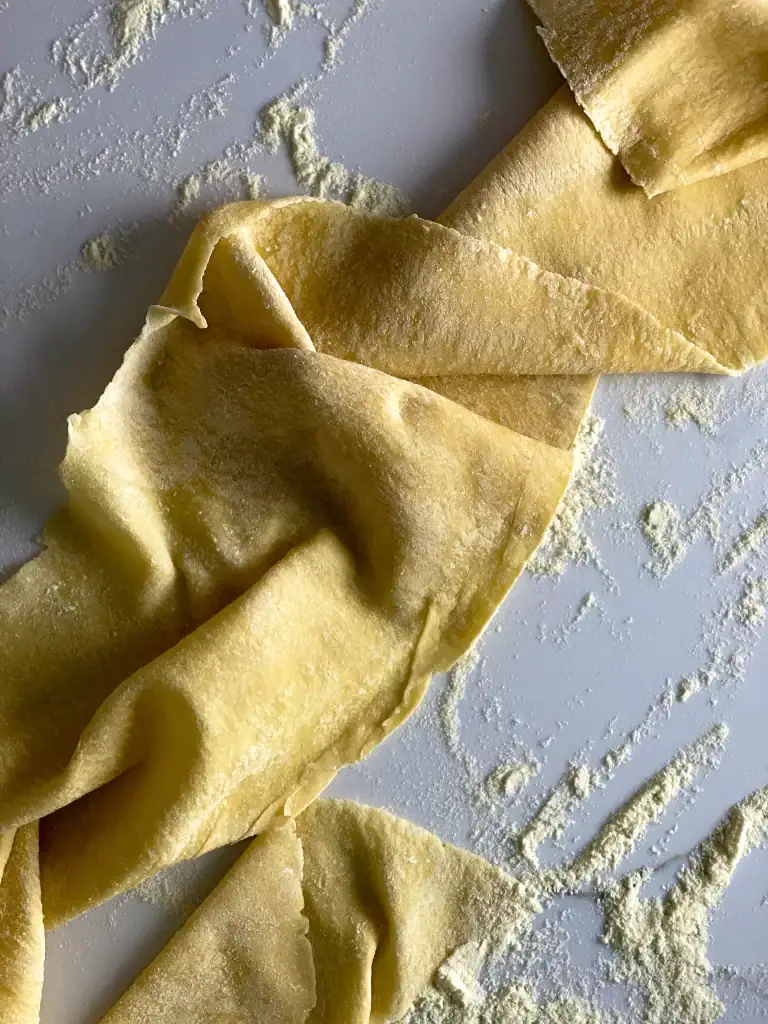
How to make homemade pasta dough: the base for all fresh pastas, both with 00 flour +eggs or durum wheat semolina flour + water.
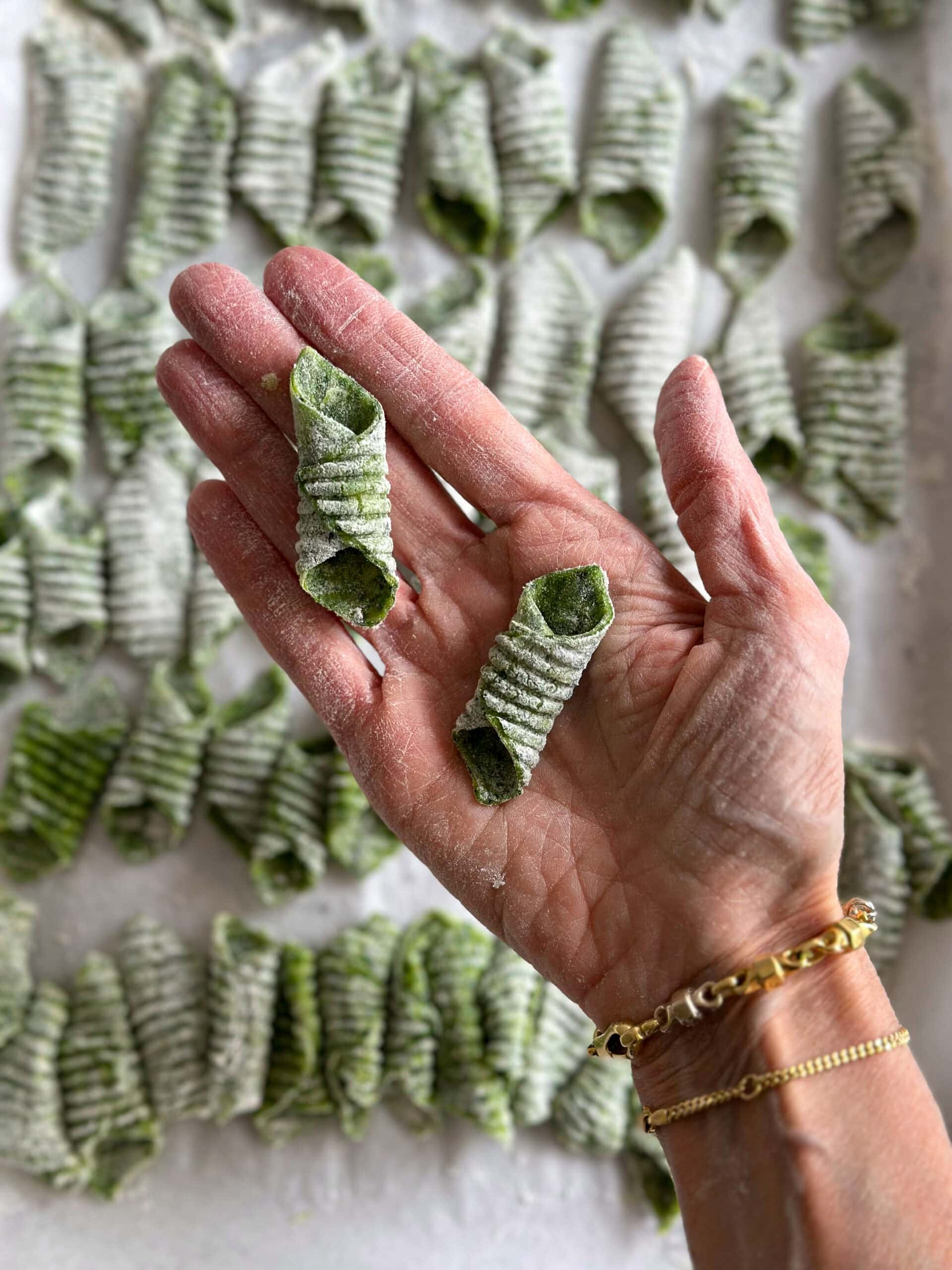
Garganelli: a shape from Emilia Romagna. I made a spinach garganelli version, ideal for spring time.
Orecchiette: a fresh pasta shape made with durum wheat semolina and water, named after its shape, resembling little ears – aka orecchiette in Italian. Classic shape from Puglia.
Cavatelli: another fresh pasta shape made with durum wheat semolina and water, typical as well from the south. Try it with my sausage spicy sauce.


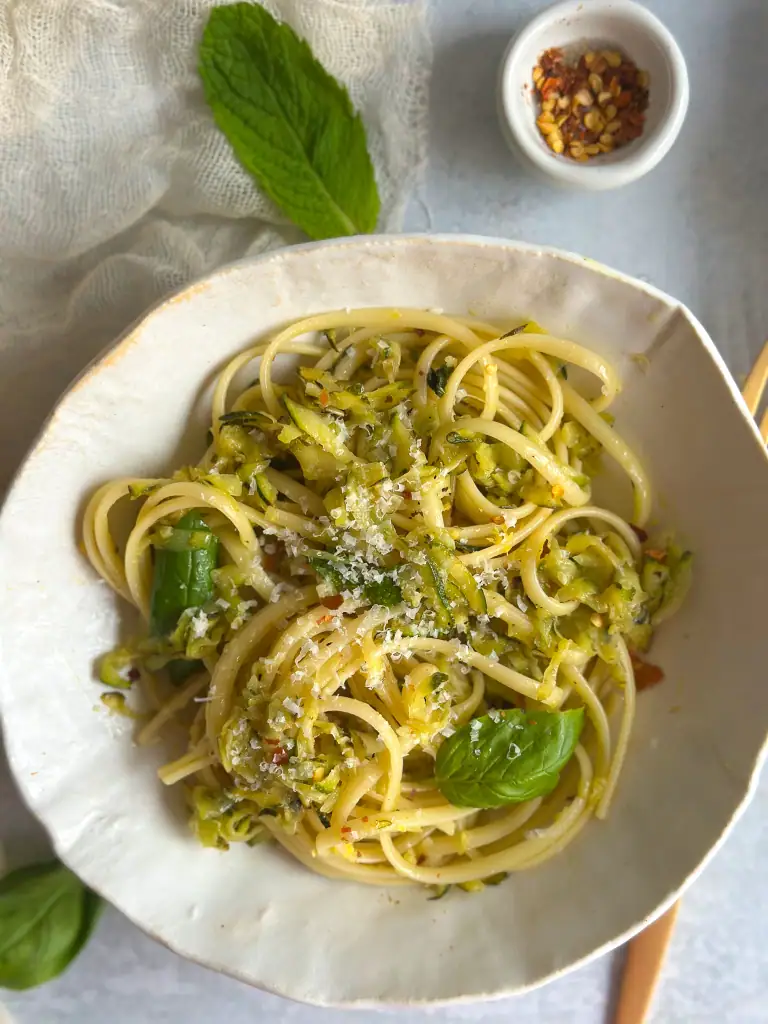
Pasta with Zucchine: a classic dish that calls fom dry pasta. The emulsification of the starch with the oil, is what makees the the saucee crreamy and silky without adding butter.
Mussels Spaghetti with Cherry Tomatoes: anotheer dish that calls for drry pasta.

FINAL TAKEAWAY
- Fresh pasta is tender, delicate, and celebratory.
- Dried pasta is structured, bold, and foundational.
- Knowing when Italians use each is the difference between following a recipe — and understanding a cuisine.
- And that’s where real Italian cooking begins.
✨ I hope you will find this dry vs fresh pasta guide helpful! I would love to connect with you through my recipe and I will be very appreciative of your comments! If you make this recipe make sure to tag me on Instagram @Italian_Kitchen_Confessions.To get more ideas follow me on Pinterest.✨


