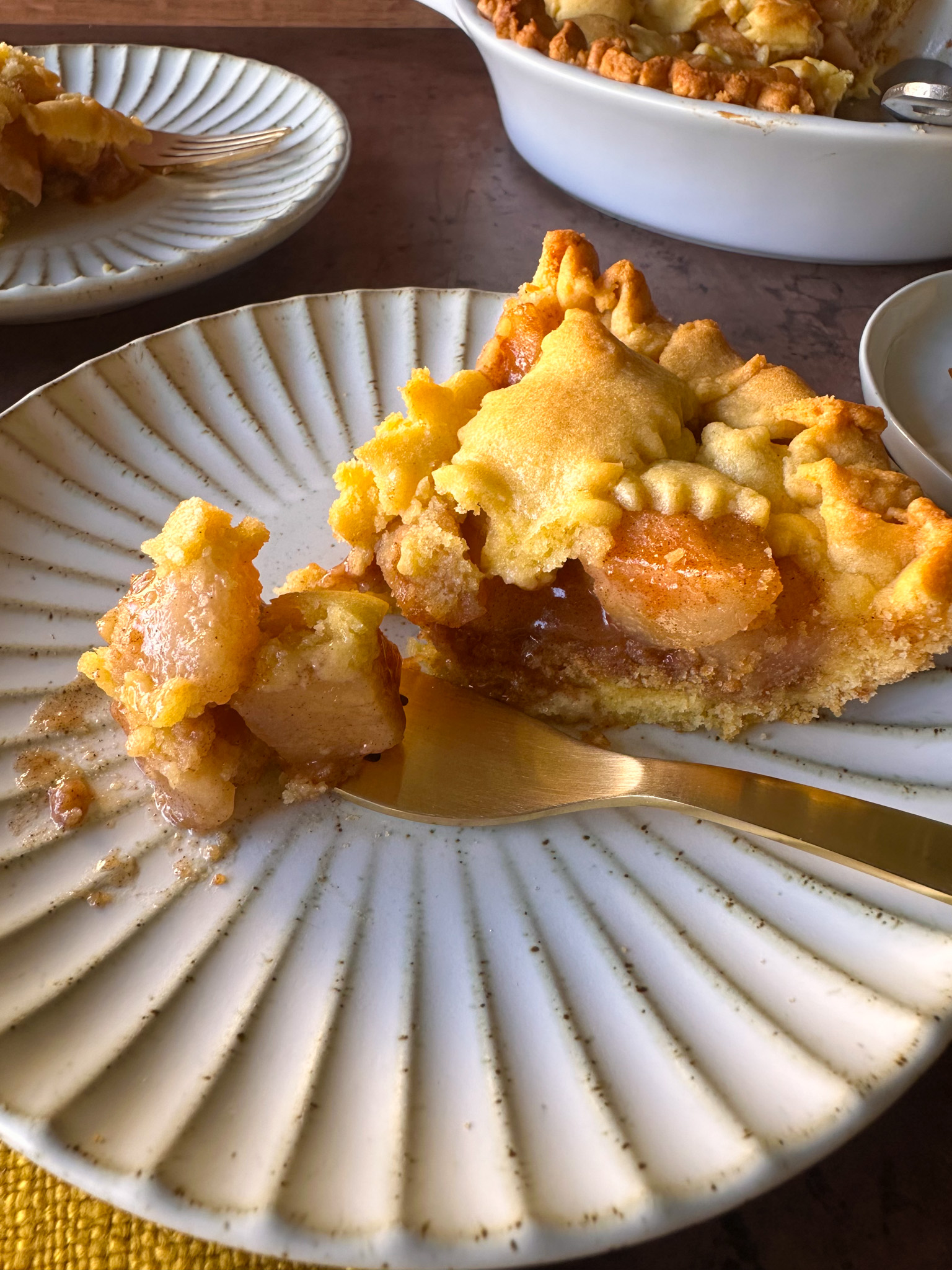
Servings: 8
Calories: 411kcal
Equipment
- 1 Rolling Pin
- 1 tart pan 9 inch diameter
- 1 pastry cutter
Ingredients
For the crust pie
- 300 gr flour baking 00
- 150 gr sugar caster
- 100 gr butter unsalted
- 1 tsp baking powder
- 1 tbsp lemon zest grated
- 1 pinch salt
- 1 unit egg yolks
- 1 unit egg whole
For the filling
- 25 gr butter unsalted
- 2 lb pear Bosc, peeled and chopped
- 60 gr sugar caster
- 1 pinch salt
- 2 tsp corn starch
- 1.5 tsp cinnamon
- 4 units cookies digestive
Instructions
Prepare the Pasta Frolla
- Mix the eggs and sugar. In the bowl of a KitchenAid stand mixer fitted with the flat beater, combine the whole egg, egg yolk and caster sugar. Beat on medium speed for approximately 2 minutes, until the mixture is well combined and slightly lighter in color.
- Add the remaining ingredients. Add the flour, softened butter, baking powder, lemon zest and salt. Mix on low speed until the ingredients begin to come together and form a dough. Avoid overmixing, which can make the pastry tough.
- Shape and chill. Transfer the dough to a lightly floured work surface. Gently bring it together with your hands, shape into a disk and wrap tightly in plastic wrap. Refrigerate for at least 1 hour, or overnight.
Prepare the Cinnamon Pear Filling
- Prepare the pears. Peel, core and chop the Bosc pears into medium-sized pieces, approximately ½–¾ inch (1.5–2 cm). Keeping the pieces relatively uniform will help them cook evenly.
- Cook the pears. Melt the butter in a large skillet over low heat. Add the chopped pears, caster sugar, cinnamon, vanilla extract and salt. Stir gently to coat the pears.
- Develop the flavor. Cook over low heat for approximately 20 minutes, stirring occasionally, until the pears become tender and the juices develop a glossy, caramel-like consistency. The pears should soften but retain their shape. If using very ripe pears, reduce the cooking time.
- Thicken the filling. In a small bowl, mix the cornstarch with approximately 1 tablespoon of cold water until smooth. Stir the mixture into the pears and cook for another 1–2 minutes, until the juices thicken and lightly coat the fruit.
- Cool completely. Remove the skillet from the heat and transfer the filling to a bowl. Allow it to cool completely before assembling the crostata. If preparing it the day before, refrigerate in an airtight container.
Assemble the Crostata
- Prepare the oven and tart dish. Preheat the oven to 350°F (175°C). Position the rack in the lower-middle section of the oven. Lightly butter a 9–9½-inch (23–24 cm) tart dish if needed.
- Roll out the pastry. Remove the pasta frolla from the refrigerator and let it rest at room temperature for approximately 10 minutes, or until pliable. Reserve about one-third of the dough for the lattice. Roll out the remaining two-thirds on a lightly floured surface to approximately 3–4 mm thick.
- Line the tart dish. Carefully transfer the pastry to the dish, pressing it gently against the bottom and sides. Trim the excess dough with a sharp knife.
- Add the biscuit layer. Crush the digestive biscuits into fine crumbs and sprinkle them evenly over the unbaked pastry base. This layer helps absorb excess moisture released by the pears during baking.
- Add the pear filling. Spoon the completely cooled pear mixture over the biscuit layer, spreading it evenly with the back of a spoon.
- Create the lattice. Roll out the reserved dough to approximately 3–4 mm thick. Using a pastry wheel or sharp knife, cut it into strips approximately ½–¾ inch (1.5–2 cm) wide. Arrange the strips over the filling in a crisscross pattern, gently pressing the ends into the pastry edges.
- Chill before baking. Refrigerate the assembled crostata for 15–20 minutes to help the pastry hold its shape during baking.
Bake and Serve
- Bake the crostata. Place the tart dish on the lower-middle oven rack and bake at 350°F (175°C) for approximately 50 minutes, until the lattice and edges are golden brown and the pastry is cooked through.
- Protect the edges if necessary. If the edges begin browning too quickly, cover them loosely with aluminum foil during the second half of baking. Ceramic dishes may require slightly longer baking times than metal pans.
- Cool before slicing. Remove the crostata from the oven and let it cool completely in the dish, approximately 2 hours. This allows the filling to set and makes it easier to cut clean slices.
- Serve. Enjoy at room temperature, on its own or with a spoonful of mascarpone cream, vanilla gelato or lightly whipped cream.
Notes
- Choosing the pears: Bosc pears are ideal because they retain their shape during cooking. Select pears that are firm but flavorful. Very ripe pears will require less cooking time.
- Preventing a soggy bottom: Three techniques work together in this recipe: pre-cooking the pears to reduce moisture, adding cornstarch to thicken their juices, and sprinkling crushed digestive biscuits over the pastry base.
- No blind-baking required: The pastry and filling bake together. I tested this recipe in a Staub ceramic tart dish at 350°F for 50 minutes, and the bottom crust was fully cooked.
- Make ahead: Prepare the pasta frolla and pear filling the day before. Store separately in the refrigerator and assemble just before baking.
- Storage: Refrigerate leftover crostata in an airtight container for up to 3–4 days. Bring to room temperature before serving or warm gently in the oven.
- Flour measurement: For the most consistent pasta frolla, weigh the flour in grams rather than relying on cup measurements.
Nutrition
Calories: 411kcal | Carbohydrates: 71g | Protein: 6g | Fat: 14g | Sodium: 168mg | Potassium: 301mg | Fiber: 4g | Sugar: 37g | Vitamin A: 422IU | Vitamin C: 6mg | Calcium: 61mg | Iron: 2mg
Have you tried to make it?Mention @Italian_Kitchen_Confessions or tag #Italian_Kitchen_Confessions!