This Peperonata post contains affiliate links for products we love. Italian Kitchen Confessions earns a small commission on these links at no cost to you.
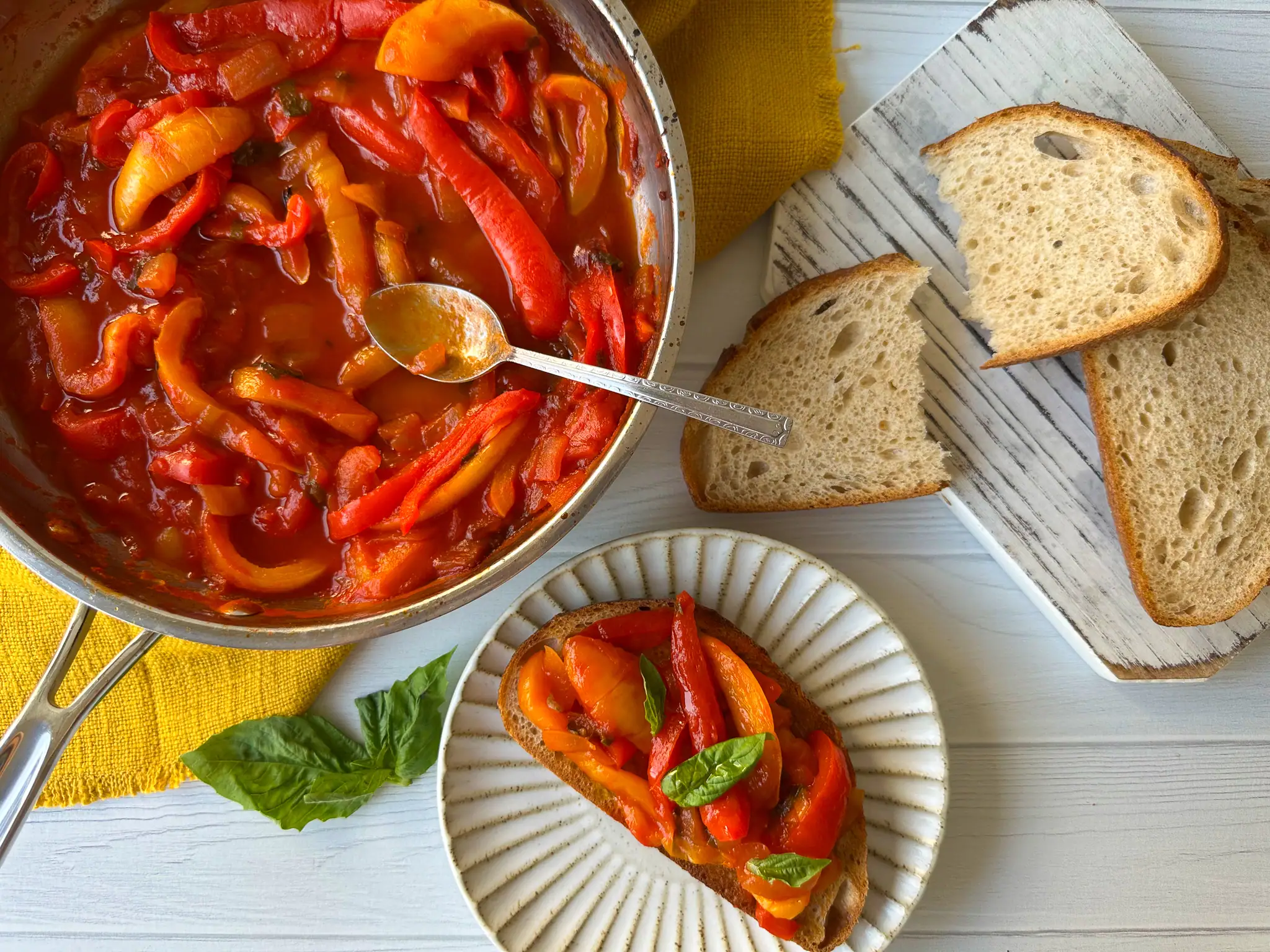
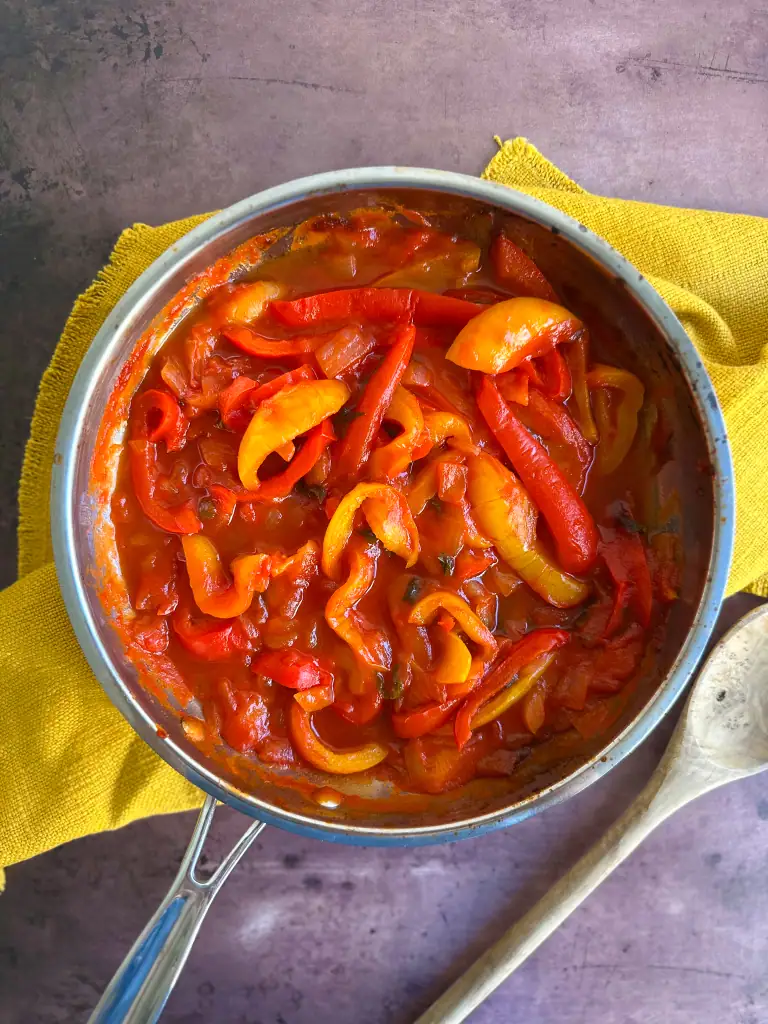
Peperonata is a beautiful example of cucina povera: simple ingredients such as bell peppers, tomatoes, onions, sugar and a touch vinegar cooked together to reach a deep flavor. Peperonata derives its name from pepperoni – bell pepper in Italian- which is the main ingredients of this dish.,
This is the kind of dish that brings you straight to an Italian summer kitchen—where peppers are simmering gently on the stove, filling the air with their sweet, tangy aroma. It’s colorful, comforting, and incredibly versatile, whether served warm, cold, or at room temperature.
WHAT IS PEPERONATA?
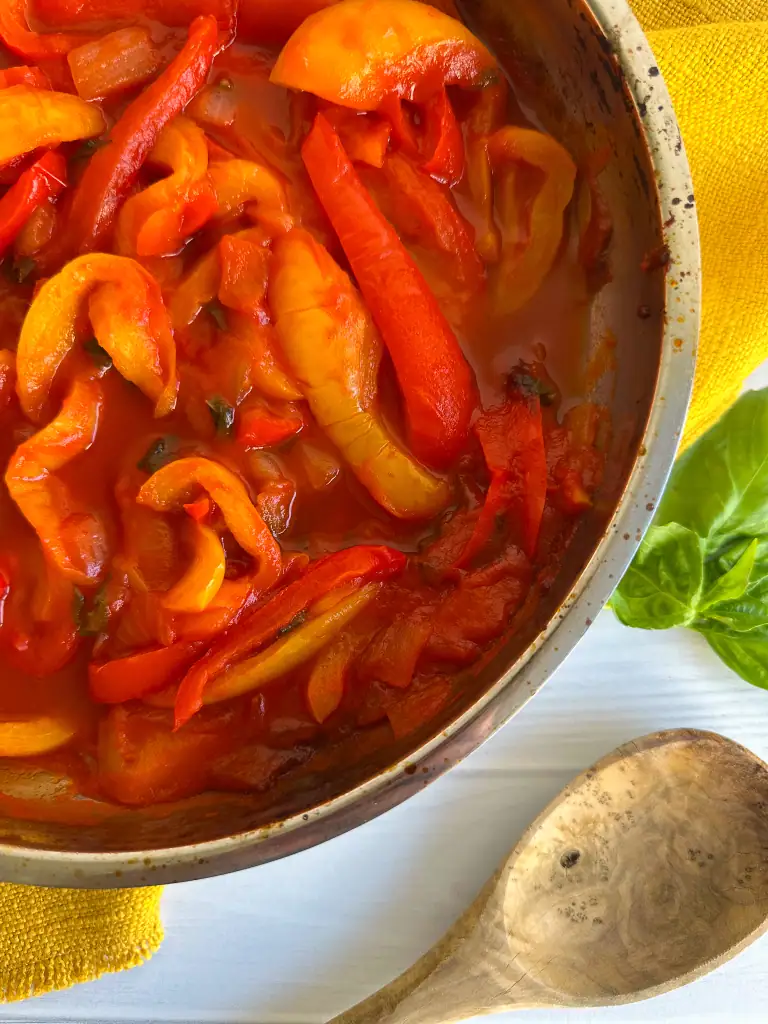
Peperonata is a traditional Italian side dish made by stewing bell peppers slowly with onions, tomatoes, vinegar, and sugar until soft and flavorful. Its origins are Southern Italian, especially in Calabria and Sicily, but you’ll find variations all over the country. The secret to a great peperonata lies in patience—the slow cooking allows the vegetables to caramelize and the flavors to deepen. Think about it as Italian bell pepper stew, slowly simmered until all flavors caramelize and blend together into a sort of peperonata sauce.
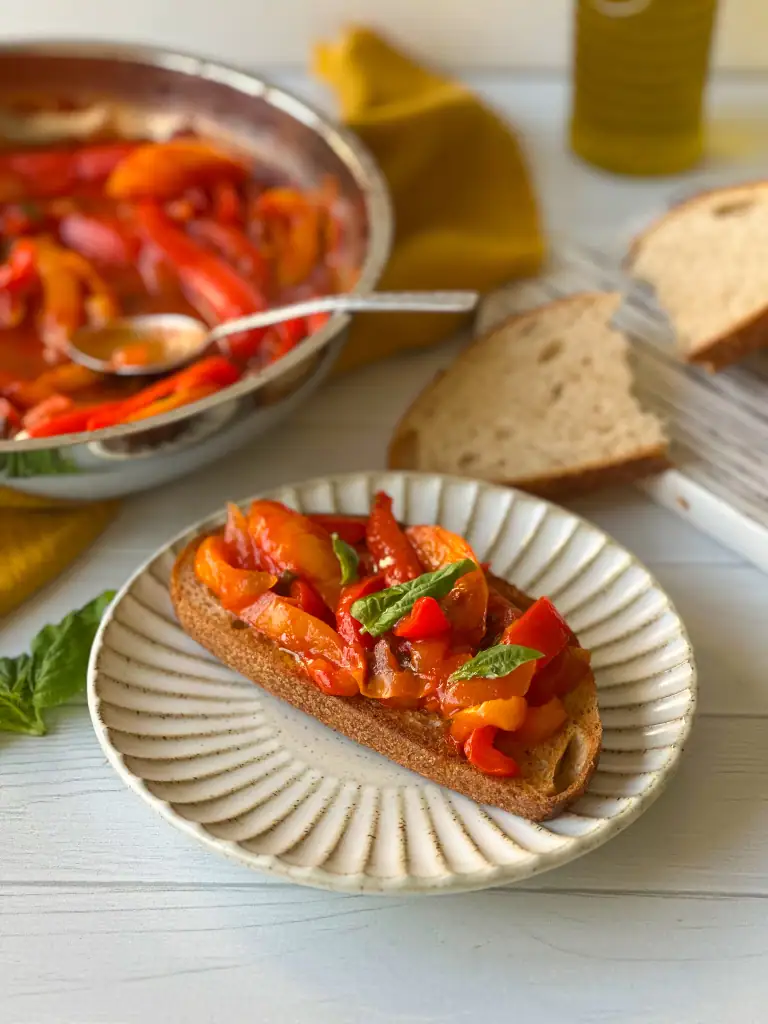
I learned this traditional peperonata recipe from my dad, who in the summer made a lot of different recipes with bell peppers. Usually he was cooking this dish chunky, in some others part of Italy is cooked into a jammy relish. I am used to have it in this way and I like ti eat it on his own, or over a bruschetta or, folder into pasta, that was how often my dad was using left overs.
PEPERONATA: NOTES ON INGREDIENTS
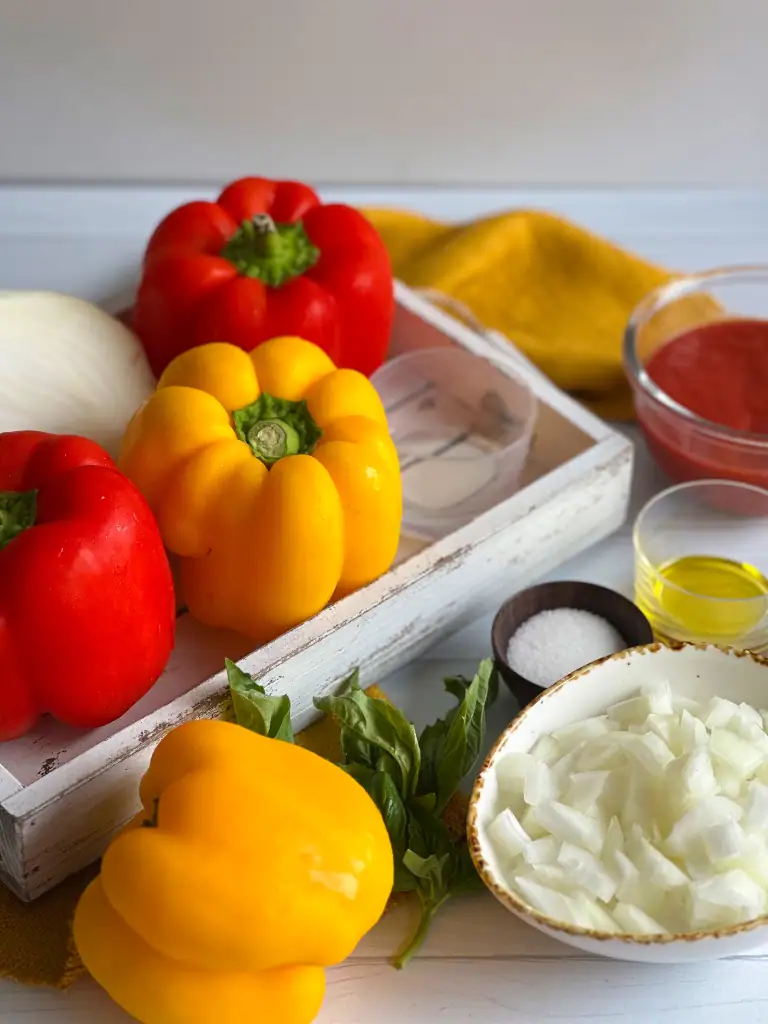
While you will find all the ingredients in the recipe card, here below a few important notes on some key ingredients to make Italian peperonata:
Bell Peppers
Classic peperonata use a mix of red, yellow, and orange peppers for the best flavor and color. Red peppers bring sweetness, yellow adds brightness, and orange balances both. Avoid green peppers—they’re more bitter and don’t give the same sweetness.
Vinegar
A touch of vinegar (like white wine vinegar or aged rosé vinegar) balances the sweetness and gives that signature tang. Don’t skip it—it’s what makes peperonata taste a bit sweet and sour.
Sugar
Just a small pinch! Sugar enhances the natural sweetness of the peppers and helps caramelize the sauce as it cooks. Do not skip it, do not use sweeteners!
HOW TO MAKE THE BEST PEPERONATA RECIPE: NOTES ON PREPARATION
Making peperonata is all about coaxing out the natural sweetness of the peppers and creating harmony between the tangy, sweet, and savory notes. A few tips:
Slice evenly: Cut peppers into similar-sized strips so they cook evenly.
Slice finely: slice the onion finely, they will cook faster and caramelize better.
Cook low and slow: Don’t rush. Keep the heat moderate to low and stir occasionally to prevent sticking or burning.
Use a heavy-bottomed pan: It helps maintain steady heat for long cooking.
Rest before serving: Peperonata improves as it sits. Let it rest at least 30 minutes—better yet, refrigerate overnight and serve the next day.
PEPERONATA: NOTES ON SUBSTITUTIONS
- Bell peppers – sweet long peppers can be used instead. Never use green peppers. Italian dishes do not use green peppers as they are not common.
- Tomato passata – you can swap it for a mix of tomato paste 1/3 of a cup, with 2/3 of water.
- White wine vinegar – I would use apple cider vinegar, or a lighter balsamic vinegar.
PEPERONATA RECIPE VARIATIONS
The recipe I am sharing is the most traditional and authentic one, but there are some variations all over Italy, here a few ideas for you:
- My dad sometimes was adding some potatoes cut in ½ inch slices, shaped as half circle. He was adding them along with the passata, for a side that was more complete in terms of nutrients.
- If you like a spicy peperonata, add ½ teaspoon of red pepper flakes or Calabrian chili pepper. In general Italian recipes have just a hint of heat, but you can always add more, if you can tolerate it.
- If you want to give a more earthy note to your peperonata, add a bit of dried oregano 5 minutes from the end of cooking.

Ingredients
- 1½ tbsp olive oil extra virgin
- 1 cup yellow onion chopped
- ½ pound bell pepper red
- ½ pound bell pepper yellow
- 1 sprig basil fresh
- 1 cup tomato passata
- 1½ tbsp white wine vinegar
- 1 tbsp sugar
- 2 tsp salt
Instructions
- Prepare the vegetables:Wash and deseed the bell peppers. Cut them into strips about 1 cm wide. Thinly slice the onions.
- Cook the base:In a large skillet or sauté pan, heat the olive oil over medium heat. Add the onion and cook gently for 5–7 minutes, until soft and fragrant.
- Add the peppers:Stir in the sliced peppers. Season with a pinch of salt. Cover and let cook on medium-low heat for about 10–12 minutes, stirring occasionally.
- Add tomato, vinegar, and sugar:Add the tomato sauce, Stir well, cover again, and let it simmer for 15–20 minutes, until the peppers are tender and the sauce has thickened. At the end add vinegar, and sugar. Cook for 1–15 more minutes until the vinegar has evaporated. Adjust salt if needed.
- Finish and serve:Sprinkle with fresh basil or parsley, and serve warm, cold, or at room temperature.
Nutrition
FAQ
What is the difference between peperonata and ratatouille?
Peperonata is an Italian dish focusing primarily on bell peppers stewed with onion, tomato, vinegar, and sometimes sugar. Ratatouille is a French Provençal dish that combines peppers with zucchini, eggplant, and herbs, often cooked separately before combining. Peperonata is sweeter and simpler, while ratatouille is more herbaceous and vegetable-forward.
Can I make peperonata without vinegar?
You can, but it will lack the balance that vinegar provides. If needed, use lemon juice as a substitute.
Can I freeze peperonata?
Yes. Once cooled, freeze in airtight containers for up to 2 months. Thaw in the fridge overnight before reheating.
Is peperonata served hot or cold?
This Italian stewed peppers are delicious both hot or cold! It’s delicious warm as a side dish, or for a peperonata pasta or cold as part of an antipasto platter or picnic.
Can I add eggplant or zucchini to peperonata?
While not traditional, you can adapt the dish. However, once you start adding multiple vegetables, you’re closer to a caponata or a ratatouille.
Is peperonata (Italian stewed peppers) healthy?
Yes it is healthy! Based on vegetables, this side dish packs a lot of vitamin C, antioxidants. It is a good source of fibers and the use of extra virgin olive oil provides healthy fats. It is a gluten-free, dairy-free recipe suitable for vegans and it is great to add to your summer rotation.

WHAT TO SERVE WITH PEPERONATA (ITALIAN STEWED PEPPERS)
Peperonata is incredibly versatile and can be served in many ways:
- As a side dish with grilled meats, roast chicken, or fish
- On toasted bread or bruschetta with a drizzle of olive oil
- Folded into pasta, especially with ricotta or burrata
- Spooned over polenta or risotto
- As a filling for sandwiches or focaccia
- Topped with a fried egg for a quick and rustic lunch
HOW TO STORE PEPERONATA
Peperonata stores beautifully:
- Fridge: Keep in an airtight container for up to 5 days.
- Freezer: Freeze cooled peperonata in a sealed container for up to 2 months.
- To reheat: Gently warm in a pan over low heat or in the microwave, adding a splash of water if needed.
Flavor improves after a day, making it a perfect make-ahead dish for meal prep or entertaining.
WHICH WINE PAIRS BEST WITH PEPERONATA?
Peperonata’s sweet and tangy flavor calls for wines that complement its vibrant character:
White wine: Try a crisp Vermentino, Grillo, or Falanghina. These wines have enough acidity to cut through the sweetness of the peppers.
Rosé: A dry rosé (like a Cerasuolo d’Abruzzo or rosato from Salento) matches both the freshness and complexity of peperonata.
Red wine: If serving with meats, go for a light-bodied red like Dolcetto or Frappato.
MORE BELL PEPPER RECIPES YOU WILL LOVE
Looking for more tasty bell pepper recipes ? On my blog you can find different ways to use these summer vegetables, rich in vitamin c!
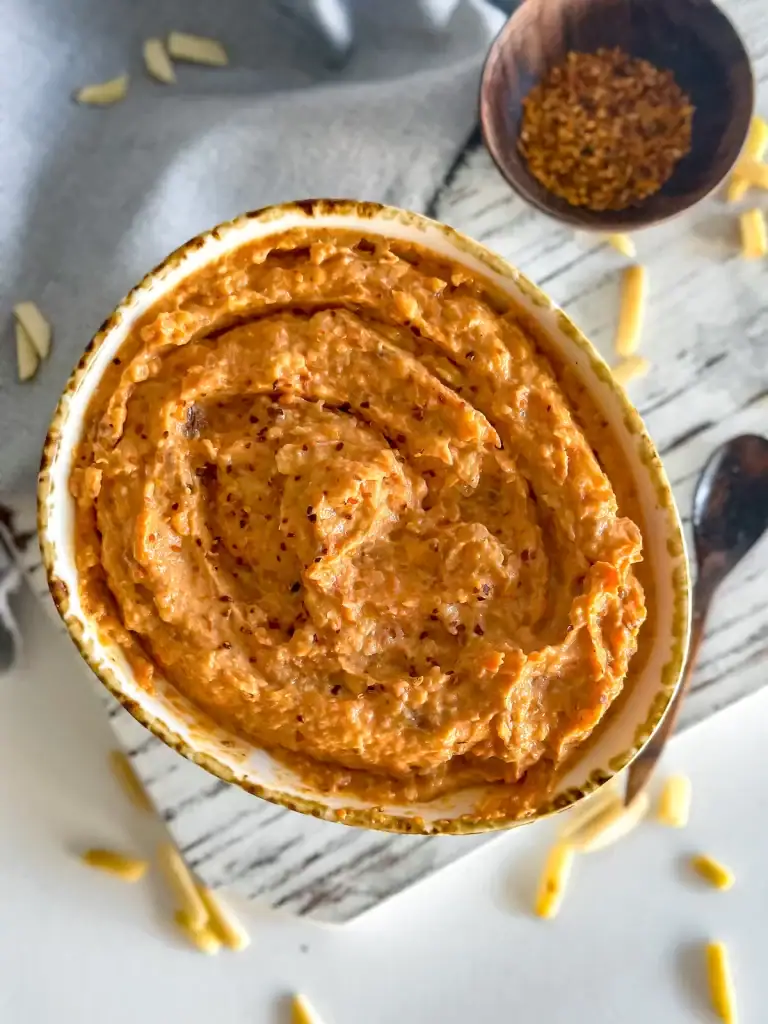
Red pepper Pesto (Calabrian Pesto): this red pepper pesto is a sensory delight—smoky, spicy, and fresh. It is a perfect dip for a summer al fresco aperitivo or you can use to make a roasted red pepper pesto pasta, that will spice up your normal pasta night!

Simply Roasted Peppers: is an easy recipe made with simple ingredients! This recipe will take you around 1 hours from start to finish, but you will end up with a jar full of goodness, rich in Vitamin C, that will last at least 5 days in the fridge. Simply Roasted Bell Peppers can be enjoyed on their own and can also be used as a part of many other Italian recipes!
Roasted Red Pepper Bruschetta with anchovies and mozzarella: Roasted Peppers, Mozzarella and Anchovies Bruschetta: a flavor combination that seems odd to many but that will surprise by how extraordinary it is. The saltiness of the anchovies contrasts the buttery mozzarella and the smoky taste of roasted peppers. If you are looking for a recipe to entertain your friends and family this summer, make this one!


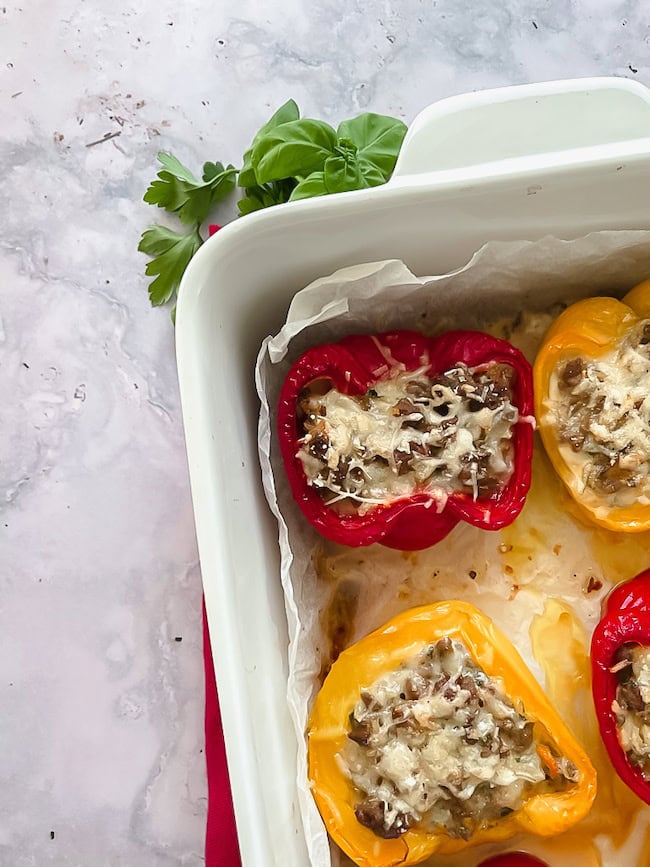
Italian Stuffed Peppers: a classic rustic dish, made with lean beef, brown rice, and bursting with classic Italian flavors such as fresh herbs, gooey mozzarella and nutty parmesan. A symphony of flavor perfect for lunch along with a side little green salad.
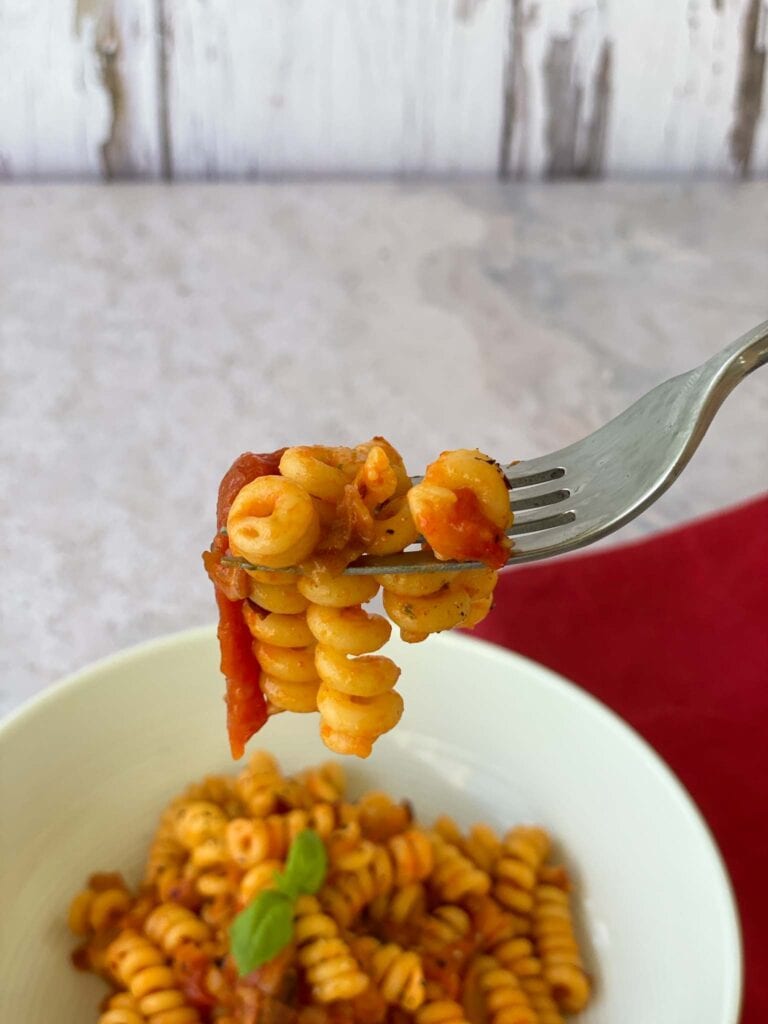
Spicy pasta with roasted bell peppers and bacon: A simple pasta recipe, easy to make and with a kick at evert bite. Few simple and fresh ingredients that comes together quickly for those lazy summer nights when you want something tasty but quick to make.
I hope you liked this Peperonata recipe! If you try this recipe and you liked it, please leave a star review below! I would be very appreciative of your comments! Make sure to tag me on Instagram @Italian_kitchen_confessions I hope you loved it! To get more ideas follow me on Pinterest.


