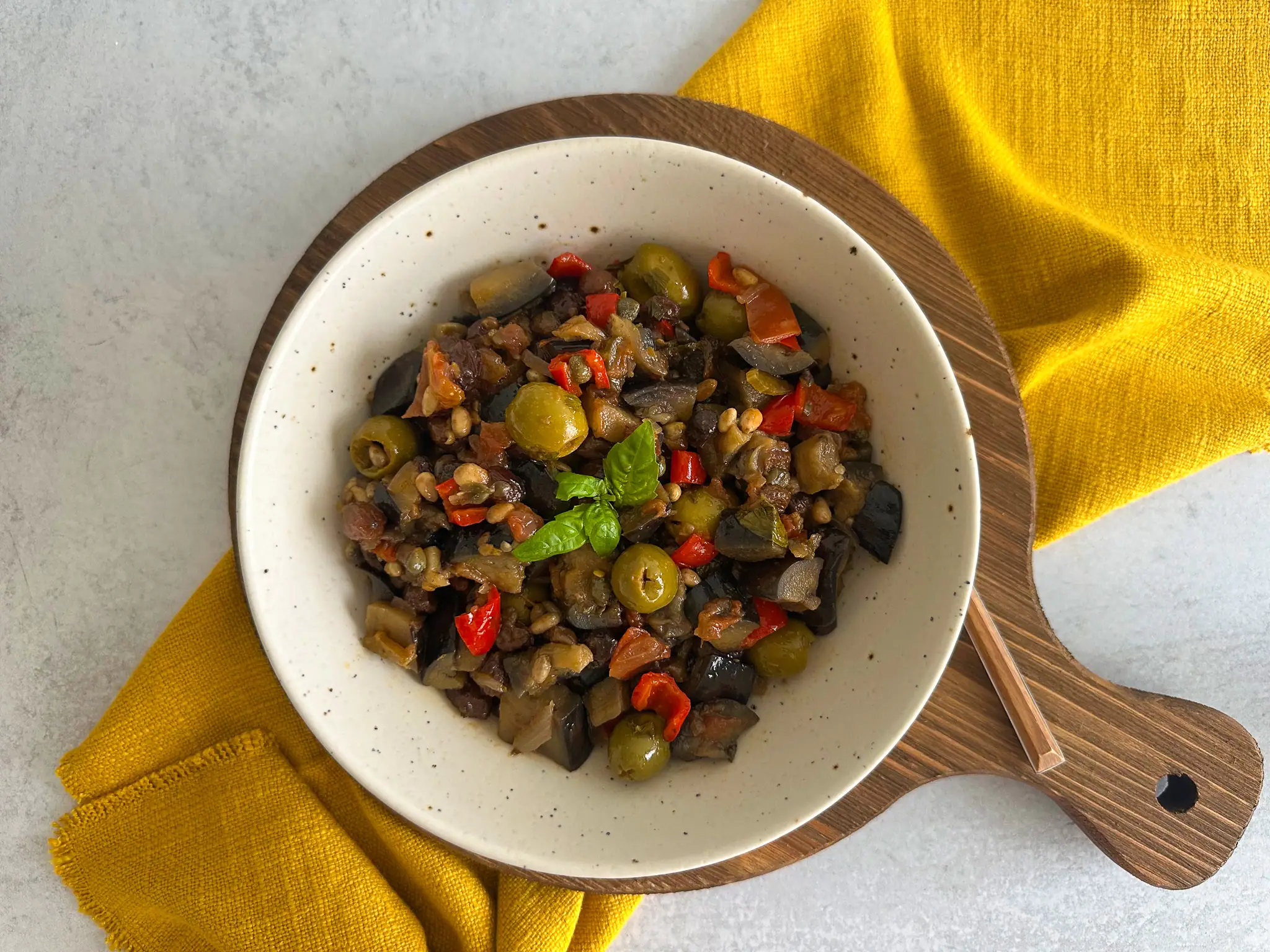
Caponata is one of this dishes that captures the spirit of Sicily, There’s one dish that captures the soul of Sicily: Caponata. A vibrant, sweet-and-sour eggplant recipe loaded with summer vegetables, briny olives, and tangy vinegar, Caponata brings together everything I love about Sicilian cooking — bold flavors, colorful produce, and layers of history.
I first tasted Sicilian Caponata in Palermo during a summer trip, and it instantly stole my heart. Every family has its own version, but they all share the same agrodolce balance — the perfect harmony of sweet and sour that defines traditional Sicilian cuisine.
Sweet, sour, savory, and bursting with Mediterranean ingredients, this eggplant-based dish is more than just a recipe — it’s a story of culture, trade, and tradition. With roots tracing back centuries, Caponata has become a symbol of Sicilian cuisine, celebrated for its versatility and unique balance of flavors.
In this guide, I’ll walk you through everything you need to know about Caponata: its history, how it compares to French ratatouille, my twist on key ingredients and why they work together, classic variations, storage tips, and the perfect wine pairings.
This recipe stays authentic to its roots while adding my personal twist, and I’ll show you step by step how to make it perfectly at home.
WHAT IS SICILIAN CAPONATA?
Caponata is a traditional Sicilian dish made with eggplant, bell peppers, onions, celery, tomatoes, olives, and capers, cooked slowly until tender and finished with a sweet-and-sour flavor known in Italian as agrodolce. The balance of sugar and vinegar gives Caponata its signature taste — tangy yet slightly sweet, with layers of depth.
The dish dates back to at least the 18th century, though some food historians believe its origins are even older, influenced by Arab, Spanish, and Greek cuisines that shaped Sicily’s food culture. Over the centuries, Caponata has evolved into many regional styles — from the classic Palermo version with pine nuts and raisins to versions including swordfish in coastal areas.
What makes Sicilian Caponata special is its versatility: it can be served warm, at room temperature, or cold, and it only gets better after resting for a day as the flavors meld together.
WHAT IS THE DIFFERENCE BETWEEN CAPONATA AND RATATOUILLE?
At first glance, Caponata and French ratatouille may seem similar: both are Mediterranean vegetable dishes featuring eggplant, peppers, and tomatoes. But the two differ in several key ways:
• Flavor profile: Ratatouille is savory, herb-forward, and gently stewed, while Caponata has a distinctive sweet-and-sour agrodolce flavor from vinegar and sugar.
• Texture: Caponata is chunkier, with vegetables often fried separately before being combined, giving them richer caramelized notes. Ratatouille tends to be softer, with vegetables stewed together.
• Ingredients: Caponata typically includes olives, capers, raisins, and pine nuts — ingredients that bring a uniquely Sicilian identity. Ratatouille relies more on Provençal herbs like thyme, rosemary, and basil.
In short, while both dishes highlight seasonal vegetables, Caponata is unmistakably Sicilian thanks to its bold contrast of sweet, sour, and savory.
SICILIAN CAPONATA: NOTES ON INGREDIENTS AND WHY THEY WORK WELL TOGETHER
Here’s what you’ll need to prepare a classic Sicilian Caponata, and why each of these elements has a purpose:
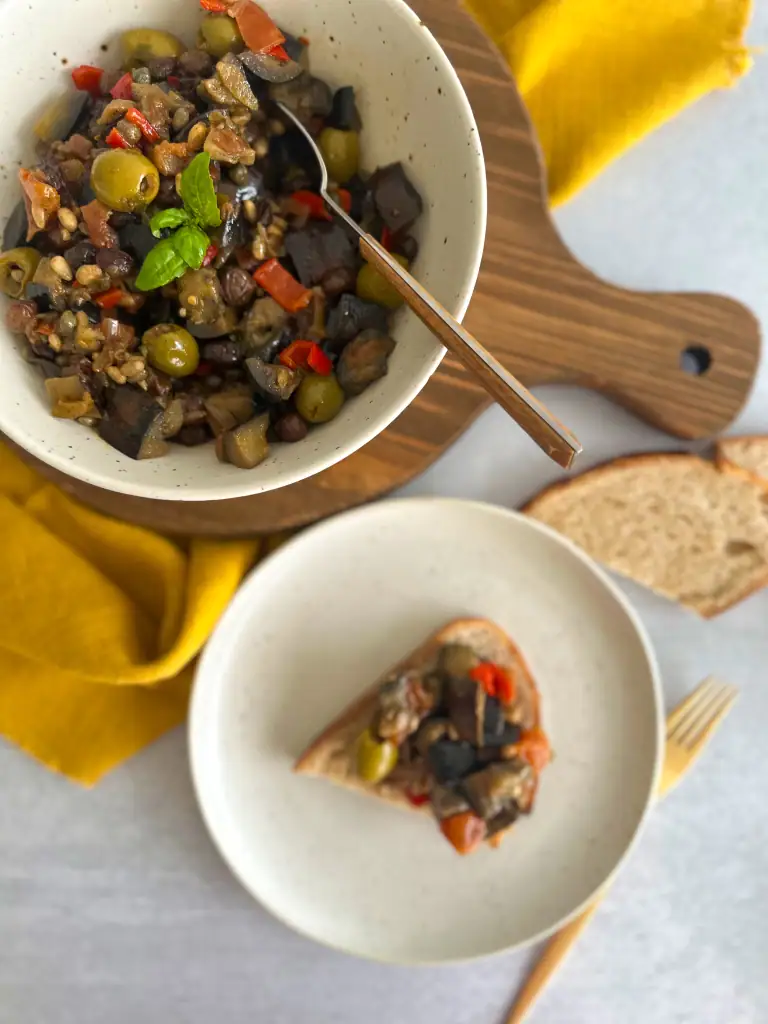
- 1 pound eggplant – The star ingredient, eggplant provides a meaty texture that absorbs flavors beautifully. In fact eggplants soaks up the olive oil and becomes silky, anchoring the dish
- bell pepper – Adds sweetness and color, balancing the dish, brightening the overall flavor.
- tomatoes – Necessary to addA touch of acidity and umami depth.
- green olives – Briny and salty, they sharpen the flavor profile. Choose Castelvetrano variety, for their plump texture and flavor profile.
- capers – Along with olives they give a burst of salt and tang in every bite. If you buy capers in salt, rinse them before using them.
- raisins – Bring gentle sweetness, highlighting the agrodolce nature of the dish and contrasting the salty flavor of green olives and capers.
- pine nuts – Add crunch and nutty richness.
- red onion – Mild sweetness that caramelizes during cooking.
- cup celery – Essential for traditional Caponata, offering freshness and subtle bitterness.
- vinegar – Red wine vinegar is traditional, providing the necessary acidity to balance sweetness.
- Sugar: to balance the vinegar acidity and give the Caponata its very distinctive flavor.
The magic lies in balance: salty, sweet, sour, and savory flavors mingling in perfect harmony.

INGREDIENTS SUBSTITUTIONS
If you don’t have all the traditional ingredients, you can still make a delicious eggplant stew:
- Eggplant: Swap part of the eggplant with zucchini for a lighter texture.
- Red Peppers: Use yellow or orange peppers variety.
- Green olives: replace them with black olives (taggiasca or kalamata) if that’s what you have.
- Pine Nuts: substitute with toasted almonds or walnuts.
- Raisins: Use golden raisins for a slightly different sweetness.
- Red wine vinegar: try apple cider vinegar for a milder tang.
EGGPLANT CAPONATA VARIATIONS
Sicily is full of regional takes on Eggplant Caponata. A few examples include:
- Palermo-style – The most classic version, with pine nuts and raisins.
- Catania-style – Adds potatoes for extra heartiness.
- Trapani-style – Often includes almonds instead of pine nuts.
- Seafood variation – In coastal towns, some add swordfish or tuna for a main-course version.
Each version reflects local tastes and available ingredients, but all maintain the balance of agrodolce. Whatever is your favorite version, make sure always vinegar and sugar are in your ingredients list as they contribute to the signature taste of this dish.
TIPS FOR THE BEST SICILIAN CAPONATA
- Salt and drain the eggplant before cooking to remove bitterness and excess water.
- I usually pan fry vegetables separately to ensure they keep their texture, I do not deep fry them, having in this way a lighter version.
- Don’t skip the vinegar and raisins — they define Caponata’s flavor.
- Let it rest overnight for the best results; flavors deepen beautifully.
- Serve at room temperature for maximum flavor.

Ingredients
Instructions
- Prepare the eggplant – Dice the eggplant, sprinkle with salt, and let it sit in a colander for 20–30 minutes to remove excess moisture and bitterness. Rinse and pat dry.
- Fry the eggplant – Heat 2 tbsp olive oil in a skillet. Pan fry the eggplant cubes until golden and tender. Remove and set aside.
- Cook the bell peppers– In the same pan, add 1 tbsp olive oil. Sauté bell pepper, cut in cubes. Remove and set aside.
- Prepare the base: Add onion, celery and cook until softened.
- Add flavorings – Stir in pine nuts, olives, raisins, capers and pine nuts. Let it cook a few minutes and then add the tomatoes. Cook them until softened. Return the eggplant and the bell pepper to the pan.
- Finish with agrodolce – Add vinegar and sugar (if using). Stir well and cook for 2–3 minutes, letting the vinegar evaporate slightly. Adjust seasoning. Add the the parsley and the basil. Adjust with salt and pepper.
- Rest and serve – Let the Caponata cool to room temperature before serving. Garnish with fresh basil if desired.
Nutrition
FAQ
Is Caponata like ratatouille?
Not exactly. Ratatouille is French and savory, while Caponata is Sicilian and sweet-sour with olives, capers, and raisins.
What is Caponata made of?
Eggplant, peppers, tomatoes, onions, celery, olives, capers, raisins, pine nuts, olive oil, and vinegar.
Is Caponata healthy?
Yes! It’s vegetable-based, rich in fiber, antioxidants, and healthy fats from olive oil. Gluten free, dairy free is suitable for vegetarians and vegan.
Does Caponata have olives?
Yes, green olives are traditional, though variations exist.
Does Caponata have garlic?
Some recipes add garlic, but it’s not always traditional.
Can Sicilian Caponata be served cold?
Yes — in fact, it’s often better chilled or at room temperature.
Can you make Eggplant Caponata in advance?
Absolutely. It tastes even better the next day.
WHAT TO SERVE WITH CAPONATA
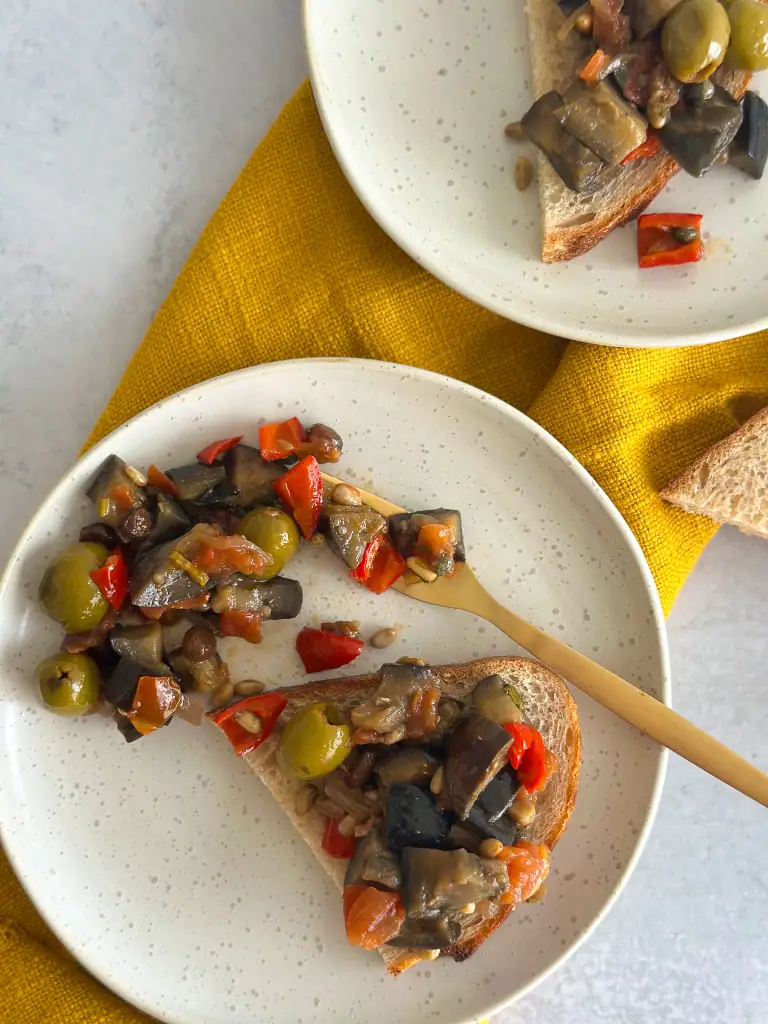
Caponata is extremely versatile. Serve it:
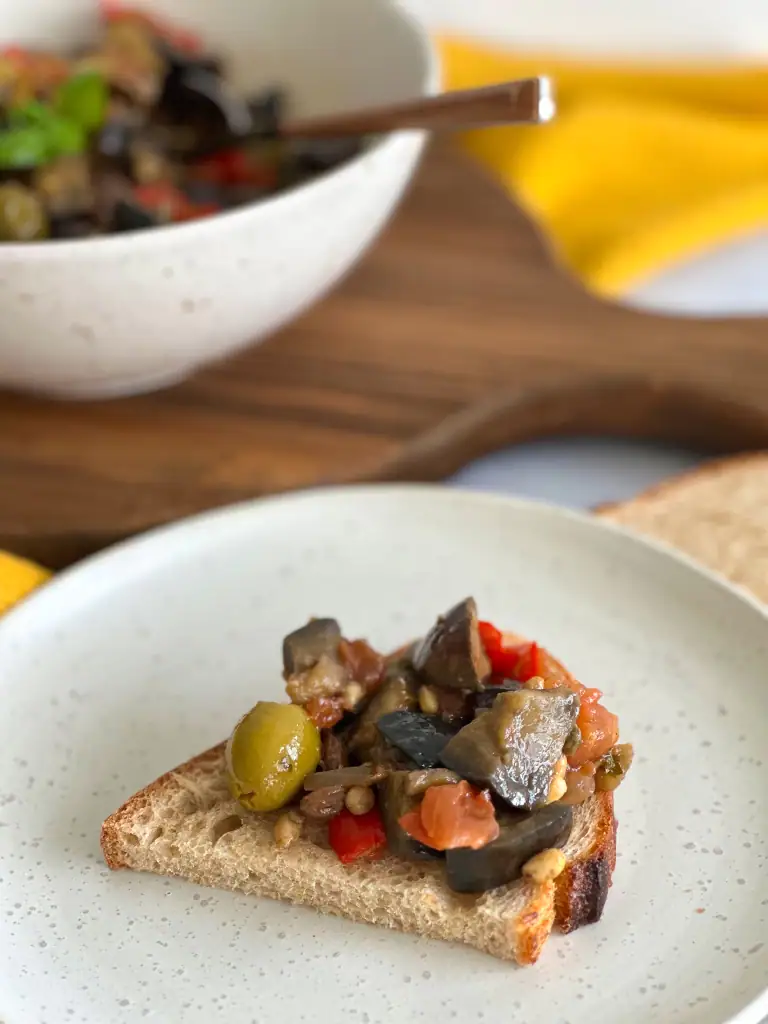
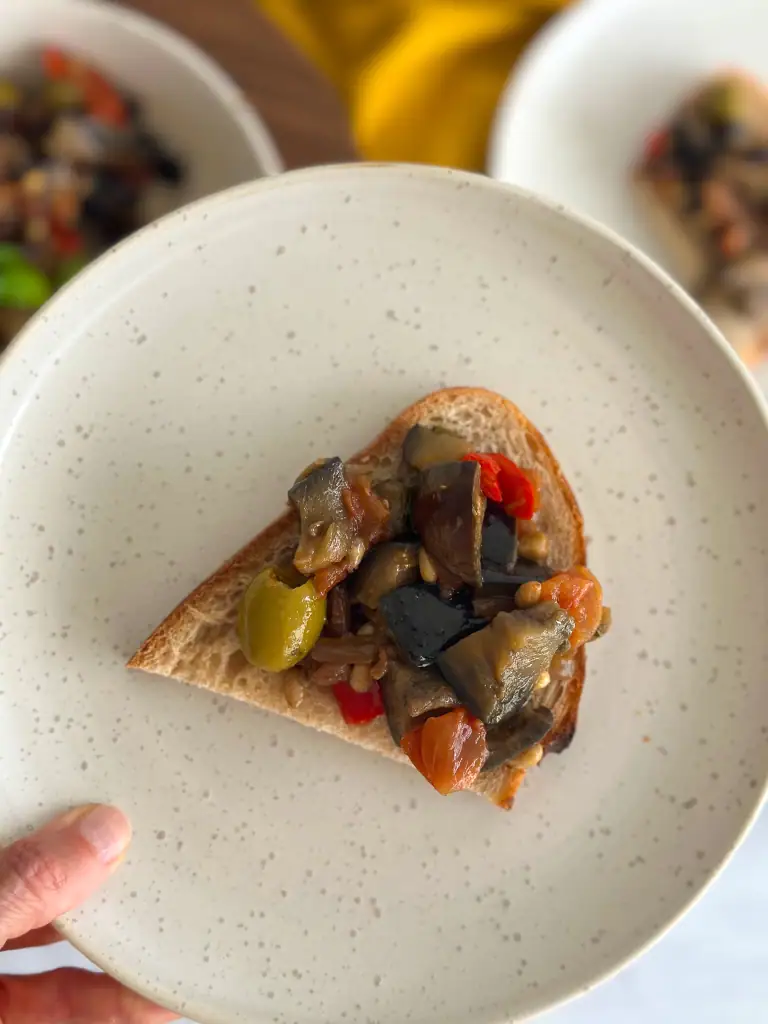
- As antipasto: great on a piece of crusty bread for a rustic bruschetta.
- Mixed into pasta for a hearty vegetarian meal.
- As a side dish for grilled fish: swordfish pairs very well with it. Typical pairing of Sicily.
- As a side dish for roast chicken or lamb, especially in September when weather is getting chiller and a roast piece of meat will complement this rustic Sicilian Eggplant Stew.
STORING SUGGESTIONS
In the fridge: Store in an airtight container for up to 5 days. I have to say this is my favorite method. I recently made a big batch and we had it as pasta sauce, over bruschetta and as a side for some seafood skewers.
Make-ahead: Best enjoyed after 24 hours when flavors have developed.
Freezing: While possible, freezing changes texture. It’s best eaten fresh.
WHICH WINE TO PAIR WITH CAPONATA
Caponata’s sweet-and-sour notes pair well with wines that balance acidity and fruitiness. Great choices include:
- Sicilian Nero d’Avola – A medium-bodied red with dark fruit notes.
- Etna Rosato – A crisp rosé from Mount Etna that complements the tang.
- Grillo or Catarratto – Local Sicilian white wines with bright acidity.
- Non-alcoholic option: Sparkling water with a splash of lemon or a tart pomegranate spritzer.
MORE RECIPES WITH EGGPLANTS
If you love Caponata, try these other delicious eggplant recipes:
Eggplant Parmesan (Parmigiana di Melanzane): a classic dish, where layers of fried eggplants alternate with sweet tomato sauce and gooey mozzarella, all topped with Parmigiano Reggiano.
Pasta alla Norma : another classic Sicilian dish, based on eggplant, tomatoes and salted ricotta.
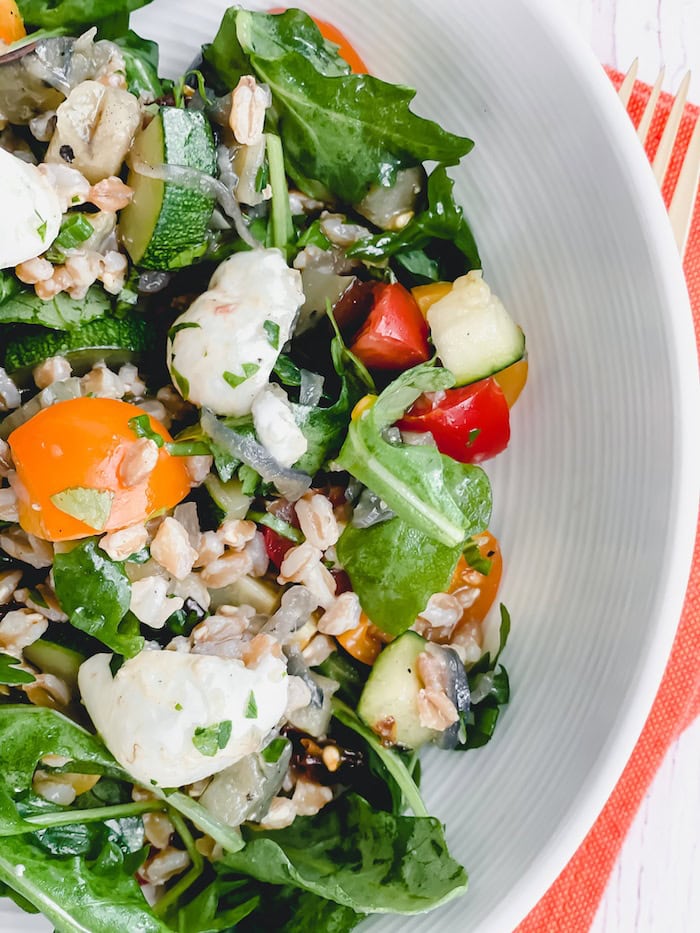
End of Summer Farro Salad: this a a lighter recipe, where eggplants are sautéed in extra virgin olive oil along with some zucchini to toss some farro. Adding some bufala mozzarella add a touch of creaminess and tart taste to the plate.


MORE SWEET AND SOUR RECIPES
If you like the tangy sweeteness of caponata, you will also love:
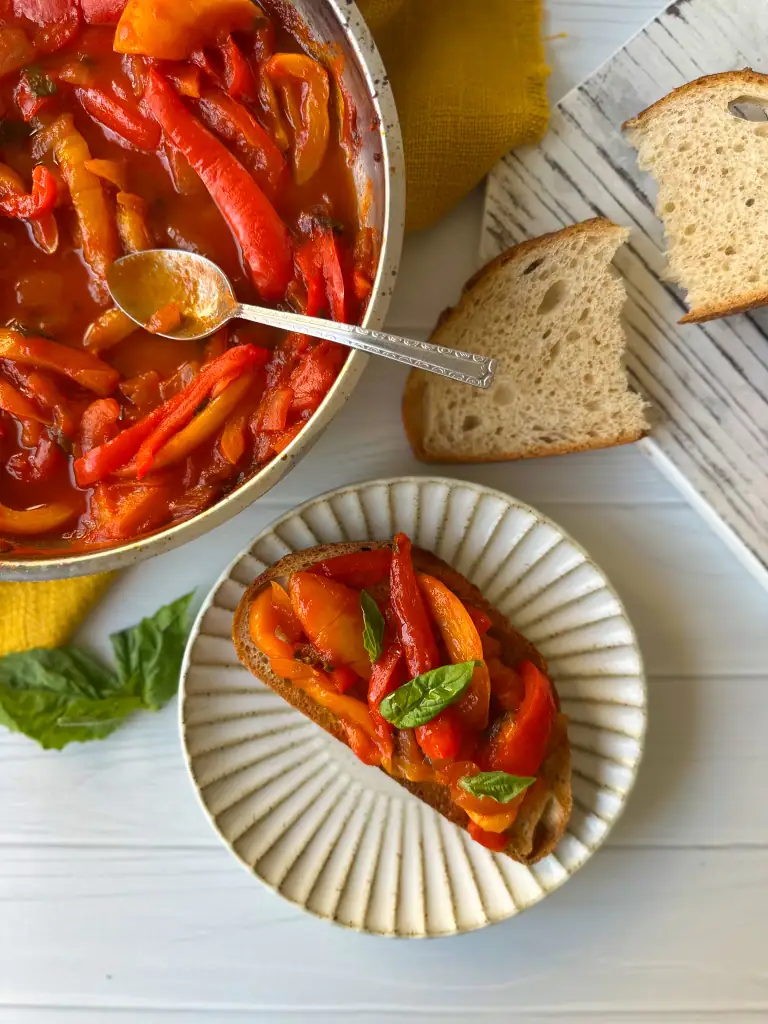
Peperonata: a classic dish made with bell peppers and tomatoes, simples, yet delicious
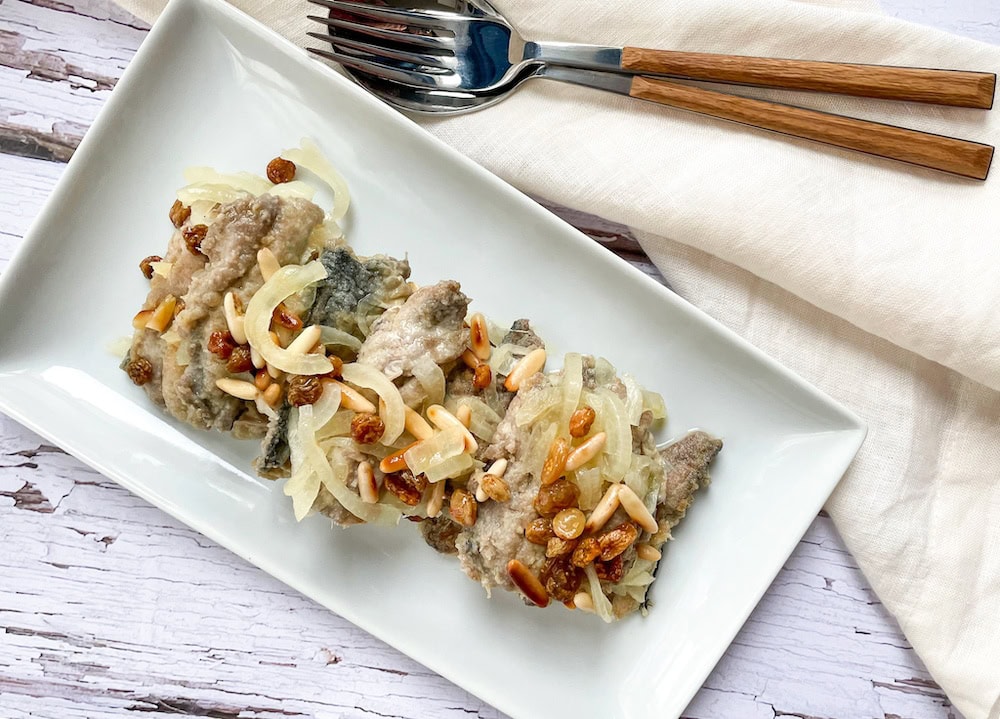
Sarde in Saor (Sweet and Sour Sardines): a classic dish for Venice, symbol of Venetian cuisine. Ideal as appetizer or lightlunch along with a salad.
I hope you liked my Caponata recipe! If you try this recipe and you liked it, please leave a star review below! I would be very appreciative of your comments! Make sure to tag me on Instagram @Italian_kitchen_confessions I hope you loved it! To get more ideas follow me on Pinterest.
This Sicilian Caponata post contains affiliate links for products we love. Italian Kitchen Confessions earns a small commission on these links at no cost to you.


