
For me, this is the best kind of Italian Tomato Sauce: simple, comforting and made with just a handful of good ingredients.
Sugo al pomodoro was one of the first recipes I learned to cook. Growing up in Italy, both of my parents worked long hours, but somehow they always managed to put a home-cooked meal on the table. A simple pasta al pomodoro was often our dinner on busy nights.
I still remember one evening when I was in high school and my parents were running late. I decided to make the sugo myself. It wasn’t an elaborate meal, but I remember feeling proud that, for once, I could cook for them after all the years they had cooked for me.
I still make tomato sauce almost exactly the same way today: whole peeled tomatoes, extra virgin olive oil, onion, garlic and fresh basil, gently simmered until the tomatoes break down into a flavorful sauce.
It is the kind of recipe every Italian household makes a little differently, and once you know how to make it, you have the foundation for countless Italian meals.
WHY YOU WILL LOVE THIS RECIPE
- Simple ingredients: You only need tomatoes, extra virgin olive oil, onion, garlic and basil, plus salt and pepper.
- Ready in about 35 minutes: This is an everyday tomato sauce, not one that needs to simmer for hours.
- Perfect for pasta: Toss it with spaghetti, rigatoni or your favorite pasta for one of the simplest Italian meals.
- A versatile Italian staple: Use it as a starting point for classic chicken cacciatore, ragu’, classic lasagna and many other tomato-based Italian recipes.
- Easy to make ahead: Make a batch and keep it in the refrigerator or freezer for another meal.
WHAT DOES SUGO MEAN IN ITALIAN?
In Italian, sugo is a general word for a sauce used to dress pasta or other dishes. Sugo al pomodoro simply means tomato sauce, and it is one of the most basic and beloved sauces in Italian home cooking.
There isn’t one single recipe for sugo al pomodoro. Every Italian family has its own version: some use onion, some use garlic, some use both, and cooking times vary. This is my family’s everyday version, made with whole peeled tomatoes, extra virgin olive oil, onion, garlic and fresh basil.
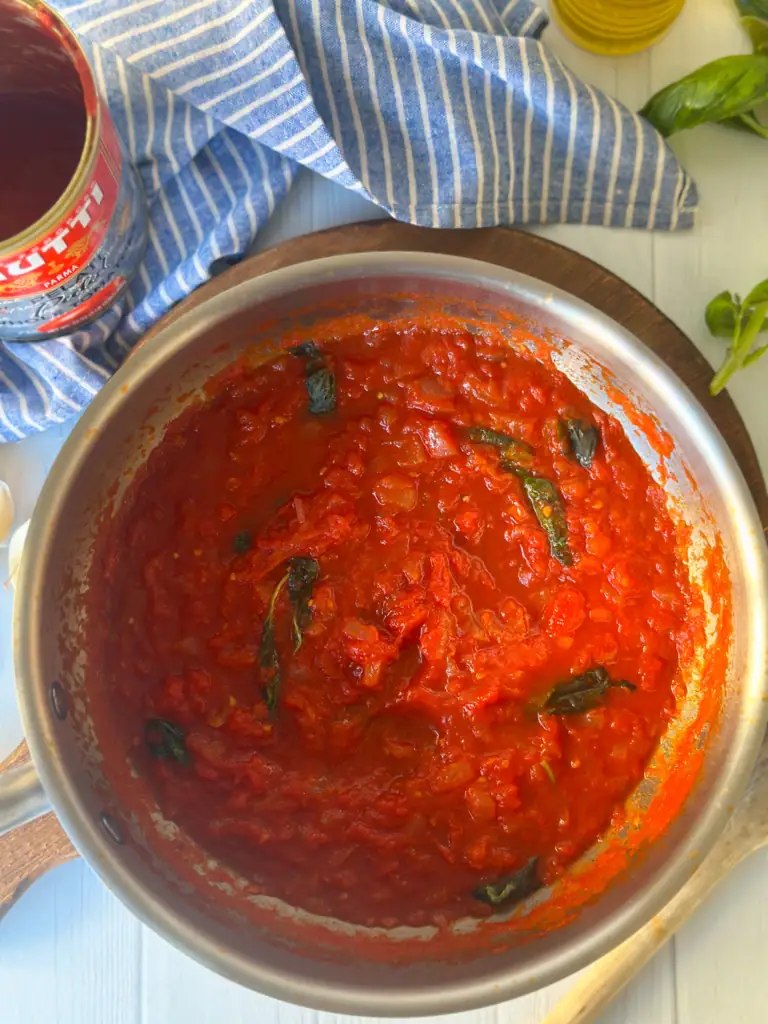
SUGO VS. MARINARA VS. SUNDAY SAUCE: WHAT’S THE DIFFERENCE?
If you live in the United States, you may be more familiar with the terms marinara, red sauce or Sunday sauce than sugo al pomodoro. While the names are sometimes used interchangeably, they don’t always refer to exactly the same thing.
Sugo al pomodoro is the simple tomato sauce Italians use for pasta and as the starting point for many other dishes. The ingredients and cooking method vary from family to family.
Marinara sauce, as the term is commonly used in the U.S., generally refers to a relatively simple tomato sauce flavored with garlic and herbs. It is often quicker and lighter than longer-cooked tomato sauces.
Sunday sauce or Sunday gravy is an Italian-American tradition rather than a term commonly used in Italy. It usually refers to a tomato-based sauce cooked slowly with meat, such as meatballs, sausage, pork or beef.
Ragù is the Italian term for a sauce in which meat plays an important role. There are many regional versions throughout Italy, including the famous ragù alla Bolognese.
IS SUGO AL POMODORO THE BASE FOR EVERY ITALIAN TOMATO SAUCE?
No. Sugo al pomodoro is one of the fundamental tomato sauces in Italian cooking, but it isn’t a universal mother sauce. It is more a weeknight sauce when you need something simple, easy and that you can make with basics aromatics and pantry ingredients.
Different Italian recipes build their tomato flavor differently. Penne all’arrabbiata starts with garlic and chili; pasta all’amatriciana begins with guanciale; puttanesca gets its distinctive flavor from garlic, anchovies, capers and olives; while dishes such as meatballs or chicken cacciatora may use a soffritto as part of a longer cooking process.
ITALIAN TOMATO SAUCE (SUGO AL POMODORO) INGREDIENTS
One of the secrets of Italian cooking is knowing when not to add more ingredients. A good sugo al pomodoro depends on a few high-quality ingredients and letting the tomatoes remain the star.
Whole peeled tomatoes (pomodori pelati): Use good-quality canned whole peeled tomatoes rather than diced tomatoes or prepared tomato sauce. I especially like whole peeled San Marzano tomatoes when available.
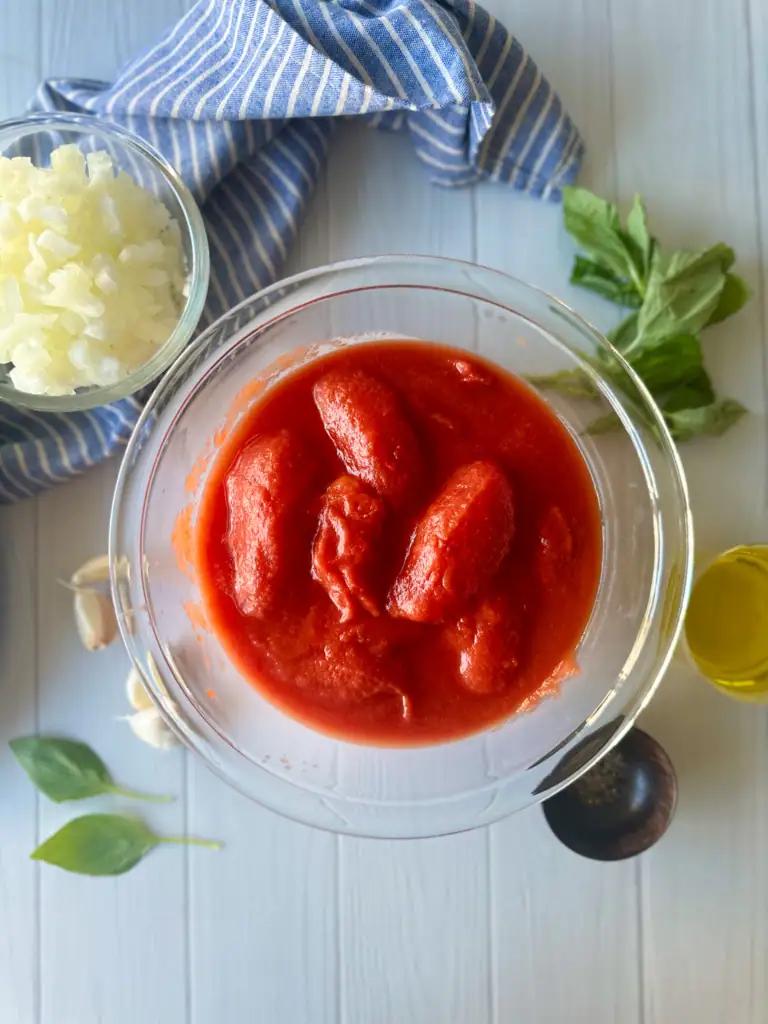
Extra virgin olive oil: Use a good-quality EVOO that you enjoy for cooking.
Onion: I use yellow onion for its gentle sweetness. White onion or shallot can also work.
Garlic: A few cloves add depth without overpowering the tomato.
Fresh basil: Add it toward the end so its flavor stays fresh and aromatic.
Salt and freshly ground black pepper: Season to taste.
WHAT ARE THE BEST TOMATOES FOR ITALIAN TOMATO SAUCE ?
For this recipe, I recommend whole peeled tomatoes rather than diced or crushed tomatoes. Whole tomatoes undergo less processing and allow you to control the final texture of your sauce. If using San Marzano tomatoes, look for authentic Pomodoro San Marzano dell’Agro Sarnese-Nocerino DOP on the label. But San Marzano tomatoes aren’t essential—a high-quality can of Italian whole peeled tomatoes will still make an excellent sugo.
Check the ingredient list as well. For a simple sauce like this, I prefer tomatoes with as few added ingredients as possible. Some of my favorite brands are Mutti Whole Peeled Tomatoes, Cento San Marzano Certified Peeled Tomatoes and Bianco di Napoli Organic Whole Peeled Tomatoes.
HOW TO MAKE ITALIAN TOMATO SAUCE (SUGO AL POMODORO)
Heat the extra virgin olive oil in a large skillet or saucepan over medium-low heat. Add the diced onion and cook gently until soft and translucent, about 10-15 minutes. You want the onion to sweat, not brown. Cooking onion on low and covered will aid the sweating process. The result is a sweeter taste that will not overpower the tomatoes.
Add the garlic, gently crushed and cook briefly until fragrant. After 2-3 minutes remove it as it can get bitter after over cooking.
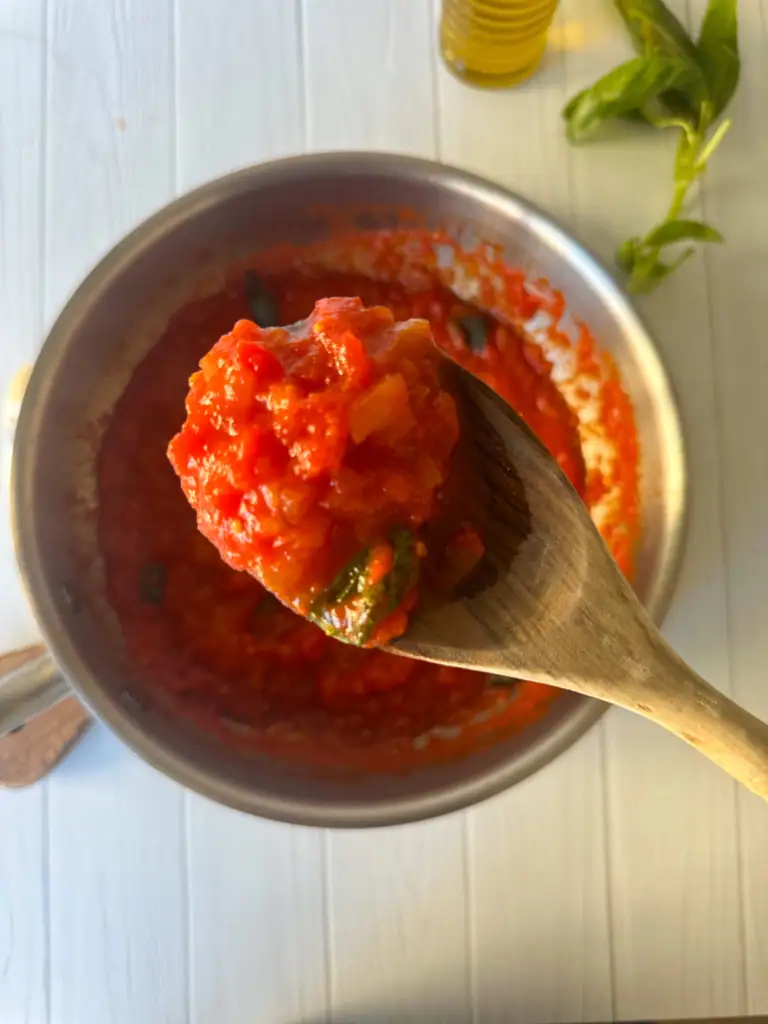
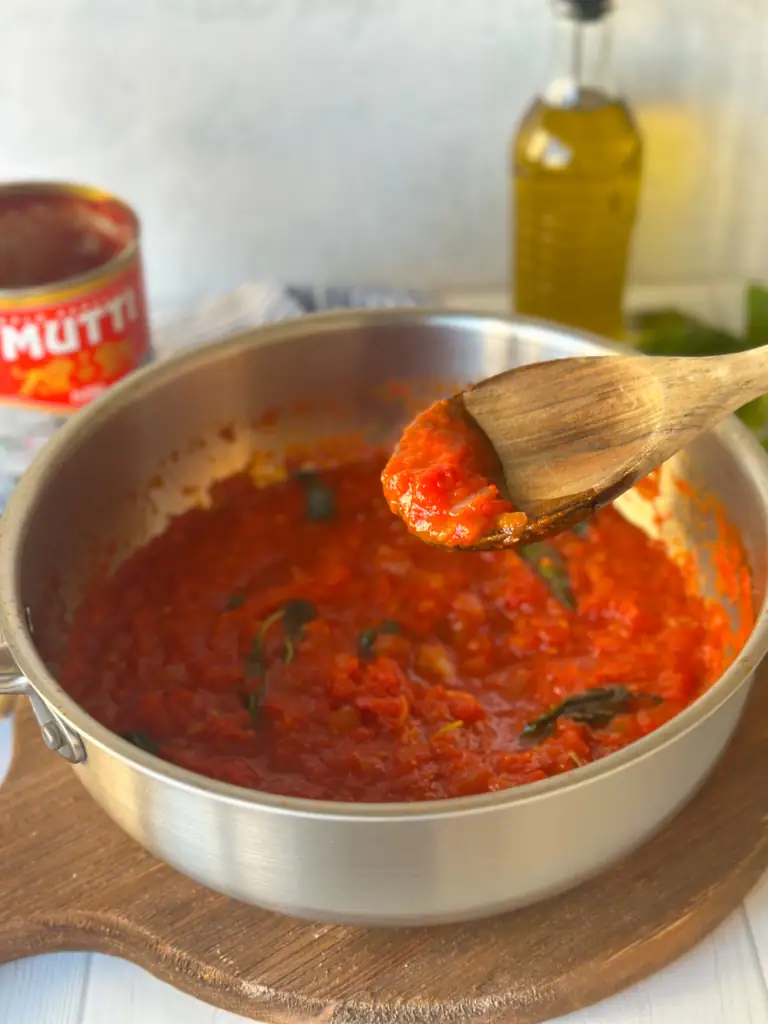
Add the whole peeled tomatoes and their juices. Gently break the tomatoes apart with a wooden spoon.
Bring to a gentle simmer, lower the heat and cook uncovered for about 25–30 minutes, stirring occasionally, until the tomatoes have broken down and the sauce has thickened slightly.
Turn off the heat. Season with salt and freshly ground black pepper and add the fresh basil.
My Tip: Don’t rush the onion and don’t aggressively crush the tomatoes. Gentle cooking is what gives this simple sauce its sweetness and texture.

Ingredients
- 3 tbsp olive oil extra virgin
- 1 cup onion yellow, diced
- 4 cloves garlic crushed
- 28 oz whole peeled tomatoes canned
- 1 tsp salt
- ¼ tsp black pepper crushed
- 1 sprig basil
Instructions
- Start by slicing, or dicing, your onion. Add good quality extra virgin olive oil to a large pan over medium heat.
- When the oil shimmers, add the onion and cook until softened and translucent, about 10 minutes.(see notes).
- Gently crush the garlic, add it to the pan and cook briefly until fragrant. (see notes).
- Then, add the canned tomatoes. Gently break up the tomatoes with a wooden spoon and stir occasionally as the sauce cooks 20 to 25 minutes on low heat.
- Right after turning off the heat, add a little salt and pepper, and the fresh basil, and stir to combine.
Notes
- Cooking onion on low and covered will aid the sweating process. The result is a sweeter taste that will not overpower the tomatoes.
- Remove the garlic after 2-3 minutes, it as it can get bitter after over cooking.
Nutrition
FAQ
Can I use crushed tomatoes instead of whole peeled tomatoes?
Yes, but the texture will be different. I prefer whole peeled tomatoes because I can control how much they break down as the sauce cooks.
Can I make sugo without onion?
Yes. Italian tomato sauce varies from family to family. You can omit the onion and make a simpler garlic-and-tomato version.
Why is my tomato sauce acidic?
The tomatoes themselves make the biggest difference. Start with good-quality ripe canned tomatoes and allow the onion to soften gently, which adds natural sweetness. I don’t routinely add sugar to this sugo.
Can I make sugo ahead?
Absolutely. In fact, this is one of the sauces I like to keep on hand because it works as the starting point for so many meals.
Why should you make your own homemade tomato sauce?
Making your own tomato sauce is definitely the true and authentic Italian way! The secret of Italian cooking is using simple high quality ingredients that when combined will create a balanced combination of flavors. And this sugo al pomodoro is the classic Italian example of how great ingredients lead to a sauce that has passed down from generation to generation in every Italian family.
Most canned tomato pasta sauces are filled with different ingredients and spices, that are just taking away from the sweet flavors of the tomato itself. Once you will make your own tomato sauce, you will never reach again that jar of tomato sauce.
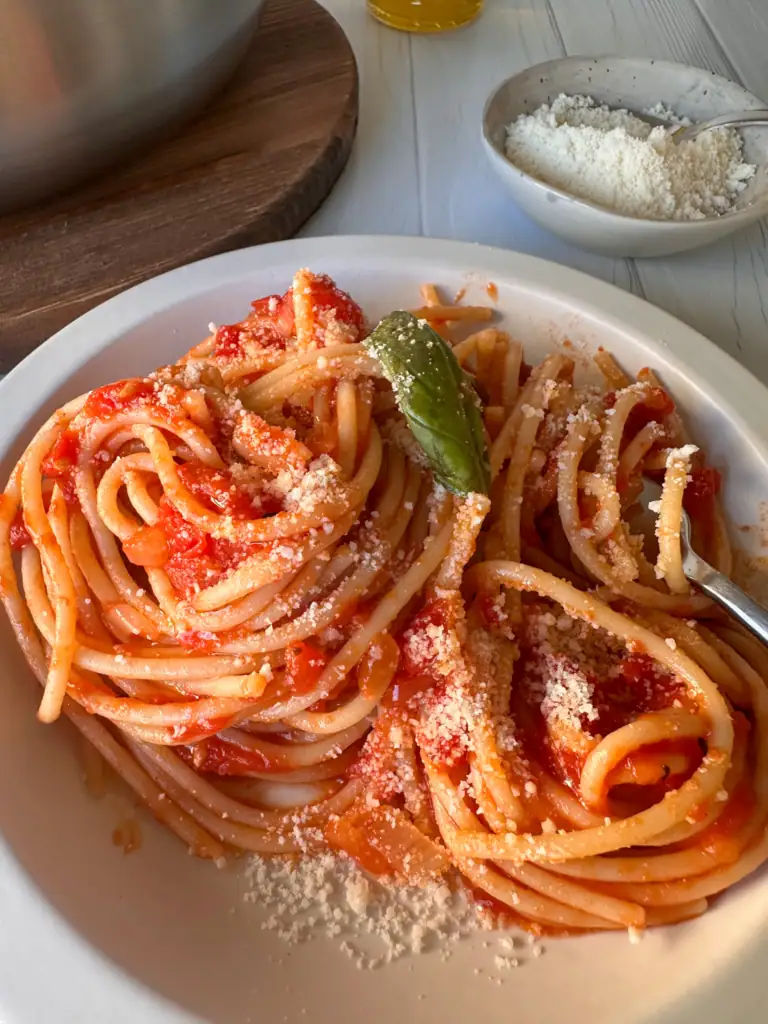
HOW TO SERVE SUGO AL POMODORO
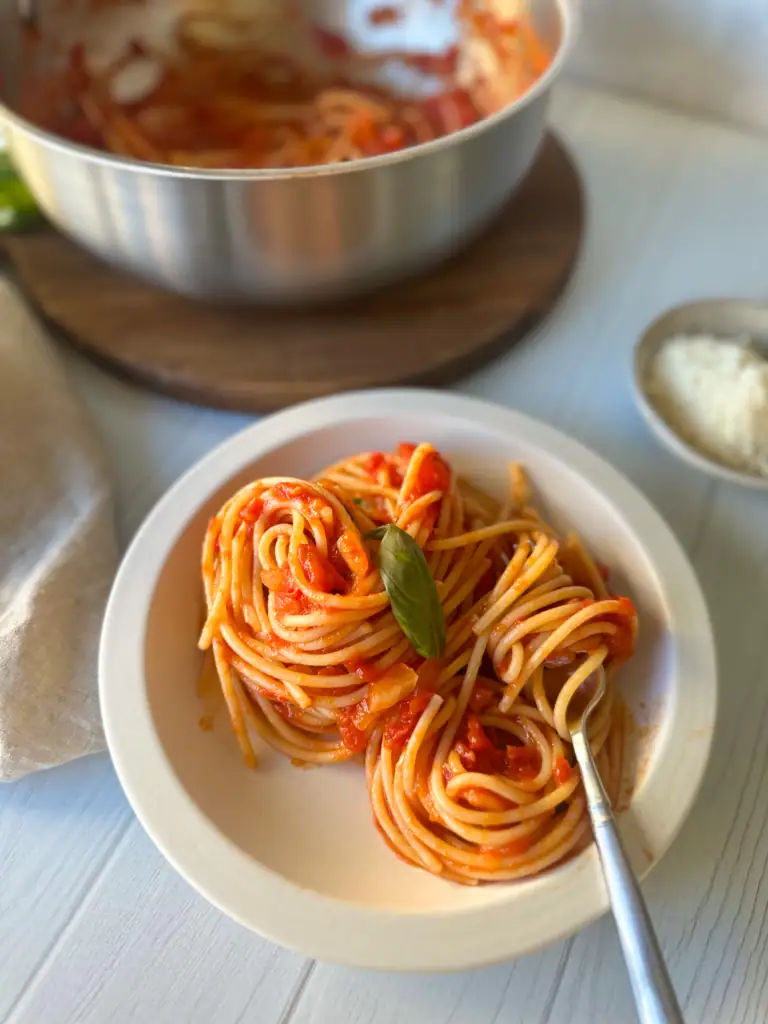
The simplest—and perhaps best—way to enjoy this sauce is pasta al pomodoro.
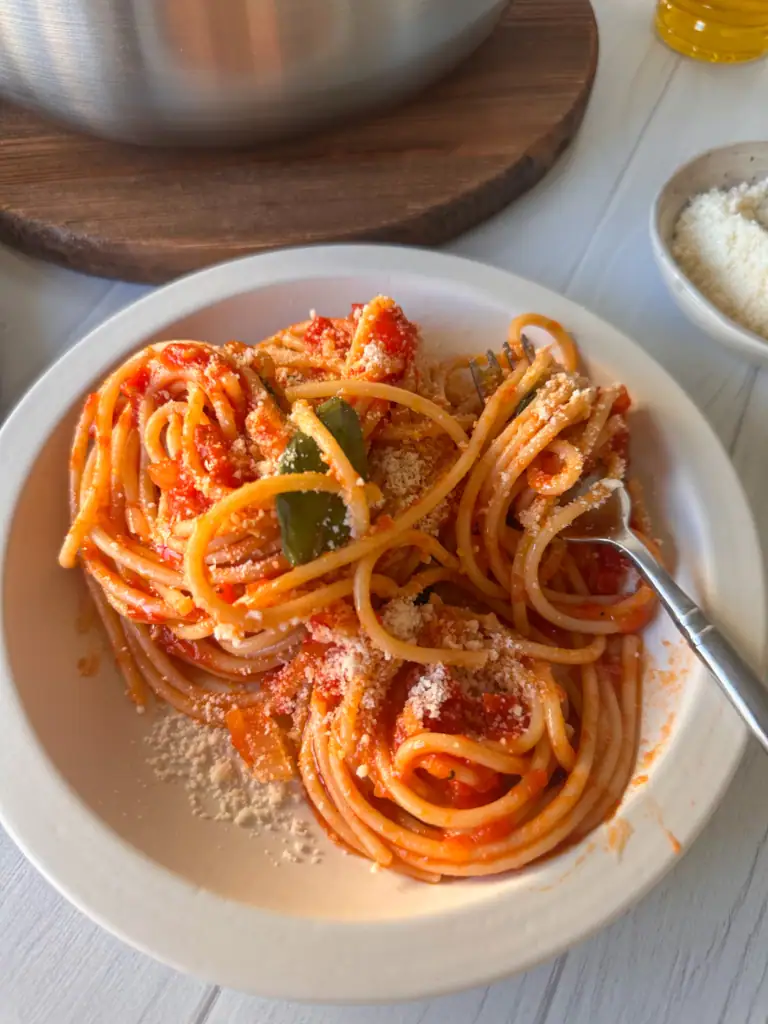
Cook spaghetti, rigatoni, mezzi rigatoni or another favorite pasta until al dente. Transfer it directly to the sauce with a splash of pasta cooking water and toss everything together for a minute or two so the pasta absorbs some of the sauce.
Finish with fresh basil and, if you like, freshly grated Parmigiano Reggiano.
My tip: And don’t leave the sauce in the bottom of the plate—fare la scarpetta with a piece of good bread! Focaccia bread or sourdough bread are both good options.
If you want something richer add on top of your pasta burrata o ricotta.
HOW TO STORE ITALIAN TOMATO SAUCE
This traditional tomato sauce is perfect for making ahead! You can store in the refrigerator or freezer so you can have it on hand at any time!
Refrigerator: Cool the sauce completely and transfer it to an airtight container. Refrigerate for up to 4–5 days.
Freezer: Freeze in an airtight freezer-safe container, leaving a little room for expansion. For best quality, use within about 3 months.
MORE DELICIOUS RECIPES QUICK TO MAKE
Cherry tomato pasta with capers and crispy breadcrumbs: A delectablecherry tomato pasta that tastes zingy and crunchy. Quick to make, it is the ideal for weeknight pasta dinner or to celebrate the last days of summer.
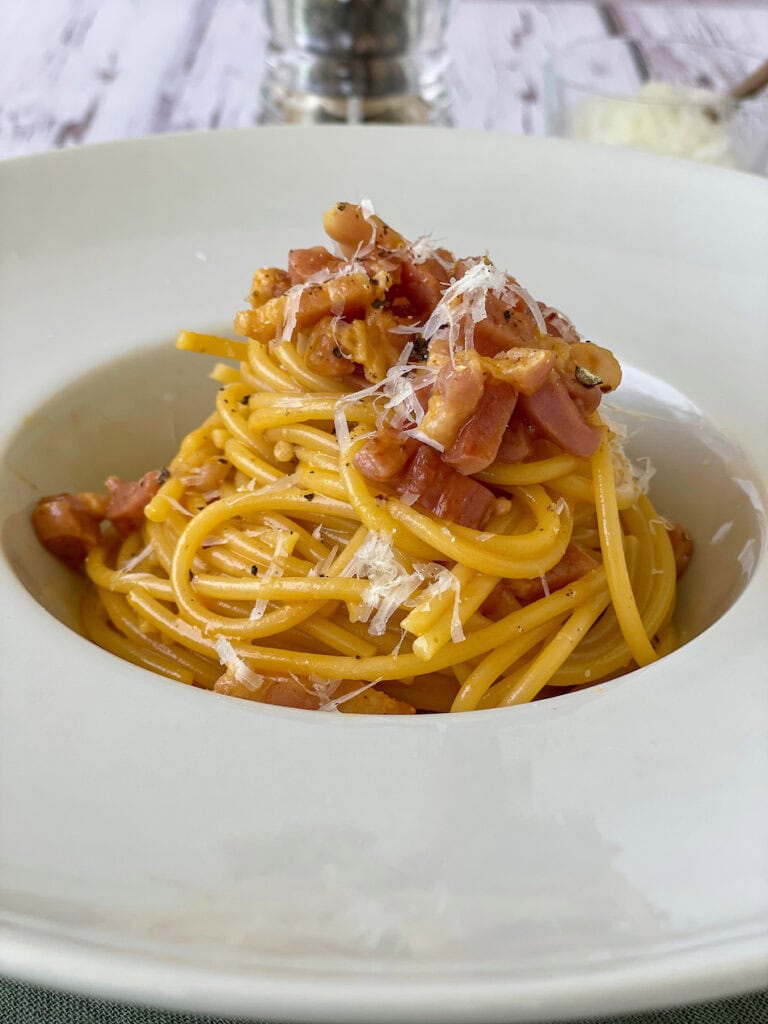
Authentic Italian Pasta alla Carbonara: Silky spaghetti are tossed with crispy guanciale and velvety sauce made of yolks and pecorino, and a touch of pepper. Simple, scrumptious and yet so quick to make this is the best comfort food recipe!

Easy Smoked Salmon Mascarpone Linguine: A luxurious pasta with succulent smoked salmon and creamy mascarpone cheese: a treat for the senses and an elegant dish ready in less than 30 minutes! So you can spend more time with your loved ones and less time cooking and cleaning.
Spaghetti with Clams (Pasta alle Vongole):A classic dish typical of the Italian culinary tradition, made with few simple and fresh ingredients. The result is a flavorsome dish with a balance between the salty taste of the clams, the sweetness of the pasta, the acidity of the wine and the overall garlicky flavor.


If you try this recipe and you liked it, please leave a star review below! I would be very appreciative of your comments! Make sure to tag me on Instagram @Italian_kitchen_confessions I hope you loved it! To get more ideas follow me on Pinterest.
This post has been updated since its original content, dated October 2022. It contains affiliate links for products we love. Italian Kitchen Confessions earns a small commission on these links at no cost to you.


La migliore salsa al mondo!!!
This wss really nice and easy but one major downside far too spicy with a whole TSP of pepper. It blue the kids heads off. Thanks for sharing. I think next time I would use 1/2 TSP. Max.
Thank you for stopping by. Sorry it was too spicy for you, I am glad you tried it and thank you for the comment.
I think there is a difference between black pepper crushed, as it is more coarse, and therefore less stronger than black pepper in powder. Maybe this explains why it was more spicy. I appreciate though you comments, very helpful.