
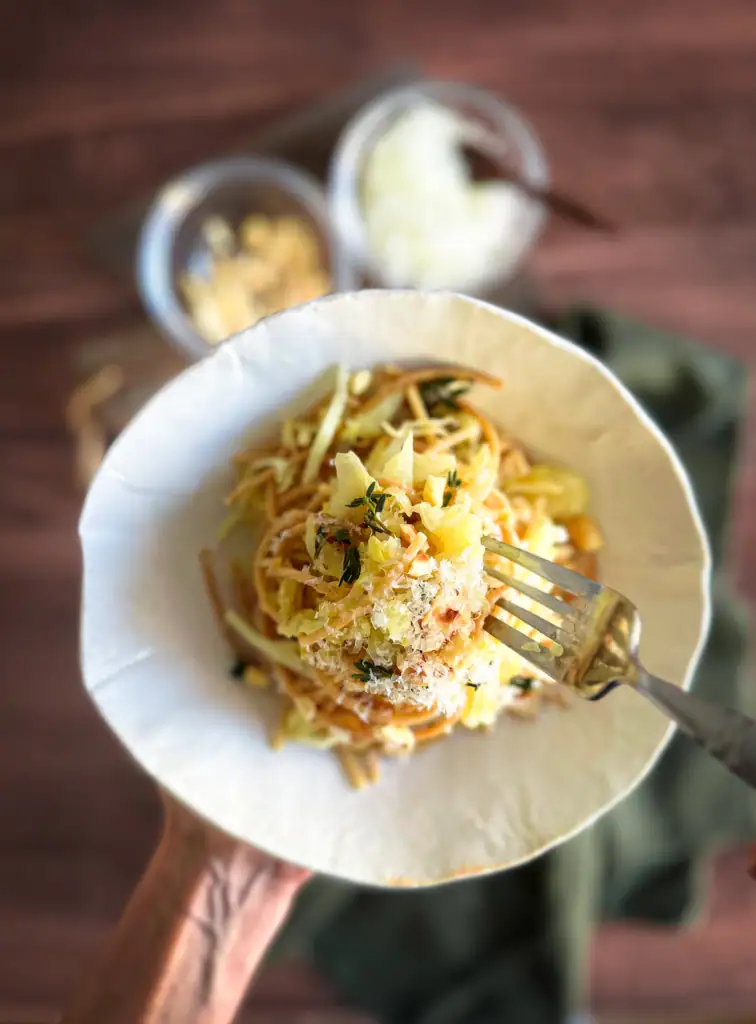
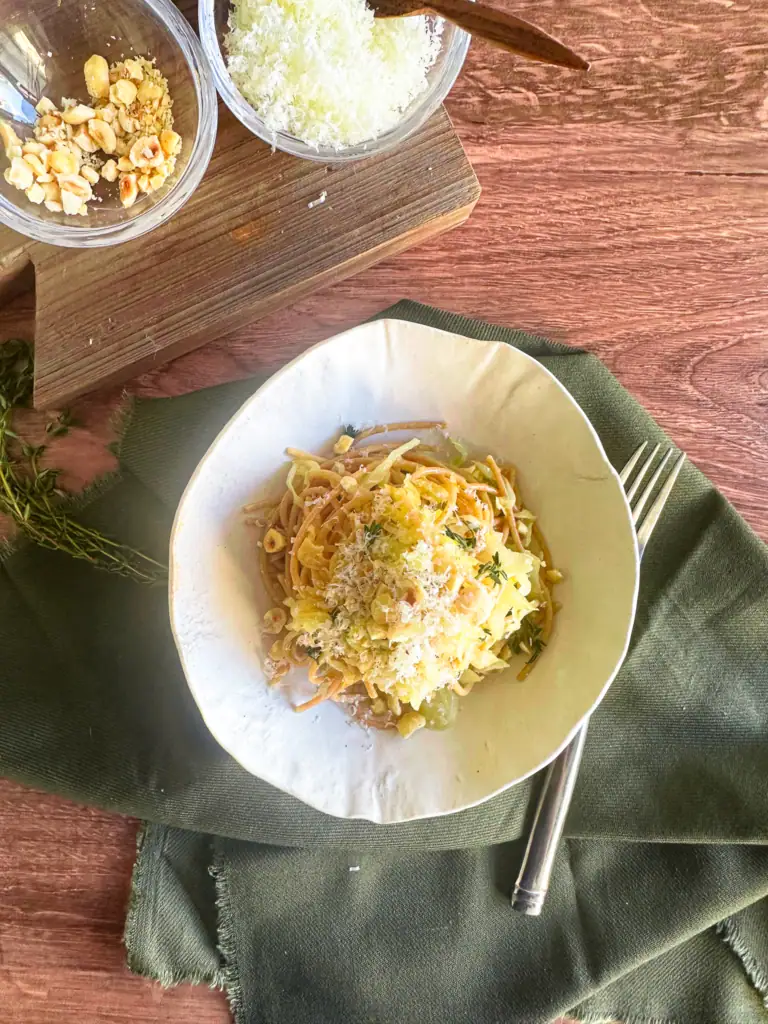
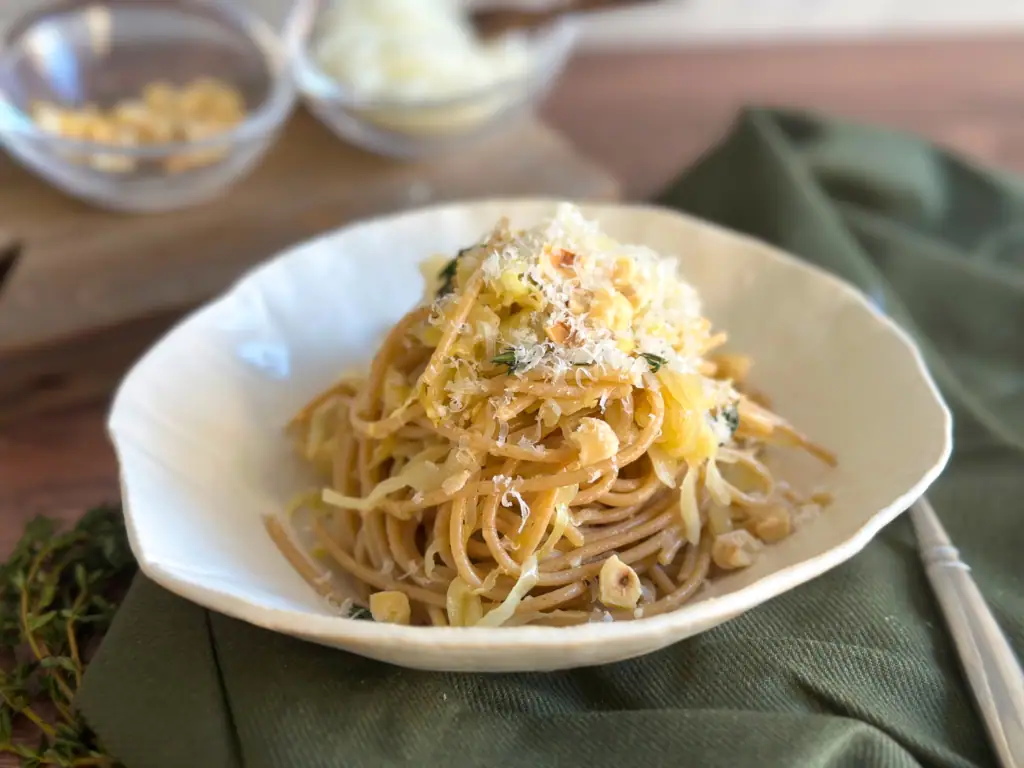
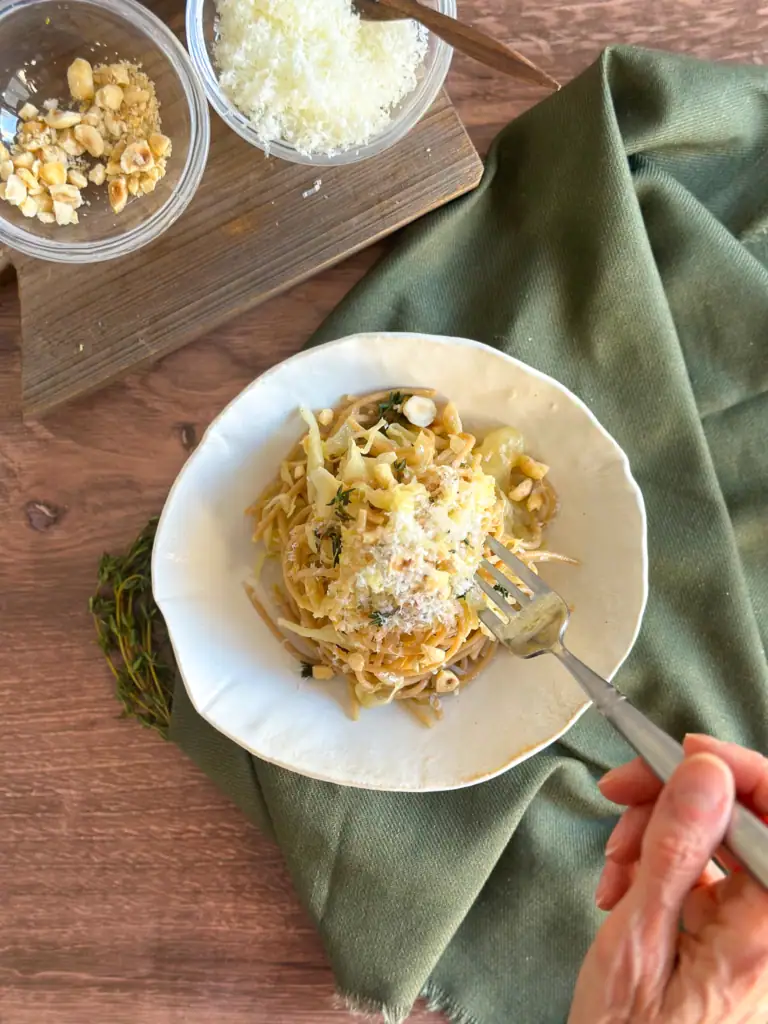
This caramelized cabbage pasta is a perfect example of how Italian cooking turns the simplest ingredients into something deeply satisfying. Thinly sliced green cabbage is slowly cooked in extra virgin olive oil until soft, golden, and naturally sweet, then tossed with whole wheat spaghetti, toasted hazelnuts, fresh thyme, and Pecorino Romano.
There’s no cream and no meat here. Instead, the sauce comes together the Italian way — through patience, olive oil, starchy pasta water, and aged cheese. The result is a silky, savory cabbage pasta recipe that feels rich without being heavy and fits beautifully into a collection of Italian vegetarian recipes.
This method comes straight from my family cooking, rooted in the Piedmont tradition, where cabbage and hazelnuts are everyday ingredients rather than rustic afterthoughts. My dad often cooked cabbage slowly with onion and olive oil, letting time — not cream or meat — do the work. The result was always sweet, comforting, and deeply savory.
- Start with a fresh, firm cabbage.
- Remove and discard any tough or damaged outer leaves.
- Cut the cabbage in half through the core.
- Cut each half into quarters and remove the core completely — it won’t soften properly.
- Slice the cabbage very thinly (about ⅛ inch / 3 mm).
- Thin slicing is essential. It allows the cabbage to release moisture gradually and caramelize instead of steaming.
WHY THIS CABBAGE PASTA WORKS
- Cabbage caramelizes beautifully, becoming sweet and jammy
- Whole wheat spaghetti adds structure and nutty depth
- Hazelnuts replace meatiness, adding texture and warmth
- Pecorino and pasta water create a naturally creamy sauce without cream
- This is everyday Italian cooking at its best: humble, seasonal, and technique-driven.
INGREDIENTS & WHY THIS WORKS (ITALIAN LOGIC)
This dish succeeds because each ingredient plays a precise role. Nothing is decorative, and nothing is heavy.
Green Cabbage is naturally sweeter When sliced thin and cooked slowly, it releases moisture gradually, allowing its natural sugars to concentrate. This is why the cabbage becomes jammy and rich without cream or meat.
Onion is not a base here — it’s a sweetener. Cooked gently before the cabbage is added, it melts into the olive oil and reinforces the cabbage’s sweetness. In northern Italian cooking, onion often replaces fat-heavy ingredients by building depth through slow cooking.

Extra Virgin Olive Oil: Olive oil is both the cooking medium and the flavor backbone. It carries aroma, prevents burning during the long cook, and gives the final sauce its roundness. Using good-quality olive oil is essential, because it becomes part of the sauce itself.
Whole Wheat Spaghetti: Whole wheat pasta adds structure and a subtle nutty bitterness that balances the sweetness of the cabbage and onion. Its rougher surface also holds onto the emulsified sauce better, making the dish feel complete and satisfying.
Hazelnuts: They bring texture and savory depth — a nod to Piedmont, where they are used as a source of richness in everyday cooking. Toasting them amplifies their aroma and replaces the role meat would normally play, adding warmth and complexity.
Fresh Thyme: Thyme adds a restrained herbal note that cuts through sweetness without overpowering the vegetables. It complements cabbage particularly well and keeps the dish firmly savory rather than sweet.
Pecorino Romano: Pecorino adds salinity and umami. Finely grated and added off heat, it melts into the pasta water and olive oil, helping create a silky, cohesive sauce rather than a dry finish.
Pasta Cooking Water: Starchy pasta water is the final binding element. It emulsifies olive oil and cheese, transforming caramelized vegetables into a true sauce that coats.
HOW TO PREP CABBAGE FOR PASTA
STEP-BY-STEP
Prep the vegetables: Remove tough outer leaves from the Savoy cabbage. Cut it in half, remove the core completely, and slice the cabbage very thinly. Thinly slice one small onion as well.
Start with olive oil and onion: Heat extra virgin olive oil in a wide pan over medium heat. Add the sliced onion with a pinch of salt and cook gently for 5–7 minutes, until soft and translucent but not browned.
Add the cabbage: Add the sliced cabbage and another pinch of salt. Toss well to coat everything in oil.
Cook low and slow: Cook uncovered for 25–30 minutes, stirring every few minutes.
- First, the cabbage will release water and soften
- Then the moisture will evaporate
- Finally, the cabbage and onion will turn golden, sweet, and almost jammy
- Let the vegetables lightly stick to the pan before stirring — this is where flavor develops.
Adjust as needed: if the pan becomes too dry at any point, add a small splash of water, not more oil. This helps the vegetables caramelize evenly without frying.
Finish with herbs: When the cabbage is deeply golden and fragrant, stir in fresh thyme and remove from the heat. The mixture should taste naturally sweet, savory, and rounded — never bitter.
WHY THIS WORKS
- Onion adds sweetness and depth without overpowering the cabbage
- Savoy cabbage’s delicate leaves caramelize more evenly than green cabbage
- Slow cooking concentrates natural sugars — no cream needed
- This is the flavor base my dad always relied on, especially in winter dishes from northern Italy: simple ingredients, treated with patience and respect.
TIPS FOR THE BEST CABBAGE PASTA
- Use a wide pan: overcrowding causes steaming instead of caramelization.
- Salt early: it helps draw out moisture and enhances sweetness.
- Be patient: real flavor develops after 20 minutes.
- Finish off heat: add Pecorino after turning off the flame to prevent clumping.
- Use pasta water generously: it’s essential for a smooth, emulsified sauce.
SUBSTITUTIONS
- Savoy cabbage: green cabbage works well, just allow the full cook time
- Whole wheat spaghetti: regular spaghetti, linguine, or short pasta like mezze maniche
- Hazelnuts: walnuts or almonds, always toasted
- Pecorino Romano: Parmigiano Reggiano for a milder flavor.
VARIATIONS (STILL CREAM-FREE & ITALIAN)
- Extra nutty: increase hazelnuts or add finely chopped hazelnut crumbs on top.
- Herb swap: sage or marjoram instead of thyme.
- Breadcrumb finish: replace hazelnuts with olive-oil-toasted pangrattato.
- Vegan version: omit Pecorino and finish with extra EVOO and breadcrumbs.
- For umami taste: add some anchovies to the pan and let it melt, after add the onion and cabbage. Remove the Pecorino, if you opt for anchovies and add toasted breadcrumbs instead.
- For a more fresh taste: add lemon squeeze.

Ingredients
Instructions
- Bring a large pot of well-salted water to a boil.
- Remove tough outer leaves from the Savoy cabbage. Cut it in half, remove the core completely, and slice the cabbage very thinly. Thinly slice one small onion as well.
- Heat extra virgin olive oil in a wide pan over medium heat. Add the sliced onion with a pinch of salt and cook gently for 5–7 minutes, until soft and translucent but not browned.
- Add the sliced cabbage and another pinch of salt. Toss well to coat everything in oil. If the pan becomes too dry at any point, add a small splash of water, not more oil. This helps the vegetables caramelize evenly without frying.
- Cook the whole wheat spaghetti until very al dente.
- Reserve at least 1 cup of pasta cooking water, then drain.
- Add the pasta to the pan with the caramelized cabbage.
- Pour in ½ cup reserved pasta water and toss over medium heat until glossy and well coated.
- Turn off the heat. Toss again, adding more pasta water as needed to create a silky sauce.
- Plate and top with hazelnuts, thyme, Pecorino Romano and black pepper
- Serve immediately with extra Pecorino and black pepper.
Nutrition
FREQUENTLY ASKED QUESTIONS
Why does this cabbage pasta taste creamy without cream?
The sauce comes from slow-caramelized cabbage, extra virgin olive oil, starchy pasta water, and finely grated Pecorino. When tossed together off heat, these elements emulsify naturally, creating a silky texture — the classic Italian method, no cream needed.
Can I use Savoy cabbage instead of green?
Yes! Its crinkled leaves are more tender and sweeter, and they caramelize more evenly. Green cabbage is firmer and needs the full cook time and very thin slicing to achieve the same result.
Why add onion if the cabbage is already sweet?
Onion reinforces and rounds out the cabbage’s sweetness. Cooked gently at the start, it melts into the olive oil and builds depth — a common northern Italian technique to create richness without relying on fat or meat.
Do I really need to cook the cabbage for 25–30 minutes?
Yes. Cabbage only becomes sweet and jammy after its moisture fully evaporates and natural sugars concentrate. Shorter cooking times result in steamed, flat-tasting cabbage rather than true caramelization.
What role do hazelnuts play in this dish?
Hazelnuts add texture and savory depth and reflect Piedmont cooking, where they’re used as a source of richness in everyday dishes. They replace the role meat often plays, making the pasta satisfying without being heavy.
Can I make this recipe vegan?
Yes. Omit the Pecorino and finish with extra olive oil and toasted hazelnuts or breadcrumbs. The dish will still be rich and balanced thanks to the caramelized vegetables and pasta water.
Which pasta shape works best for cabbage pasta?
Whole wheat spaghetti works beautifully because it balances sweetness with a nutty bite. Short shapes like rigatoni or mezze maniche also work well if you prefer more texture.
How do I prevent the Pecorino from clumping?
Always add cheese off heat and toss with pasta water. High heat causes aged cheese to seize instead of melting smoothly.
WHAT TO SERVE WITH CARAMELIZED CABBAGE PASTA
- Vegetable Sides: seasonal.
- Roasted carrots : Sweet but structured, without overlapping flavors. My recipe uses also the carrot top for a earthy pesto.
- Sautéed spinach with garlic and lemon: Clean and classic — perfect balance to the pasta. An evergreen recipe.
- Protein: If you want a fuller meal, keep proteins restrained.
- Soft-boiled or poached eggs: Adds richness without overpowering.
- Aged provolone: Salty and satisfying, served simply.
- White beans dressed with olive oil and rosemary: A very Italian, vegetarian-friendly option.
- Bread
- Crusty country bread or sourdough, lightly toasted
- Focaccia with rosemary: try mine, for a homemade Italian focaccia recipe.
STORAGE & REHEATING
- Store leftovers in an airtight container in the refrigerator for up to 2 days
- Reheat gently in a pan with a splash of water or olive oil
- Avoid microwaving — it dulls the texture and flavor
- Best enjoyed fresh, when the sauce is at its silkiest
MORE ITALIAN CABBAGE RECIPES FOR YOU
I have to confess that when I was a child I was not fond of cabbage, but lately I started loving it. Heree are a few recipes you might want to try:
Easy Cabbage Rolls recipe: Delicious savoy cabbage rolls stuffed with a hearty and delicious filling. This is the ultimate recipe for a mouthwatering winter meal.
Quick and Easy Cabbage Soup: This bowl of goodness is vegan, vegetarian and ideal for the cold winter months. Typical Venetian inland recipe, emblematic of cucina povera.


Cabbage and Apple Slaw with Fennel and Pistachios: A bright and crunchy cabbage and apple slaw with shaved fennel, citrus dressing, and toasted pistachios. Light, fresh, and full of texture — the perfect side dish for everyday meals.
Crisp Winter Red Cabbage Apple Slaw: Inspired by seasonal Italian flavors, it’s a refreshing and colorful side dish that pairs beautifully with roasted meats, salmon, or grain bowls.


✨ This Caramelized Pasta Recipe is a nourishing winter recipe! I would love to connect with you through my recipe and I will be very appreciative of your comments! If you make this recipe make sure to tag me on Instagram @Italian_Kitchen_Confessions.To get more ideas follow me on Pinterest.✨


