Casunzei (or Casunziei) are ruby red beet-filled pasta shaped by mountains, memory, and cucina povera.
Casunzei (Casunziei) Ampezzani are traditional half-moon ravioli from the Ampezzo area around Cortina d’ Ampezzo in the heart of the Dolomites. They belong to the Ladin culinary tradition — Ladin being the local language of these alpine valleys — where cooking has always meant making the most of what the land gives you.
There is no tomato sauce here. No cream. No excess. Just balance, precision, and a deep sense of place.
Italian food is often imagined as sun-soaked and abundant — tomatoes, olive oil, and long lunches outdoors. Casunzei come from a quieter Italy. One shaped by altitude, snow, and moderation.
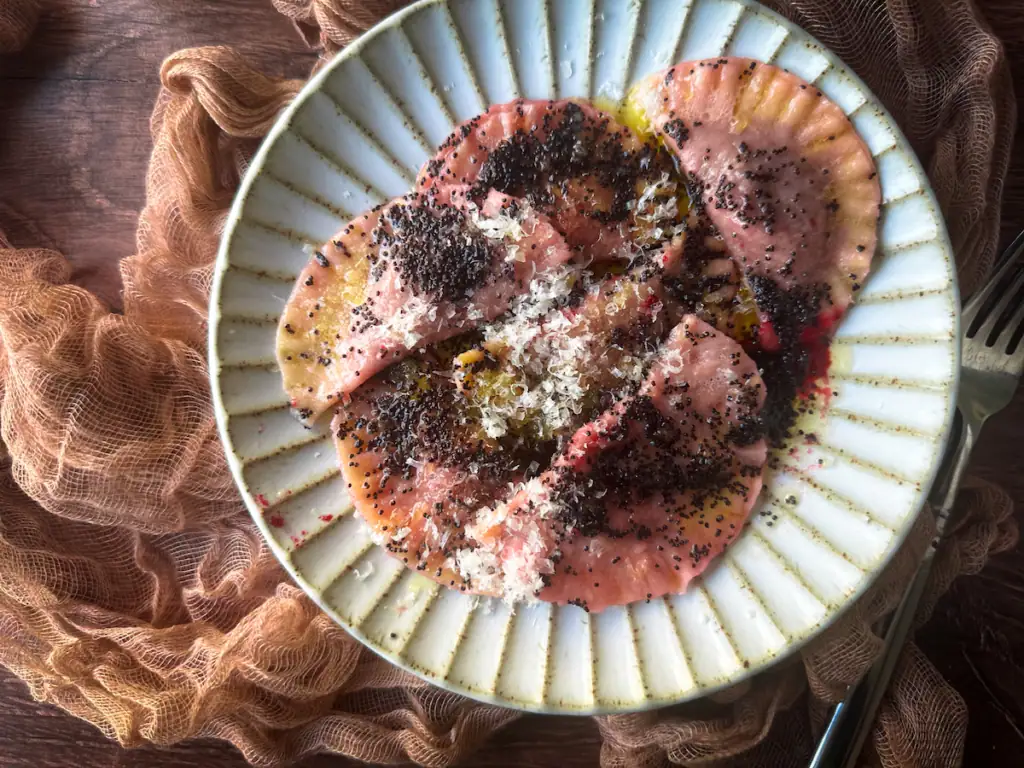
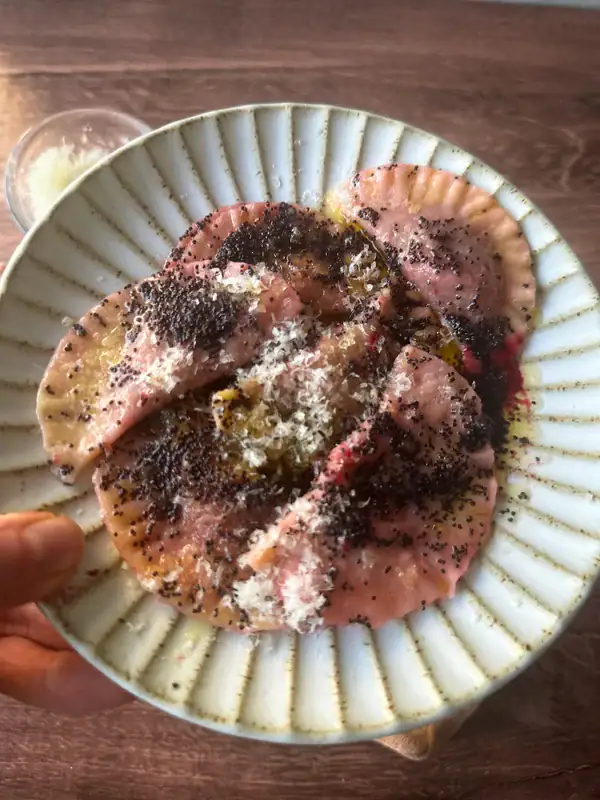
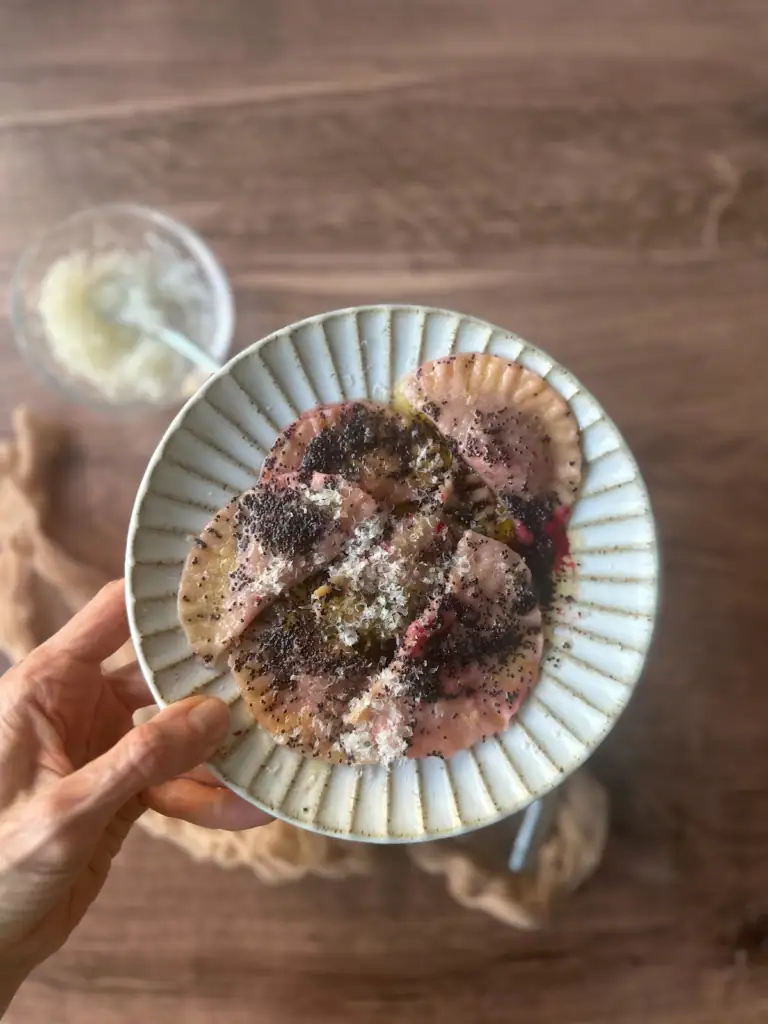
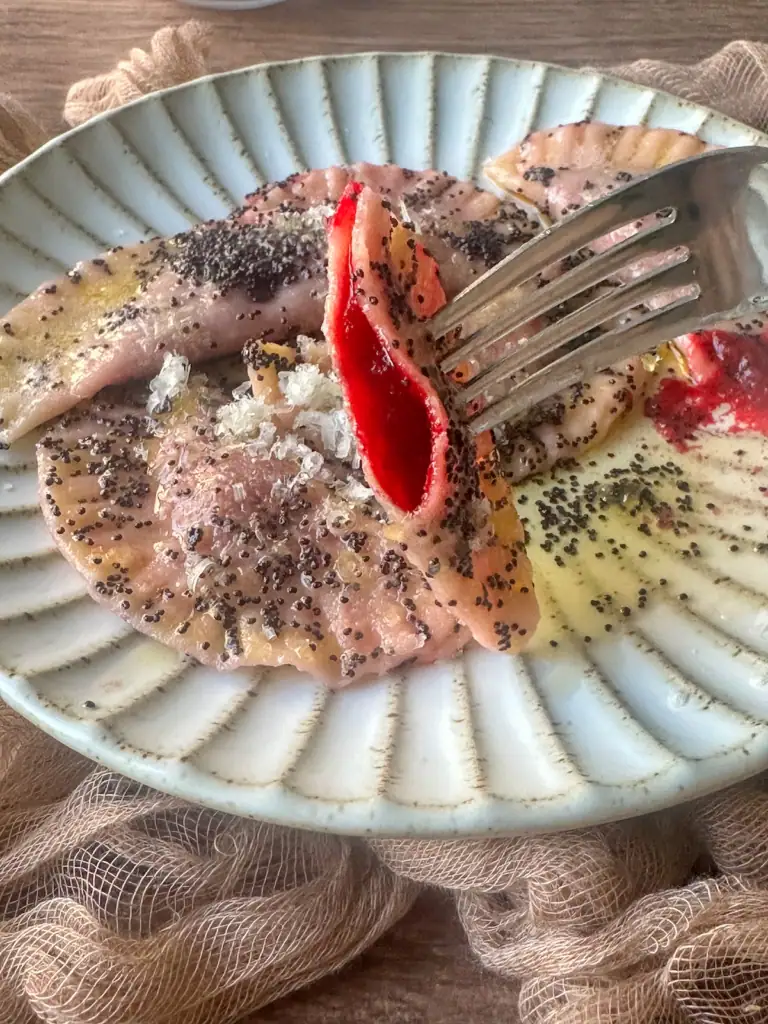
This is the classic no-ricotta casunzei from the Dolomites: sweet beets and potatoes sealed in silky pasta, finished with melted butter and poppy seeds, with clear moisture-control so they never leak.
THE CULTURAL ROOTS OF CASUNZEI (WHY THIS PASTA EXISTS)
This Alpine pasta from the Dolomites known as Casunzei come from the Ladin-speaking areas of the eastern Dolomites, influenced in the past by the Austo-Hungarian dominance, where beets and poppy seeds were commonly used ingredients. Winters were long, meat was rare, and ingredients needed to store well.
- Beets became essential:
- Easy to grow at altitude
- Naturally sweet and sustaining
- Able to last through winter cellars
- Potatoes added body.
- Butter came from mountain dairies.
- Spices like nutmeg or cinnamon arrived via historic trade routes through Tyrol and Austria.
Everything about casunzei reflects mountain logic: practical, essential, deeply thoughtful.
WHY THIS RECIPE MATTERS TO ME
I’m from the Veneto, and casunzei represent a side of Italian cooking that feels deeply familiar to me, even if it wasn’t everyday food growing up. They come from the same northern landscape I know well—where climate, altitude, and season shape the way people cook. This recipe reflects the values I was raised with in the kitchen: respect for ingredients, simplicity, and food that nourishes rather than impresses. Making casunzei is a way for me to honor that quieter, mountain-rooted Italian tradition.
WHAT ARE CASUNZEI AMPEZZANI?
Casunzei are alpine ravioli traditionally filled with red beets and potatoes, folded into half-moons and dressed simply with butter, poppy seeds, and aged cheese.
They are part of cucina povera, but an elegant one — food designed to nourish through long winters rather than impress through abundance. Their gentle sweetness, earthy aroma, and restrained seasoning reflect the mountains they come from.
Casunzei are alpine ravioli traditionally filled with red beets and potatoes, folded into half-moons and dressed simply with butter, poppy seeds, and aged cheese.
INGREDIENTS (AND WHY THEY MATTER)
For the pasta dough
- 00 flour – fine texture for thin, elastic sheets
- Eggs – structure and color
- Pinch of salt – strengthens gluten
For the filling
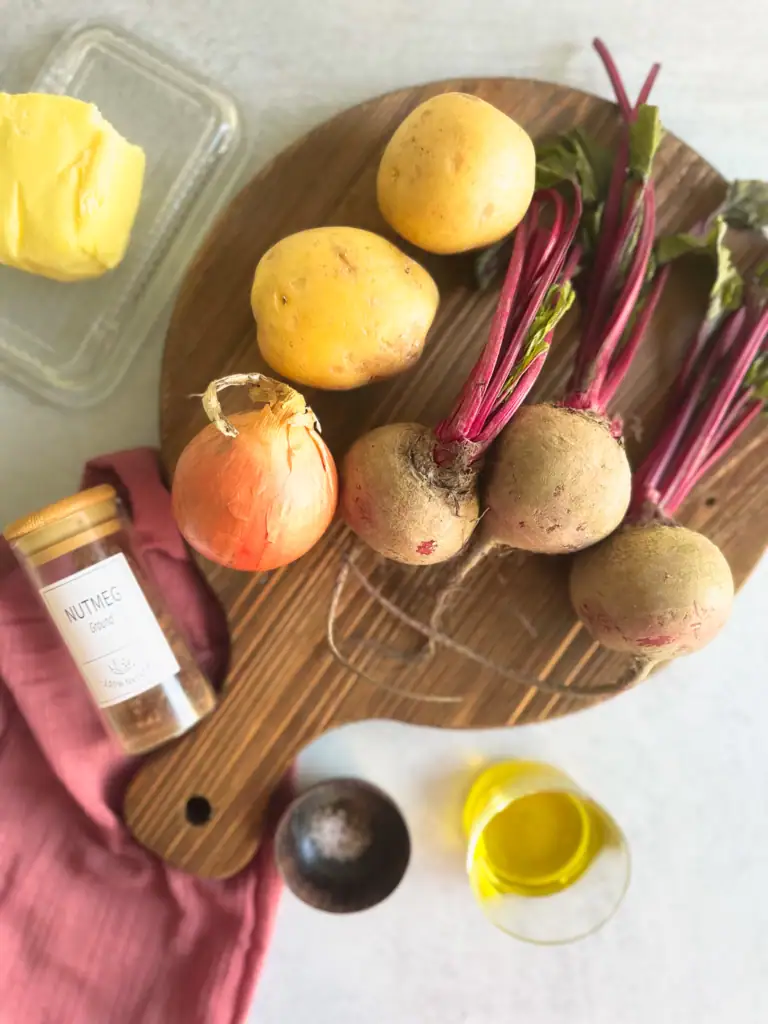
- Red beets – sweet, earthy backbone. Use firm, sweet beets; Chioggia or deep red both work.
- Potatoes – soften and round out the beet flavor
- Butter – richness without heaviness
- Salt & white pepper – gentle seasoning
For the finishing sauce
- Butter – melted until just foamy
- Poppy seeds – aromatic crunch that balances sweetness
- Grana Padano or Parmigiano – salty alpine contrast
EQUIPMENT YOU’LL NEED
- Pasta machine – I use a marcato Atlas pasta machine. You can also find a more affordable model here. I recommed though marcato as with the time you can buy different attachments to vary your pasta shaping.
- Wooden board – Key for any pasta making, you can use your own wooden board as a good start. If you fall in love with pasta making I recommend to upgrade to a bigger one, like this. A wooden board will precent your counter top to get ruined by cutting the dough and then the flattened noodle, and it will also be easier to clean up.
- 6 cm round cutter and a fork to mold the ravioli and to seal the edges.
- A rolling pin is always good to have especially to flatten the dough before using the pasta machine.
- You will need also a bench scraper will help you to bring the dough together once you have cracked the eggs.
- Fine sieve or muslin (for draining beets)
- Large pot for boiling
VARIATIONS AND AUTHENTICITY NOTES
- Casunzei rossi – beet-based (this version). Most traditional.
- Casunzei verdi – filled with wild greens or spinach. This filling does not have ricotta, so they are different from the popular Spinach Ricotta Ravioli.
Some modern recipes add ricotta. This version stays Ampezzani-authentic: beet and potato only. In some valleys, yellow turnip replaces part of the beet for a sharper profile.
TIPS ON HOW TO MAKE CASUNZEI
Pasta Dough
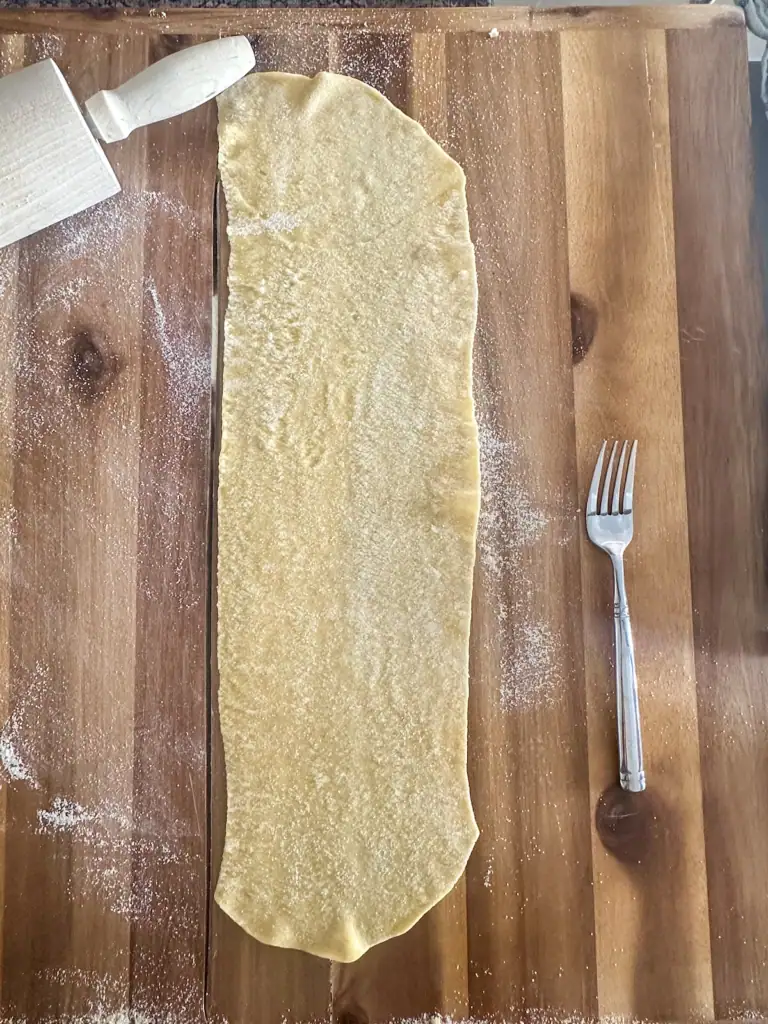
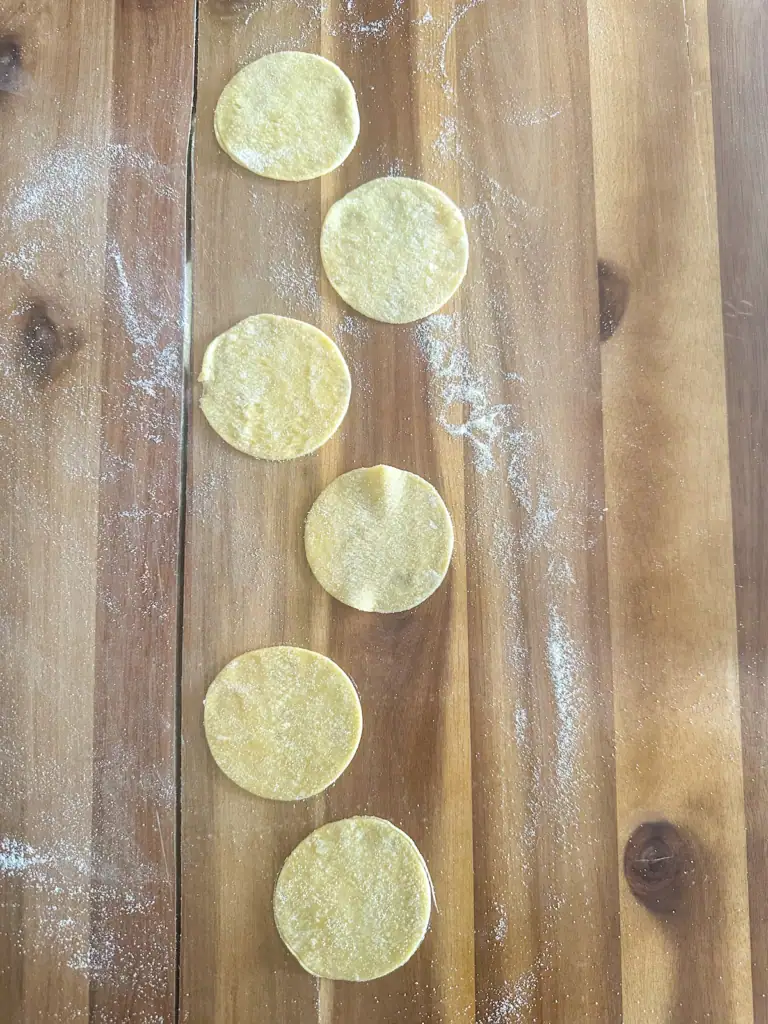
- Pasta dough has to bee thin enough, I set my Marcato machine at 6, to obtian 1mm thichness.
- For the entire pasta dough process, check my guide on How to make homemade pasta dough.
Beet & Potato Filling (Moisture Control)
Roast vs boil:
- Roasting is preferred for beginners — it concentrates flavor and reduces water.
- Roast beets at 200 °C / 400 °F until tender, then peel.
- If boiling, pulse briefly, then drain in a fine sieve or muslin 10–30 minutes.
- In this recipe I followed the traditional method: boiling.
Shaping & Sealing Casunzei
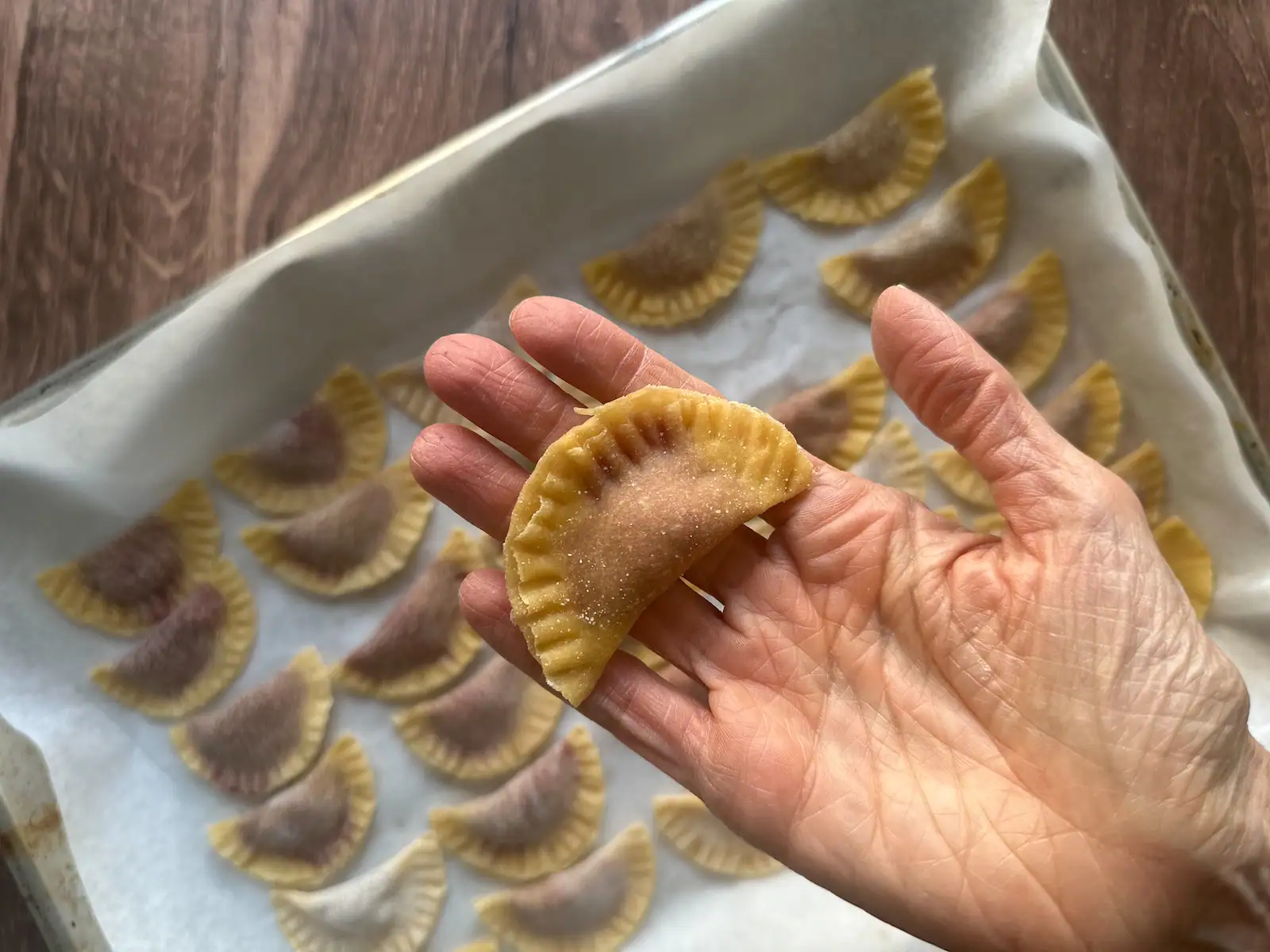
- Traditional Casunzei needs to have the pasta dough cut in into 6 cm rounds.
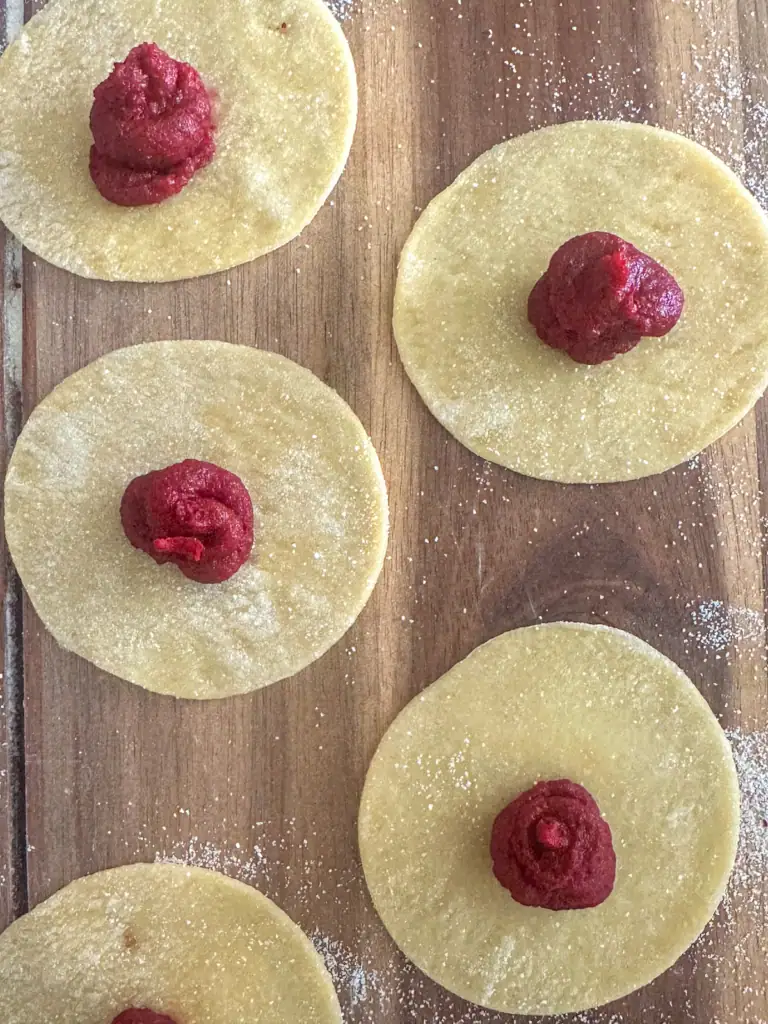
- Place ~7–8 g filling (about 1 tsp) in the center. Or alternatively use a sac a poche, it will make the job cleaner.
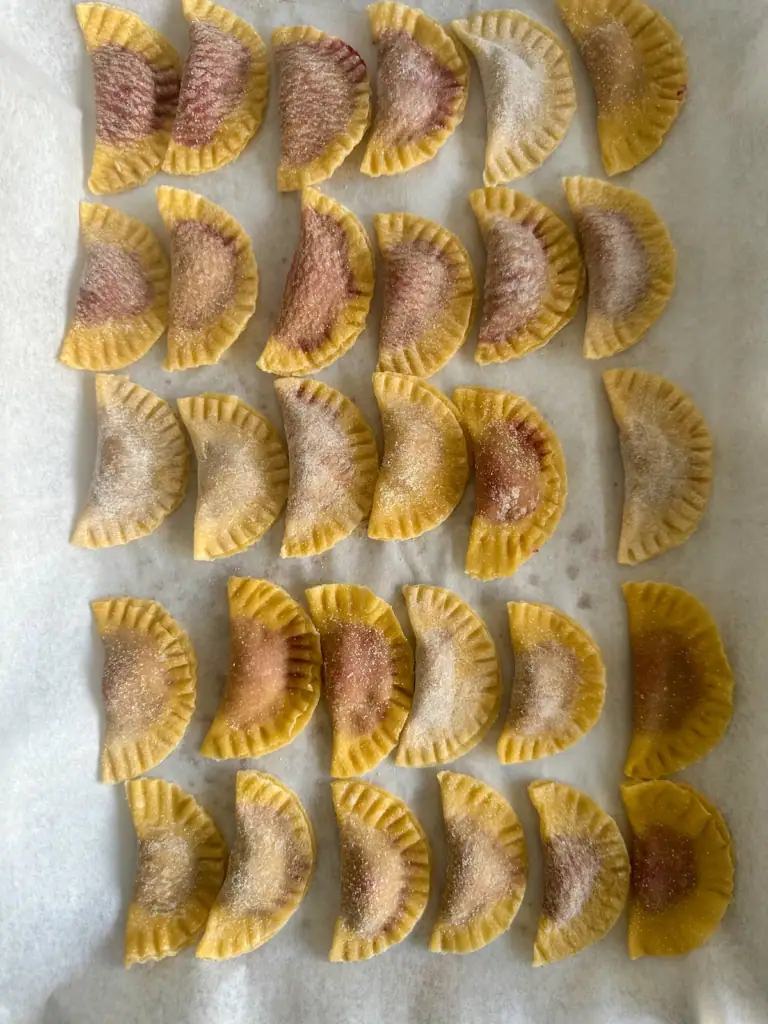
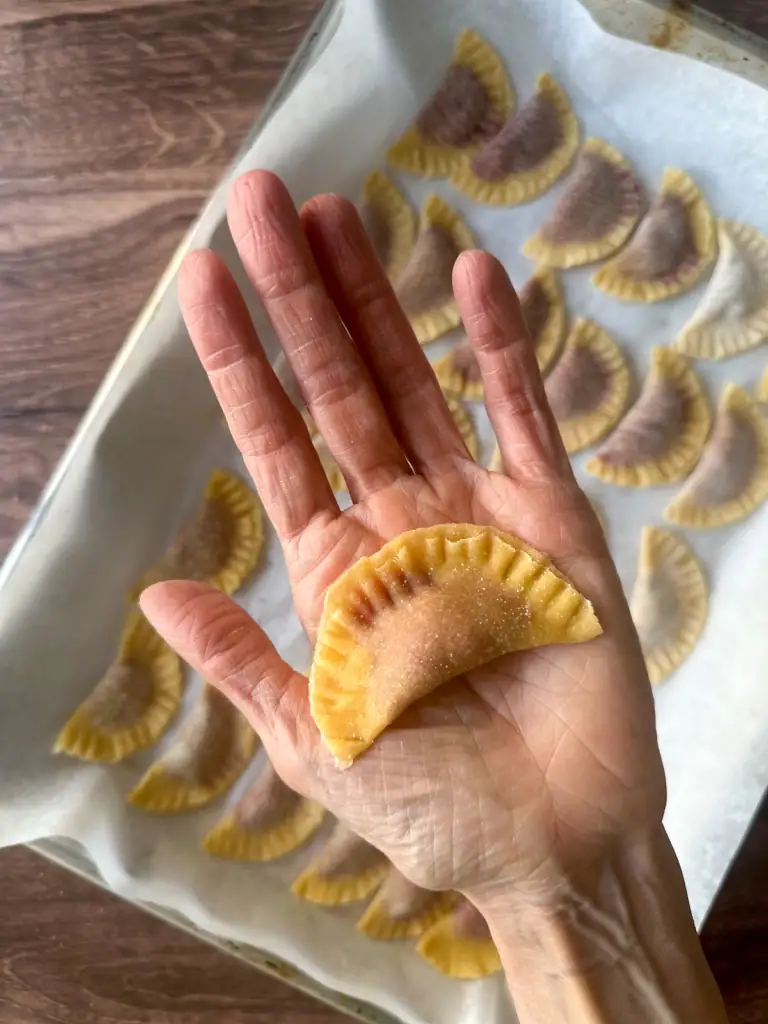
- Fold into half-moons, pressing out all trapped air. Edges should meet cleanly without stretching.
- Seal them pressing the tip of a fork ribs, all around the edge, to give it the traditional shape.
- If edges feel dry, brush lightly with water.
TROUBLESHOOTING
Seams opening?
- Filling too wet → drain longer or add breadcrumbs
- Trapped air → press out before sealing
- Dough too thin/thick → aim for ~1 mm
Dough tearing
- Cracking → mist lightly, re-knead 1 minute
- Sticky → dust lightly and rest 5 minutes
FAQS ABOUT CASUNZEI AMPEZZANI
Why do some recipes add ricotta?
Ricotta softens and sweetens the filling but drifts from the alpine profile. Breadcrumbs are a better moisture fix.
Is roasting really better than boiling beets?
Yes. Roasting concentrates flavor and reduces water. Boiling works only if you drain extremely well.
What cheese is most traditional?
Grana Padano or Parmigiano. Some areas use smoked ricotta, but it’s less typical here.
Can I add breadcrumbs to the filling?
Only if needed for moisture control, but it is not traditional.
Ingredients
FOR THE DOUGH
- 220 grams flour 00
- 3 unit eggs
- 27 grams semolina flour
FOR THEE FILLING
- half medium onions yellow
- 300 grams beetroot
- 160 grams potato
- 1 tbsp butter
- 1 pinch salt
- ½ teaspoon nutmeg
FOR THE SAUCE
- 5 tbsp butter
- 2 tbsp poppy seeds
Instructions
MAKE THE PASTA DOUGH
- Mound the flour on a work surface and make a well in the center. Add eggs and salt. Using a fork, gradually incorporate the flour, then knead by hand until smooth and elastic, about 8–10 minutes.
- Wrap tightly and rest at room temperature for 30–45 minutes.
PREPARE THE FILLING
- The night beofre boil the beets and potatoes.
- Once the beet are cold enough, peel them and grate them or blend them in a food processor.
- Place the beets on top of a colander with a bowl underneath, to collect all liquid that they will lose. Sprinkle some salt – 1/4 teaspoon- to ease this process. Leave them in cold, dry place overnight.
- The morning after, take a pan and place it on medium heat. Add 2 tablespoons butter, and half chopped onion. Once the onion has softened, add the neets and then add the potato. Add salt, pepper and nutmeg.
- Transfer the filling to a blender and blend it well. Place it in a sac a poche, or leave it in a bowl.
ROLL THE PASTA
- Divide dough into portions. Roll into sheets about 1 mm thick (setting 6 on Marcato-style machines).
- Keep sheets covered to prevent drying.
SHAPE THE CASUNZEI
- Cut pasta into 6 cm (2.5-inch) rounds. A round cookie cutter will be the best tool.
- Place 1 teaspoon (7–8 g) filling in the center of eachround. Or use a sac a poche, if you want to avoid getting your hands pink bytouching the beetroot.
- Fold intohalf-moons, pressing out all trapped air before sealing. Do not stretch the dough.If edges feel dry, lightly brush with water.
- With the ribs of a fork, make impression all around the edges: this will seal the casunziei and give them the traditional decoration.
COOK
- Bring a large pot of well-salted water to a gentle simmer.
- Cook casunzei in batches (12–14 at a time) for 3–4 minutes, until they float and feel pillowy.
FINISH & SERVE
- While pasta cooks, melt butter in a wide pan until just foamy,not browned. Add 2 tablespoons poppy seeds.
- Transfer cooked casunzei directly into the butter. Toss gently.
- Serve immediately in warm bowls. Sprinkle with grated Parmesan cheese.
Nutrition
WHAT TO SERVE WITH CASUNZEI
This ruby red ravioli form the Dolomites are great for the opening of the Olympic 2026, which will be in Cortina, or for a romantic San Valentine’s date.
You can start the meal with a classic Aperol Spritz and a classic antipasto platter, followed by this delectable beet filled ravioli.
Or alternatively you can make a Beet, fennel orange salad followed by Casunziei.
MAKE-AHEAD, STORAGE & FREEZING
- Freezing:
- Freeze uncooked casunzei in a single layer. Once firm, transfer to bags.
- Cook from frozen 4–5 minutes (about +1–2 minutes).
- Refrigeration:
- Uncooked, filled casunzei keep up to 24 hours, covered, on a floured tray.
MORE REGIONAL RECIPES FROM THE VENETO REGION
Gnocchi: A bowl of pillowy, soft and downy potato dumplings that we Italians call gnocchi. My grandmother would make gnocchi every Thursday. Comfort food at its best!
Squid ink Risotto: sometimes called also Risotto Nero – is a briny, umami dish that tastes rich and bountiful thanks to the combination of squid ink with the creamy risotto.


Rabbit with Polenta: my mom’s recipe! A hearty Venetian recipe enriched with spices and herbs. Cooked in white sauce and served over creamy yellow Italian polenta, this dish is a rich meal with a fall twist ideal for a Sunday family meal.
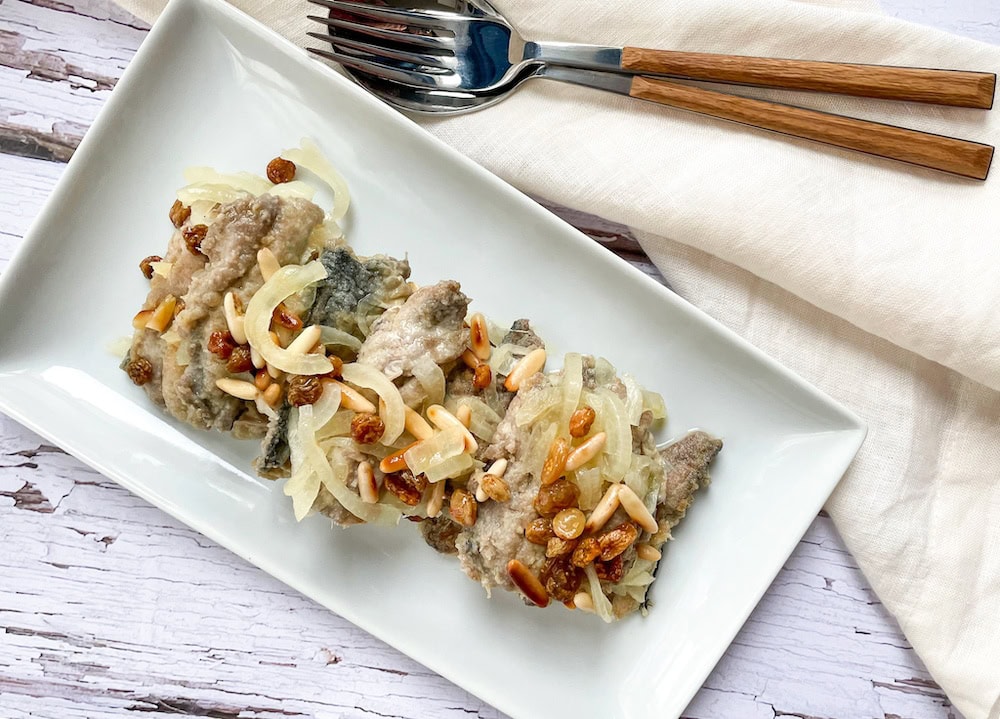
Sarde in Saor: A typical regional dish from Venice. The pungency of the sardines is combined with the sweetness of the onion and the raisins, the bright flavor of the vinegar, and the crunchiness of the pine nuts.

Pinza: a classic Epiphany cake, good to eat in colder months with a glass of milk.
Tiramisu: Tiramisu meaning “pick me up” in Italian, was born in the Veneto region, specifically Treviso in the 1970 at the restaurant Le Beccherie and since then it has become worldwide famous. This the classic recipe.

✨ This Casunzei Ampezzani Recipe is a classic winter staple! I would love to connect with you through my recipe and I will be very appreciative of your comments! If you make this recipe make sure to tag me on Instagram @Italian_Kitchen_Confessions.To get more ideas follow me on Pinterest.✨


