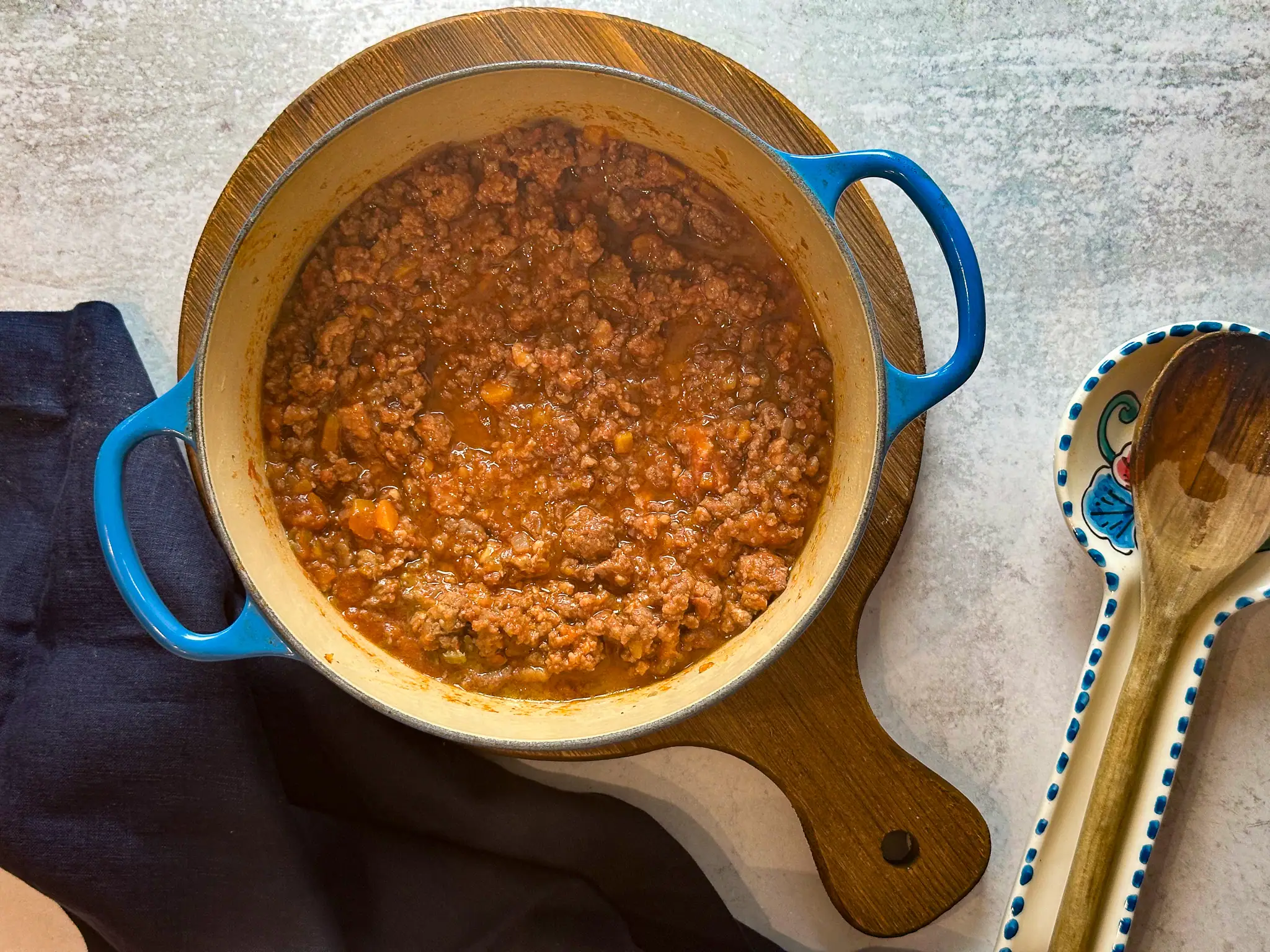
Authentic Bolognese sauce is a rich, slow-cooked, and deeply savory Ragu’. Ragù alla bolognese is not just a pasta topping—it is a culinary expression of Italian regional identity, patience, and respect for ingredients.
In my family, the ragu’ recipe we always did was a classic beef ragu’ with soffritto, herbs, spices and tomato sauce. My grandparents were used to do that in the summer, preparing individual serving portions for the colder months. My dad used a similar recipe, often adding veal and pork. Ragu’ bolognese was though the favorite recipes for lasagne alla bolognese, the specialty of my grandmother Elsa for Christmas.
In this article, we explore the true Italian origins of Bolognese sauce, how it is traditionally made, and how to cook it correctly at home. You’ll also find variations, substitutions, serving ideas, storage tips, wine pairings, and answers to common questions.
What Is Bolognese Sauce?
Bolognese sauce (ragù alla bolognese) is a traditional Italian meat sauce originating from Bologna, made by slowly simmering ground meat with soffritto, milk, wine, and a small amount of tomato.
Unlike tomato-based meat sauces, Bolognese is:
- Meat-forward, not tomato-forward
- Slow-cooked for depth and texture
- Traditionally served with fresh egg pasta
The Italian Cultural Roots of Ragù Alla Bolognese
Bolognese sauce comes from Bologna, in the Emilia-Romagna region of northern Italy—an area considered one of the most important culinary regions in the country. It is the birthplace of Parmigiano Reggiano, prosciutto di Parma, mortadella, and fresh egg pasta.
The official recipe for ragù alla bolognese was registered in 1982 with the Accademia Italiana della Cucina, preserving it as part of Italy’s culinary heritage.
Historically, Bolognese reflects:
- Access to high-quality meat and dairy
- A cooking culture built on time, restraint, and technique
- A preference for richness over acidity. This is why traditional Bolognese uses milk very little tomato.
Traditional Bolognese Ingredients Explained
Each ingredient in authentic Bolognese sauce has a specific role.
Meat: Traditionally, coarsely ground beef and small amount of pancetta. In this recipes I added ground pork for extra flavor, as it is an admitted variations. The meat provides structure and depth, not softness.
Soffritto: A classic Italian soffritto includes: onion, carrrot and celery. Finely diced and gently cooked until soft and translucent.
Fat: Butter, olive oil, or both. Butter adds roundness and richness.
Wine: a good red wine is used to deglaze and balance the meat.
Milk: Milk is essential in traditional Bolognese. It softens acidity, tenderizes the meat and creates a silky texture. In this recipe I omitted it, because I used it for fresh egg pasta, in specific lasagne. Fresh egg pasta is rich already, and lasagna contains dairy in the Parmesan and Bechamel, therefore we prefer to avoid adding dairy in the ragu’.
Tomato: Used sparingly: tomato paste or a small amount of crushed tomato.
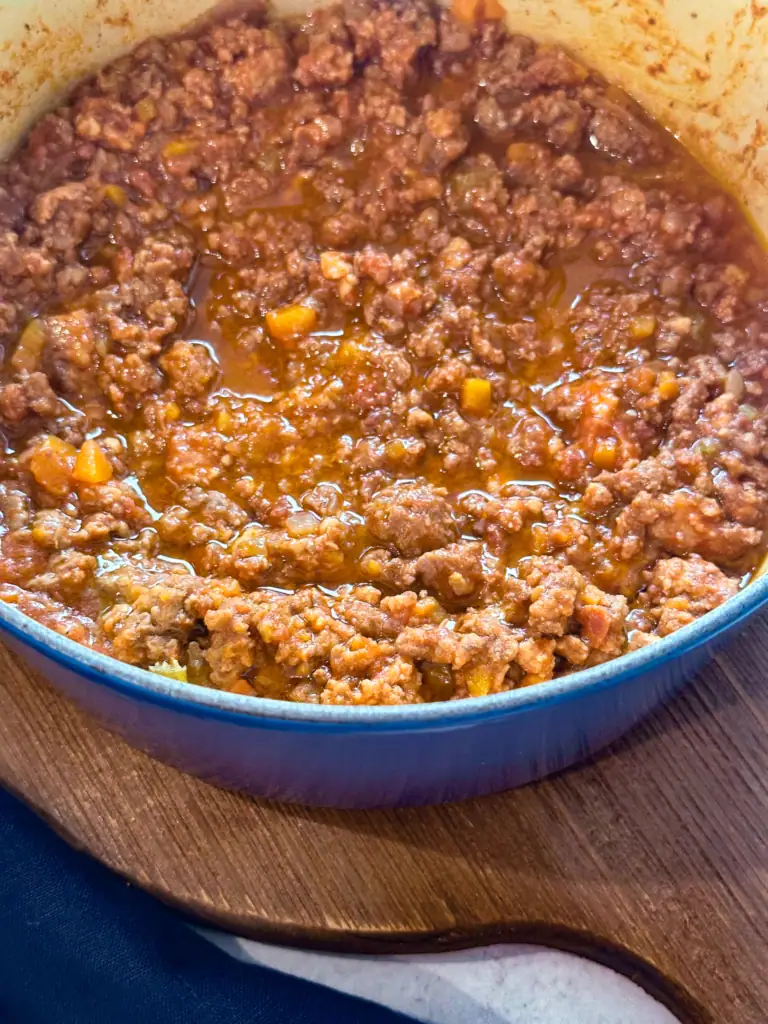
The finished sauce should be brown, not red.
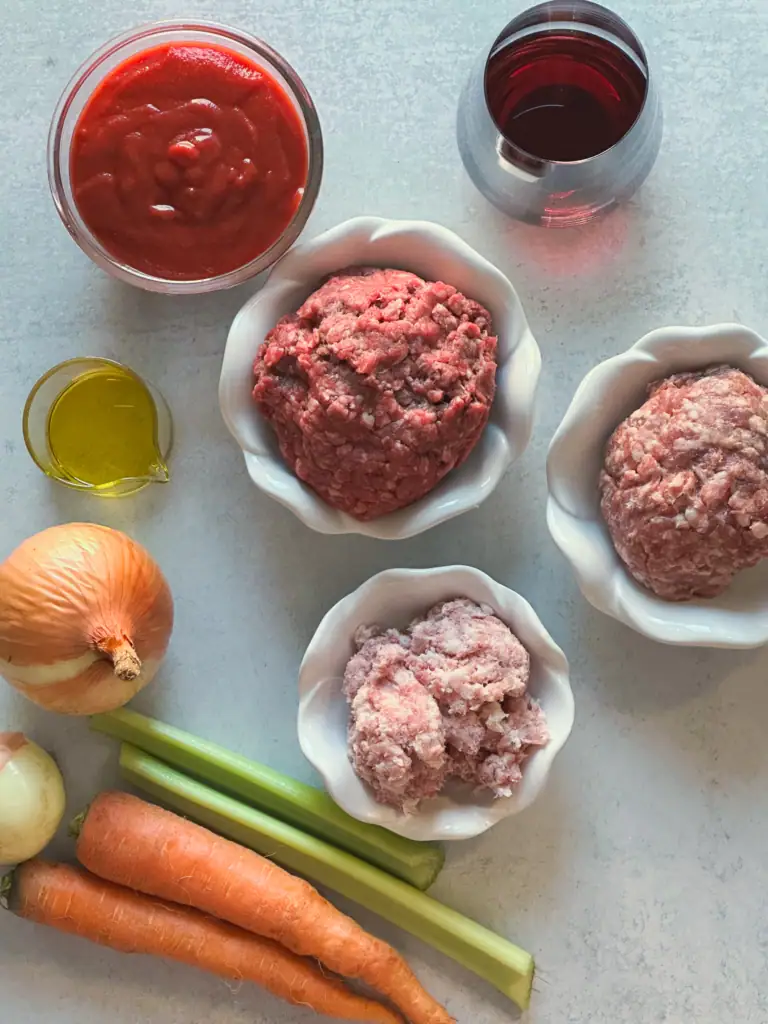
Ingredients not admtted:
❌ No garlic
❌ No basil or oregano, sage, parsley.
❌ No sugar, nutmeg or chili flakes.
How Authentic Bolognese Sauce Is Made
Step 1: Build the Soffritto: Cook onion, carrot, and celery slowly in fat over low heat until soft, never browned.
Step 2: Add Pancetta: Add pancetta and cook gently, allowing moisture to evaporate so browning can occur.
Step 3: Deglaze with Wine:Add wine and simmer until fully reduced and alcohol has evaporated.
Step 4: Add meat and let it brown completely.
Step 5: Add Tomato Stir in tomato paste or minimal tomato passata.
Step 6: Long, Slow SimmerSimmer uncovered on very low heat for 2–4 hours, stirring occasionally. Add water or broth as needed.
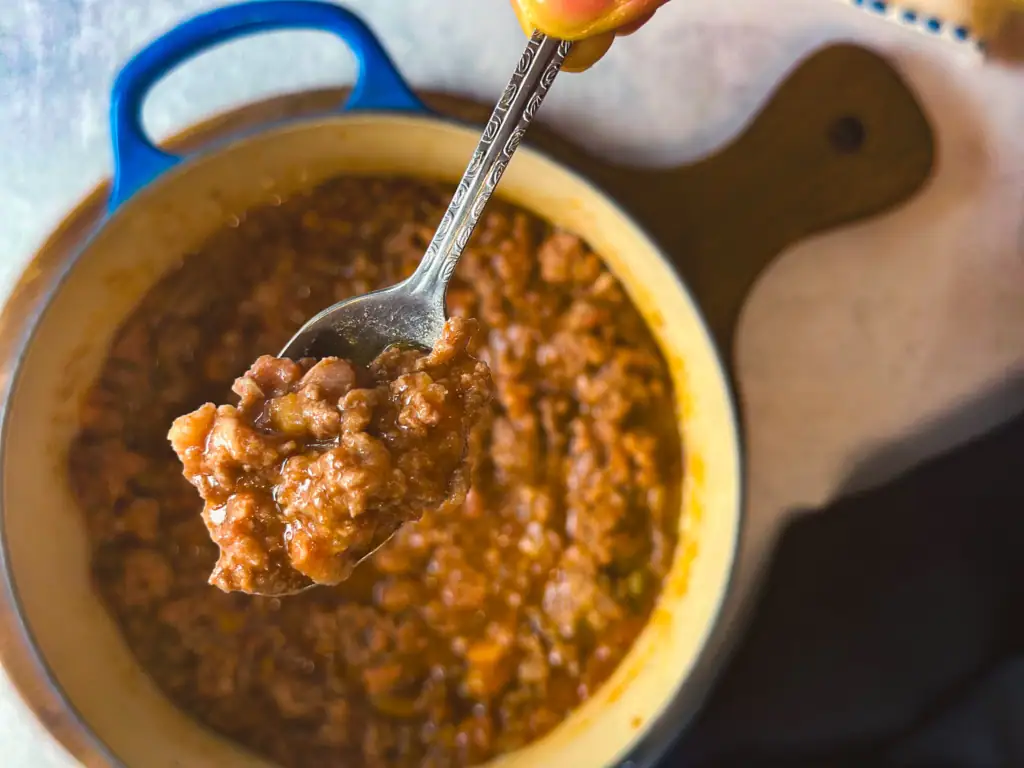
The finished sauce should be thick, rich, and cohesive—not watery.
Bolognese vs Tomato-Based Meat Sauce
Bolognese sauce is not the same as meat sauce.
- Bolognese is meat-based.
- Meat sauce is tomato-based
- Bolognese simmers longer and uses fewer ingredients
- Understanding this distinction is key to authenticity.
Ingredient Substitutions Without Losing Authenticity
- Dairy-Free: Use olive oil instead of butter. Substitute milk with unsweetened oat milk.
- Gluten-Free: Naturally gluten-free. Serve with polenta or gluten-free pasta.
- Vegetarian or Vegan: Lentils or finely chopped mushrooms.
Frequently Asked Questions About Bolognese Sauce
What is authentic Bolognese sauce made of?
Ground meat, soffritto, milk, wine, and minimal tomato.
Why does traditional Bolognese use milk?
Milk balances acidity, tenderizes meat, and creates a silky texture.
Is garlic used in authentic Bolognese sauce?
No. Garlic is not traditional.
What pasta is traditionally served with Bolognese?
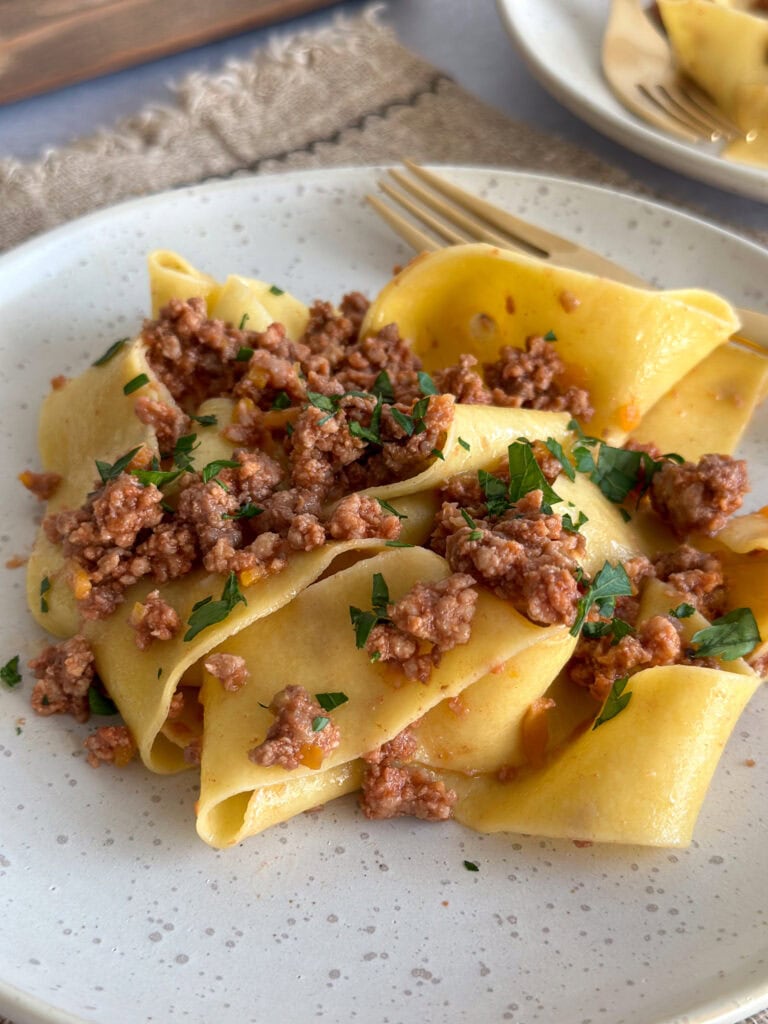
Tagliatelle or other wide egg pasta.
Can you freeze Bolognese sauce?
Yes, for up to three months.
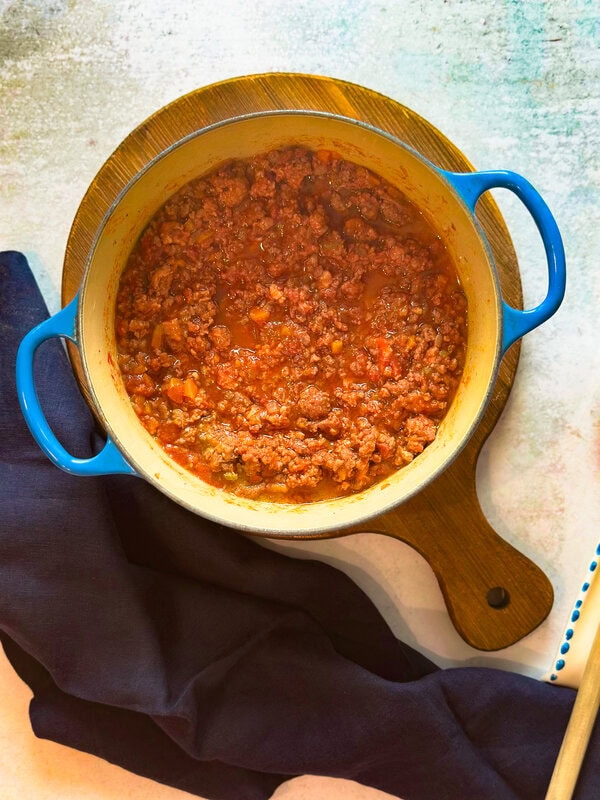
Ingredients
- 3 oz onion white, chopped
- 3 oz carrots chopped
- 3 oz celery chopped
- 2 tbsp olive oil extra virgin
- 5.3 oz pancetta
- ⅔ pound beef shoulder coarsely chopped
- ½ pound pork loin coarsely chopped
- 3.5 fl oz red wine
- ½ cup tomato passata
Instructions
- Begin preparing the ragù from the soffritto. Keeping them separate, chop the onion,carrot, and celery very finely.
- Place alarge pot on a small stove and add olive oil on medium-low flame. Gently sauté the onion for two minutes before adding the carrot and the celery.
- Combine the salt while stirring. It will help the vegetables pull out their water without burning.
- When the soffritto is slightly translucent, add the sweetground bacon (pancetta), stir, and cook for a few minutes.
- Add the ground meat and pork, crumble itwith a fork, and stir. When you hear the meat to sizzle, add the wine and letit evaporate.
- Add tomato sauce and cook for one hour, leaving the pot uncovered and never boil it.
- Optional : after an hour, add the milk to the meat sauce. Stir andcook for another hour.
- Turn it off and let it cool out; let it stand at least overnight (when cooled, place the pot in the fridge).
Nutrition
Best Pasta and Serving Suggestions for Bolognese
Traditional Pairings
• Tagliatelle (classic choice)
Other Uses
• Lasagna
• Cannelloni or stuffed pasta
• Served over polenta
Finish with freshly grated Parmigiano Reggiano.
Wine Pairing for Bolognese Sauce
Bolognese Sauce calls for red wine
• Sangiovese
• Barbera
• Nebbiolo
Avoid overly sweet or heavily oaked wines.
How to Store and Freeze Bolognese Sauce
- Refrigeration
- Store up to 4 days.
- Flavor improves after 24 hours.
- Freezing
- Freeze up to 3 months.
- Cool completely before freezing.
- Freeze in portions.
- Reheat gently with a splash of water or broth.
More Italian Pasta Sauce
Ragu’: a classic family recipe tomato based, enriched by nutmeg and herbs.
Cavatelli with Spicy Italian Sausage is a meal with all the ingredients to make a glorious Italian meal! Think about chewy al dente homemade cavatelli that collect a sauce made with Spicy Italian sausage, Calabrian chili pepper, tomato sauce and a bit of red wine.


Pasta all’ Amatriciana, which main component is the Amatriciana Sauce or “Sugo all’ Amatriciana” is a classic Italian recipe that will conquer your taste buds. In one bite you’ll taste the punch of red pepper flakes, the depth of flavor of guanciale, sauteed with white wine, the richness of a velvety tomato sauce, and the sharpness of pecorino cheese… all together in a delicious bowl of pasta.
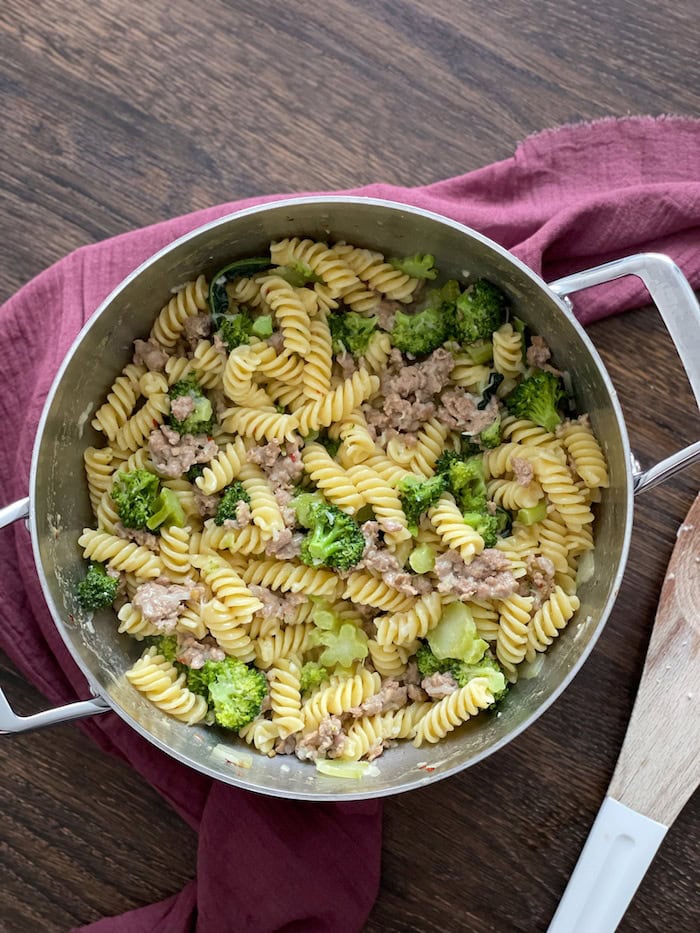
One-pot Sausage Broccoli Pasta is the easiest and most amazing pasta you can make right now. And it’s comfort food at its best. Pasta, Broccoli and Sausage is a filling combination that will feed you and your entire family in 40 minutes or less. This silky and hearty recipe will definitely enter in your rotation and hopefully will stay for many months to come!

✨ I hope you loved this Authentic Bolognese Sauce recipe! I would love to connect with you through my recipe and I will be very appreciative of your comments! If you make this recipe make sure to tag me on Instagram @Italian_kitchen_confessions. To get more ideas follow me on Pinterest.


